

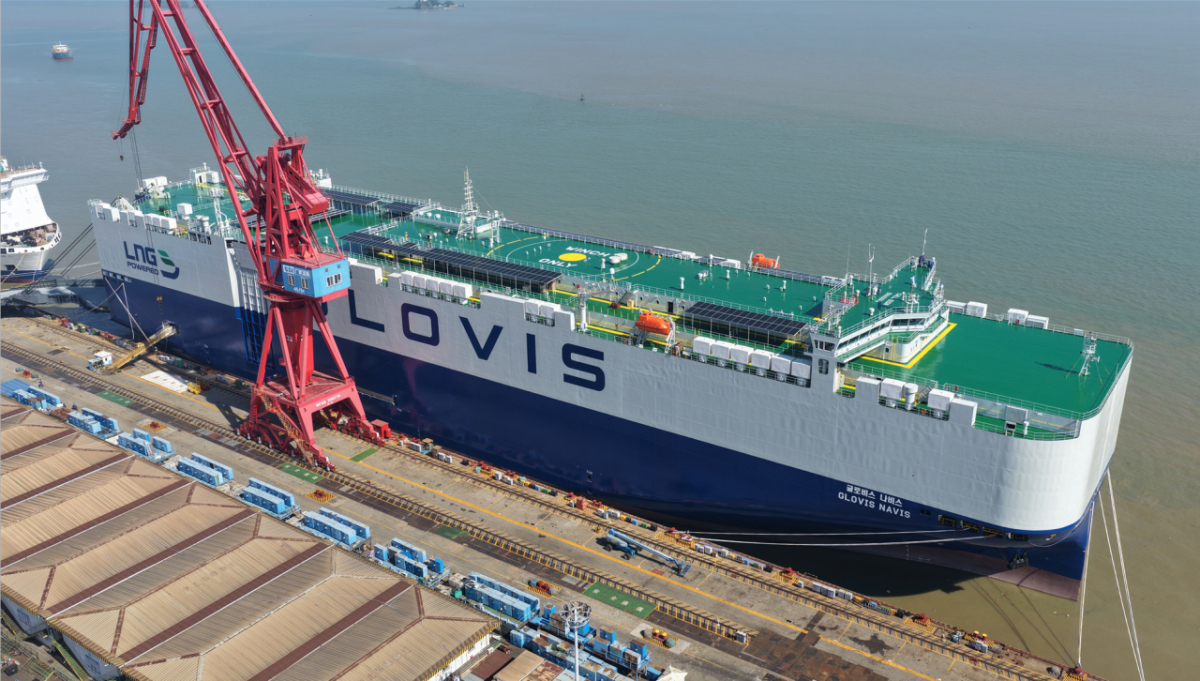
On the 26th, at the GSI shipyard in Guangzhou, Guangdong Province, China. The ultra-large car carrier 'Glovis Navis' belonging to Hyundai Glovis, spread out before our eyes, was closer to a massive architectural structure than a ship. With a length of 230 meters and a width of 40 meters, the interior of this vessel—longer than two soccer fields placed end-to-end—featured 14 decks dedicated solely to car storage. Above these decks were the crew's living quarters and the bridge, which oversees the operation of the ship.
It is as if a 16-story building had been floated entirely on the sea. This massive vessel can hold up to 10,800 cars at once. Only 21 crew members are responsible for the safety of the ship and its cargo.
Driving and Securing One by One… The Secret Behind Loading 10,800 Cars
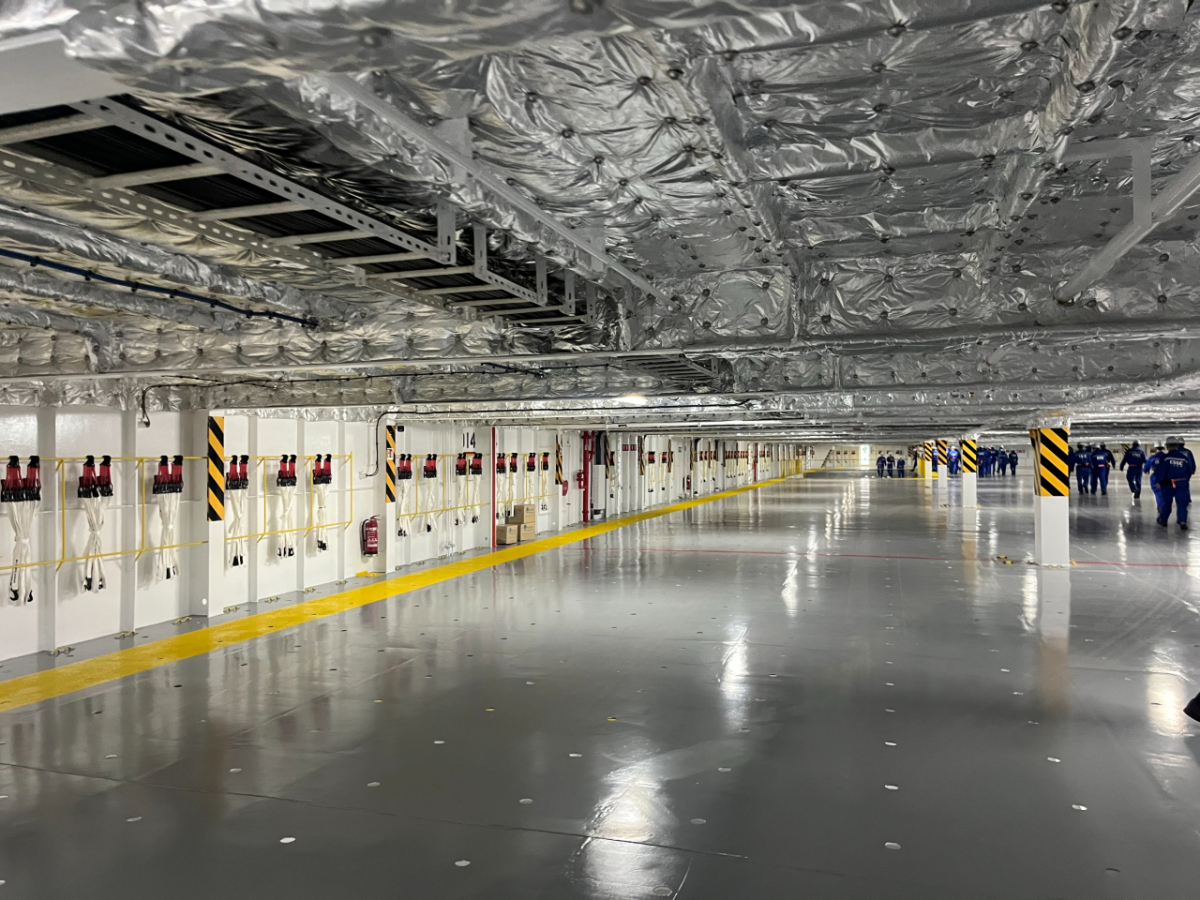
The Navis, which we boarded directly after its naming ceremony, evoked the image of a massive multi-story parking garage. Decks 1 through 14 were exclusively for cargo. The ramps, serving as access routes for vehicles to enter and exit the ship, were located on the fifth deck. When loading vehicles at domestic ports, workers affiliated with the Port Workers' Union drive each car individually into the interior of the ship.
Unlike a regular parking lot, the floor of the cargo hold was perforated with densely packed holes. This is to secure the cars so they do not move even if the ship rocks due to waves during navigation. After loading the vehicles, lashing straps are connected to the holes in the floor to secure each car individually. It is only after this process of driving and securing more than 10,000 cars one by one that the preparation for transport is finally complete.
Particularly noteworthy was the ability to change the height of the loading space. Among the 14th cargo decks, decks 2, 4, 6, 7, and 9 have adjustable heights. When carrying standard passenger cars, the space is utilized densely; when carrying high-roof commercial vehicles or construction machinery, a height of up to 7 to 8 meters can be secured.
It is akin to changing the floor height inside a building depending on the cargo being transported. This is the background behind Hyundai Glovis's ability to diversify its transport cargo beyond passenger cars to include commercial vehicles and heavy equipment.
Carrying 4,300 More Cars with the Same Amount of Fuel
The true value of the Navis is revealed in its operating costs. According to an official associated with the Navis, there is little difference in fuel consumption between existing 6,500-car-class car carriers and the Navis, but the latter can carry up to 4,300 more cars at once. In terms of loading capacity alone, this represents an increase of approximately 66%.
Captain Kim Jang-hyun of Hyundai Glovis stated that since fuel consumption is similar, operating large vessels efficiently is far more beneficial from the shipping company's perspective. He noted that as the shipping industry struggles with increased operating costs due to geopolitical conflicts, the competitiveness of ultra-large vessels is growing even further. According to him, Hyundai Glovis is promoting a plan to utilize alternative ports in Oman and the United Arab Emirates (UAE) instead of the Strait of Hormuz, where it is difficult to guarantee ship safety. Ships bound for Europe are also maintaining routes that go around the Cape of Good Hope at the southern tip of Africa, rather than passing through the Red Sea and the Suez Canal.
A route that takes about 20 days when passing through the Suez Canal requires 30 to 35 days if detouring around the Cape of Good Hope. Captain Kim said, "We use an additional 10 to 15 days' worth of fuel, and the cargo delivery period is delayed accordingly," adding, "From the standpoint of economical operation, it is quite difficult."
If the voyage duration lengthens, not only do fuel costs increase, but the deployment of the ship for its next voyage is also delayed. A vessel that can carry more cars in a single voyage serves as a means to alleviate this cost burden.
The Navis is also equipped with liquefied natural gas (LNG) dual-fuel propulsion engines. Captain Kim explained that while operating efficiency is similar compared to ships using existing heavy fuel oil, the feature is its ability to reduce carbon and pollutant emissions.
21 Crew Members Responsible for Transporting 10,800 Cars
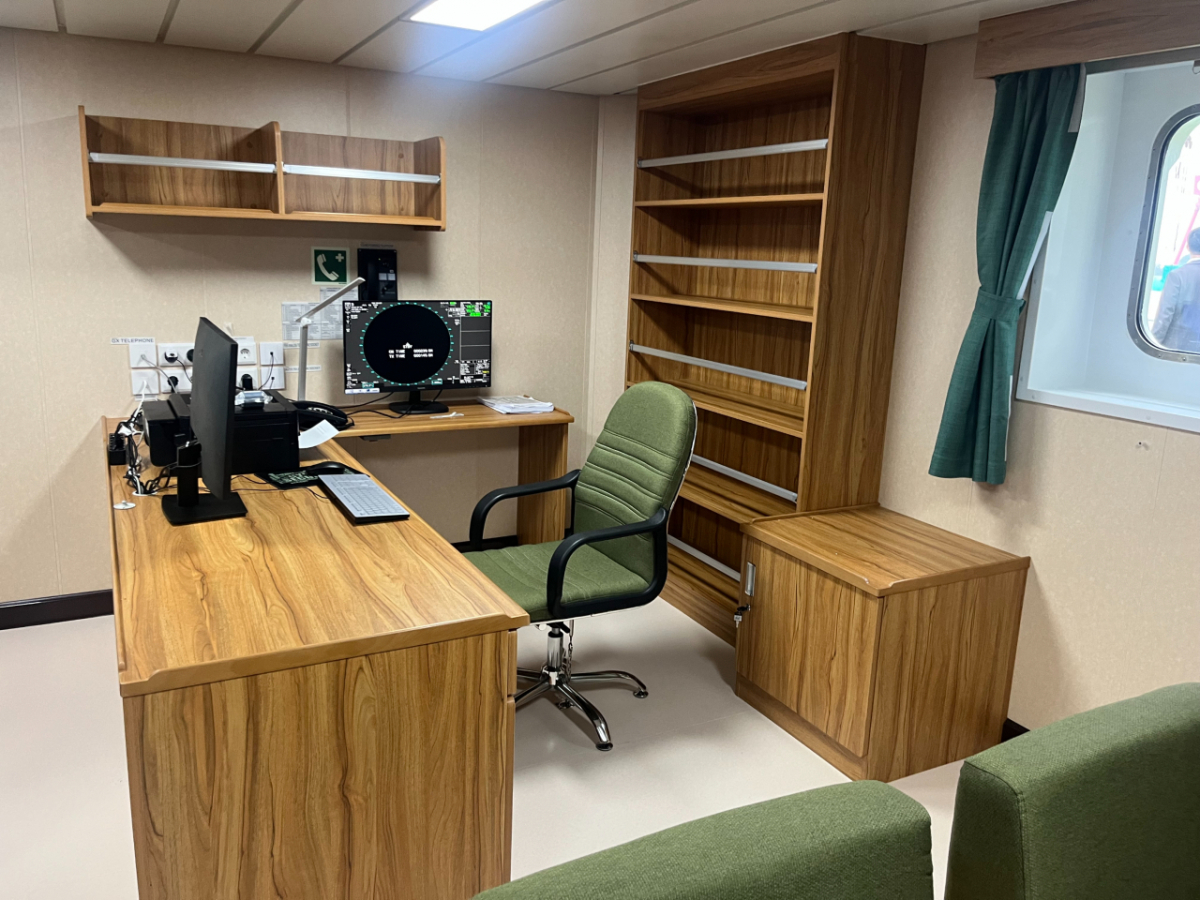
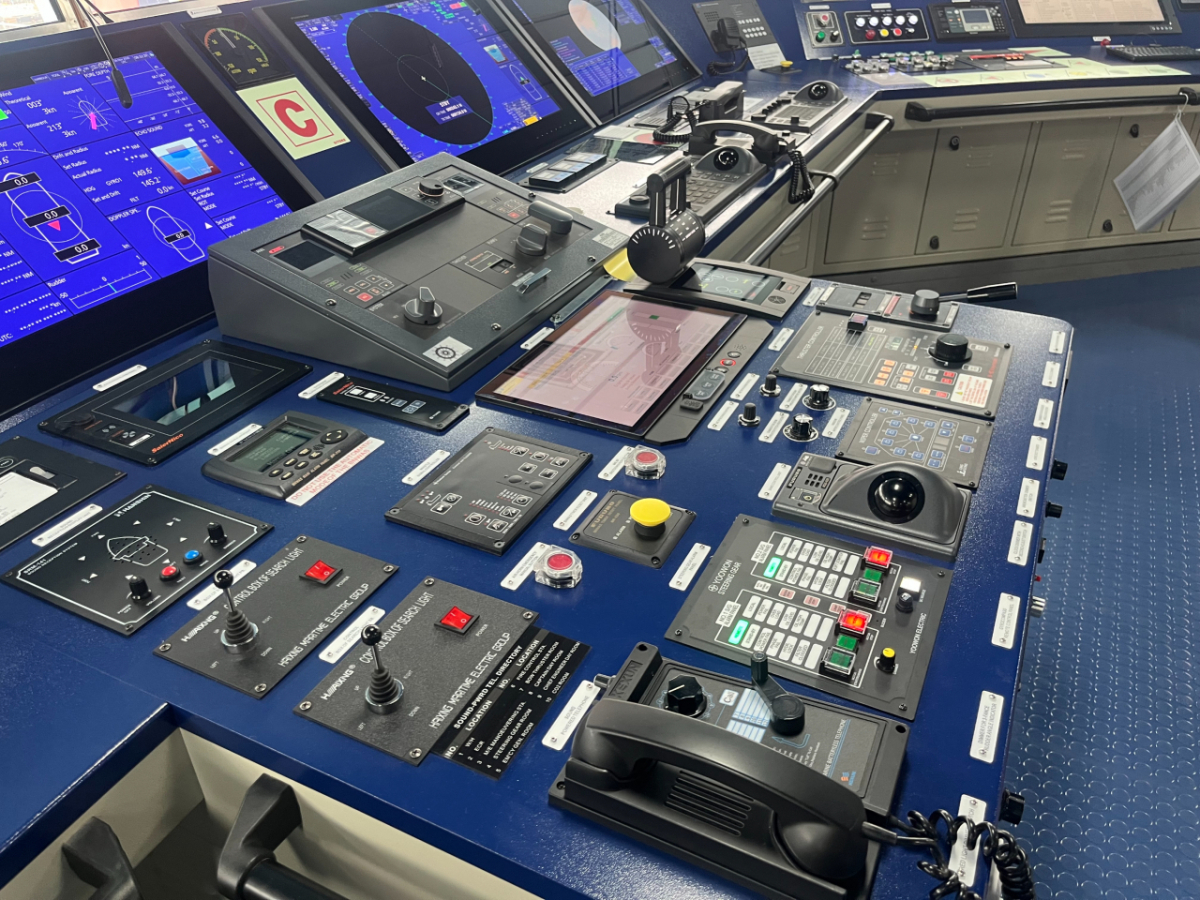
On the 16th deck, the highest point of the Navis, is located the bridge, which oversees the operation of the ship. It is a kind of driver's seat for moving a massive vessel that reaches 230 meters in length.
The crew of the Navis consists of a total of 21 members: six Koreans and 15 Filipinos. Under normal circumstances, two people form a team to perform navigation watch duties. In situations requiring additional personnel, such as when there are many nearby ships or fog is present, the captain or other watch officers board the bridge to support safe operation.
On the 15th deck, directly below, living quarters for the crew who live on the sea for long periods are provided.
The Navis is scheduled to begin its first voyage around the 1st or 2nd of next month. It plans to carry out its first voyage over a period of about one and a half to two months, loading export vehicles domestically before heading to Central and South American regions such as Mexico.
Captain Kim, who will command the world's largest car carrier, mentioned safety before innovation when asked about his ambitions. He stated, "On a ship, safety is the top priority over things like innovation," and reaffirmed his resolve by saying, "I plan to do my utmost for the safety of the ship, the cargo, and the crew during future voyages."
The 'Ability to Transport' Becomes as Important as Making Good Cars
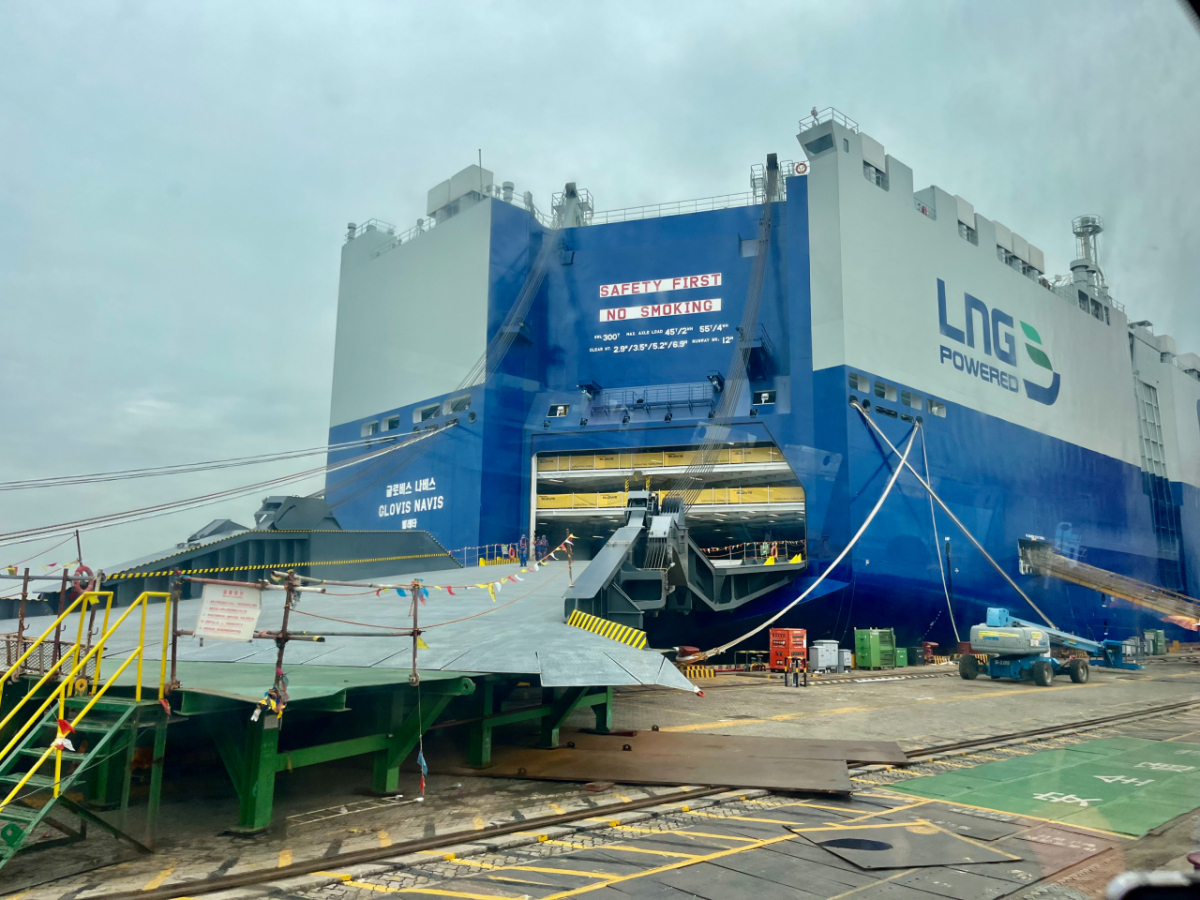
Hyundai Glovis has secured seven 10,000-car-class car carriers this year, including the Navis. It plans to introduce 10 car carriers of the 10,800-car class next year. The goal is to expand its entire car carrier fleet to 128 vessels by 2030 and transport 5 million units annually, corresponding to 20% of global finished vehicle maritime cargo volume.
As export volumes from Chinese finished vehicle manufacturers are rapidly increasing, the ability to transport cars overseas has emerged as a factor determining industrial competitiveness, alongside the ability to manufacture them. No matter how competitive the cars produced may be, if there is a shortage of vessels to carry them, exports will inevitably face difficulties.
The ability to carry 4,300 more cars with a similar amount of fuel. A large fleet capable of stably transporting export vehicles even when routes lengthen due to geopolitical crises. The massive 16-story vessel encountered at the Guangzhou shipyard fully demonstrated the meaning that "equipment is important in shipping as well."

 in INDUSTRY


