

"As the private credit market has grown significantly over the past 20 years, liquidity demand has increased. Consequently, the private credit secondary market has also experienced substantial growth recently."
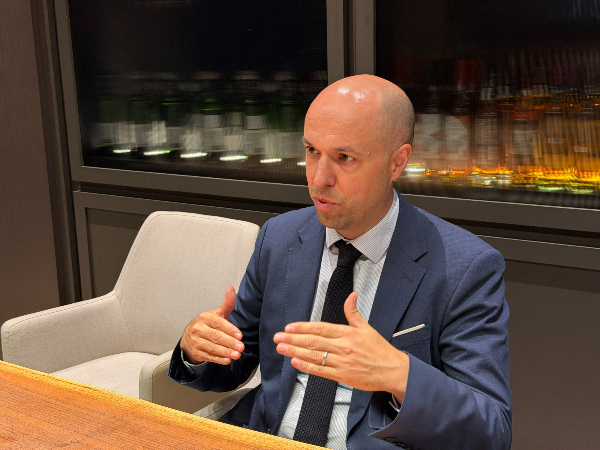
Joaquín Ardit, Senior Manager at Allianz Global Investors (AllianzGI), stated this in a recent interview with Money Today, noting that "the private credit secondary market has grown explosively over the past four to five years." Ardit, who oversees the credit secondary division, recently visited Korea to discuss trends in private credit secondaries and the broader private markets with key institutional investors. He said, "The response from institutional investors was positive," adding that they "showed considerable interest in the trends of the private credit secondary market and broader portfolio-related issues."
Private credit, also known as private lending, refers to loans provided directly to companies by non-bank financial institutions. Unlike bank loans, this structure involves raising funds from investors to form a fund, which then lends money directly to companies. The global private credit market has nearly doubled, growing from $1.2 trillion in 2020 to $2.3 trillion in 2025. Amid this growth trajectory, the secondary market is also expanding. According to AllianzGI, the transaction volume of the private credit secondary market was $20 billion last year and is projected to reach $80 billion by 2030.
In particular, market growth accelerated rapidly amid the sharp rise in interest rates in 2022. Ardit explained, "At that time, performance in the equity and bond asset classes was sluggish under high interest rate conditions, and institutional investors' assets under management (AUM) also declined." He added, "In contrast, the private credit market demonstrated high resilience as floating interest rates were applied and valuations were maintained, leading to an increased share within total assets." As the proportion of private credit grew, demand for rebalancing by selling these assets to adjust portfolio allocations increased, naturally expanding the secondary market.
Regarding concerns over private credit defaults that emerged earlier this year, Ardit stated, "There has been no phenomenon of widespread losses increasing across the entire private credit market. The private credit asset class itself is currently being managed stably." He added, "While the financial soundness of underlying portfolio companies is important, company fundamentals vary in any market."
Given that software companies account for a significant portion of global private credit portfolios, there are also voices expressing concern about the impact artificial intelligence (AI) may have on the private credit market. In response, he said, "Software companies have received substantial private credit due to their stable cash generation capabilities, but we need to examine more closely how AI's disruptive innovation will affect each company." He added, "(AllianzGI) has spent considerable time researching AI and possesses the competitive advantage of deeply understanding portfolio companies through extensive experience."
He predicted that the private credit secondary market "will continue its strong growth trend going forward." He expressed interest not only in the expanding European and U.S. markets but also in Asian markets with potential, such as Korea. Ardit acknowledged, "It is true that the absolute scale of the Asia region is smaller compared to the United States, Europe, and Japan," while adding, "The market continues to grow, and we are continuously monitoring investment opportunities across Asia."

 in STOCK
