

Attention is turning to whether South Korea can benefit from the signs that regulations on artificial intelligence (AI) data center construction may be tightened in the United States following the midterm elections. This comes amid rising speculation that global Big Tech investment in AI infrastructure could diversify beyond the U.S.
In the U.S. midterm elections on Wednesday (local time), Democratic Party candidates who pledged to regulate data centers won key gubernatorial races. Texas candidate Zina Hinojosa campaigned on a moratorium for new data center construction approvals, while Georgia’s Keisha Lance Bottoms and others also advocated for stricter regulations.
Texas is a key hub expected to account for approximately 30% of the capacity of newly operational data centers in the U.S. by 2028. Considering the regions where Democratic Party candidates won governorships, analysts suggest that nearly half of U.S. AI data center projects could face construction moratoriums or strengthened regulations.
If regulations materialize, they are expected to introduce variables into the investment strategies of Big Tech companies such as AWS (Amazon Web Services), Microsoft, and Google. This is because delays in domestic construction would increase the incentive to diversify investment destinations overseas.
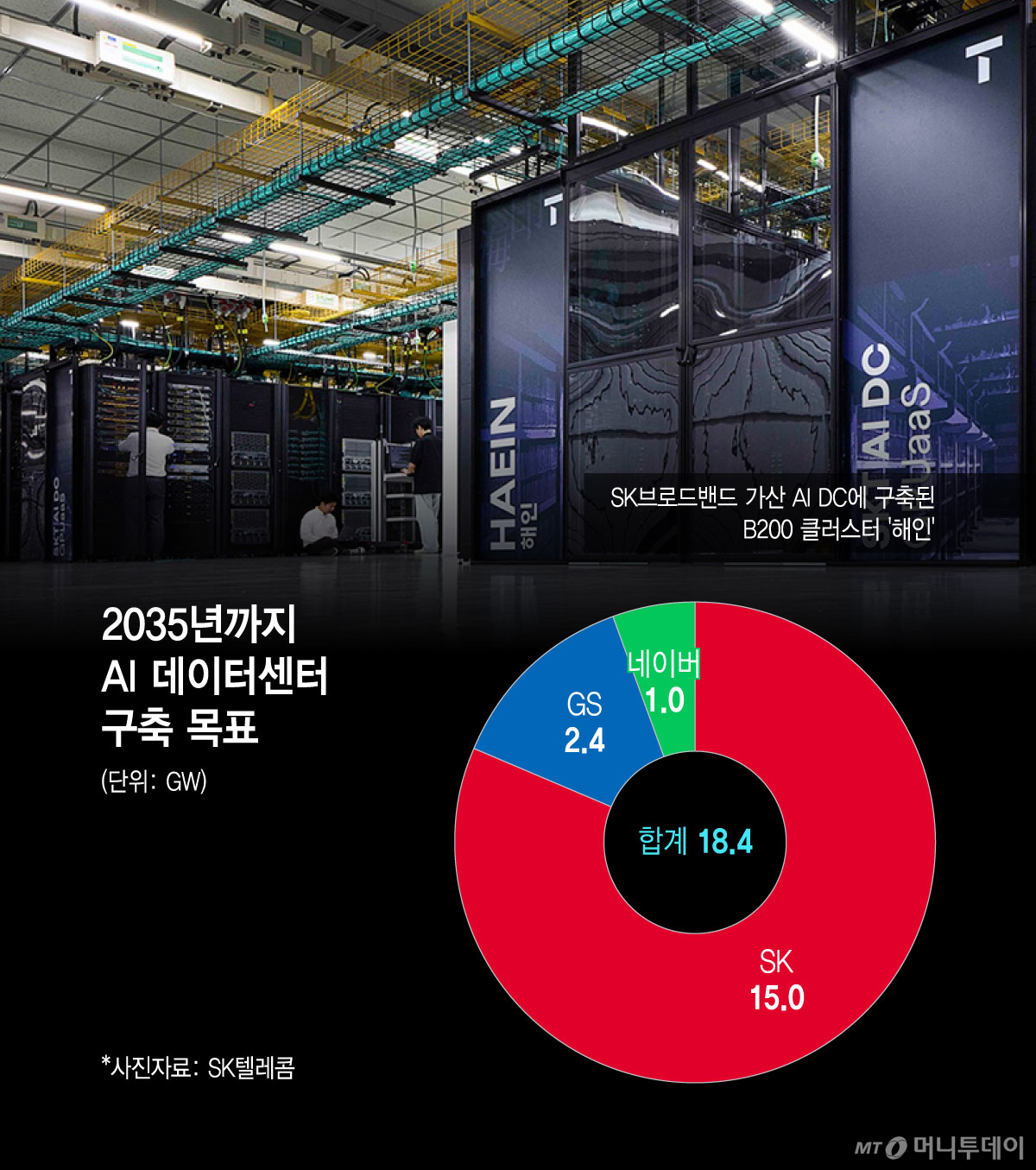
South Korea could also become a potential investment destination. In June, the government presented a long-term plan to build AI data centers with a capacity of 18.4 gigawatts (GW) through its “Korea’s Great Leap Three Major Mega-Projects.” Initially, it is pushing for 8.4 GW, including 5 GW from SK, 2.4 GW from GS, and 1 GW from Naver (NAVER). AWS and SK Group are also developing a 100-megawatt (MW) class AI data center in Ulsan.
The debt burden associated with AI investment is a variable. International credit rating agency Moody’s warned that maturities on loans related to AI infrastructure are concentrated between 2027 and 2029, which could increase refinancing burdens. While overlapping regulatory and financing pressures may slow the pace of investment, there is also a possibility that investment will diversify toward regions with advantages in power supply and costs.
Korea’s opportunities vary depending on the purpose of the data center. Real-time AI inference services for U.S. users face communication latency issues, but large-scale AI model training offers a relatively wider range of location options. This means South Korea has the potential to emerge as a new hub for global AI training infrastructure.
Professor Lee Seong-yeop at the Graduate School of Technology Management at Korea University said, “If data center regulations in the U.S. are tightened, there is a possibility that U.S. companies will look into overseas regions like South Korea as sites.” He added, “While there is a debt burden from companies’ AI investments, Big Tech firms with some financial leeway will continue to spare no expense in investing in AI.”
Lee said, “Contrary to what the Korean government has stated, there are delays in terms of securing power, easing regulations, and obtaining approvals.” He noted, “If stable power supply and a swift permitting system are established, an opportunity could open up to attract global Big Tech to South Korea’s data centers.”

 in TECH
