

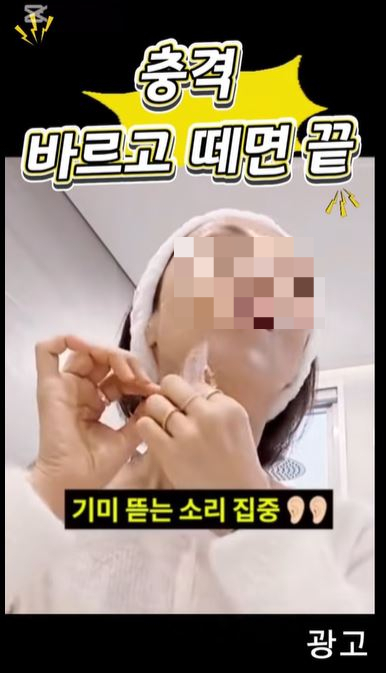
Melasma removal cosmetics advertised by actress Ms. O and famous female comedian Ms. J through videos. When applied and removed after a short time, the screen shows it as if the melasma has fallen off, and the celebrities emphasize that it is a "melasma root extraction pack" and that "the skin tone changes." They also state that "you can visibly see changes in blemishes as you apply it." However, the product is a general cosmetic with minimal actual melasma removal effects. It is clearly false and exaggerated advertising.
False and exaggerated advertising by celebrities and influencers (individuals with high influence) through SNS (social networking services) is widespread, but government management is not being carried out properly. Pointers have emerged that the responsibility of these individuals and SNS platforms needs to be strengthened.
Ministry of Food and Drug Safety does not even manage unfair advertising by celebrities and influencers... almost no cases of punishing celebrities for exaggerated advertising
According to materials received from the Ministry of Food and Drug Safety by Seo Young-seok, a Democratic Party of Korea lawmaker on the National Assembly Health and Welfare Committee, on the 15th, the Ministry of Food and Drug Safety stated that it "does not separately manage or track cases of unfair advertising in which celebrities and influencers participated as advertising models."
There are many assessments that unfair advertising through celebrities and influencers has become more sophisticated recently. In the past, television ads and print ads were central, so government pre-review was relatively strict, making it difficult to broadcast fake advertisements. However, recently, cases of subtly advertising by talking as if sharing personal experiences through short-form content on SNS, YouTube, etc., are noticeable. Yet, this falls into a "blind spot" of government management.
In fact, experts say there are almost no cases of punishment for false or exaggerated advertising in the case of celebrities. Attorney Kim Tae-min, representative of the Food Advertising Hygiene Law Research Institute, pointed out that "we have never punished an advertising model before," adding, "However, it is not as if the celebrity themselves does not know it is exaggerated advertising while delivering exaggerated advertising lines." He further criticized, saying, "Celebrities should also have a minimum sense of responsibility for the products they advertise."
It is pointed out that influencers are rarely caught, and even when enforced, fines are often small. Attorney Kim stated, "Influencers directly sell goods, so they should be punished as sellers for exaggerated advertising, but there are many cases where they only pay fines of 1 million to 20 thousand won." He added, "They also conduct group purchases (gonggu), but they often post the relevant text or video and then delete it, and they instruct people to send direct messages (DMs), making them hard to catch."
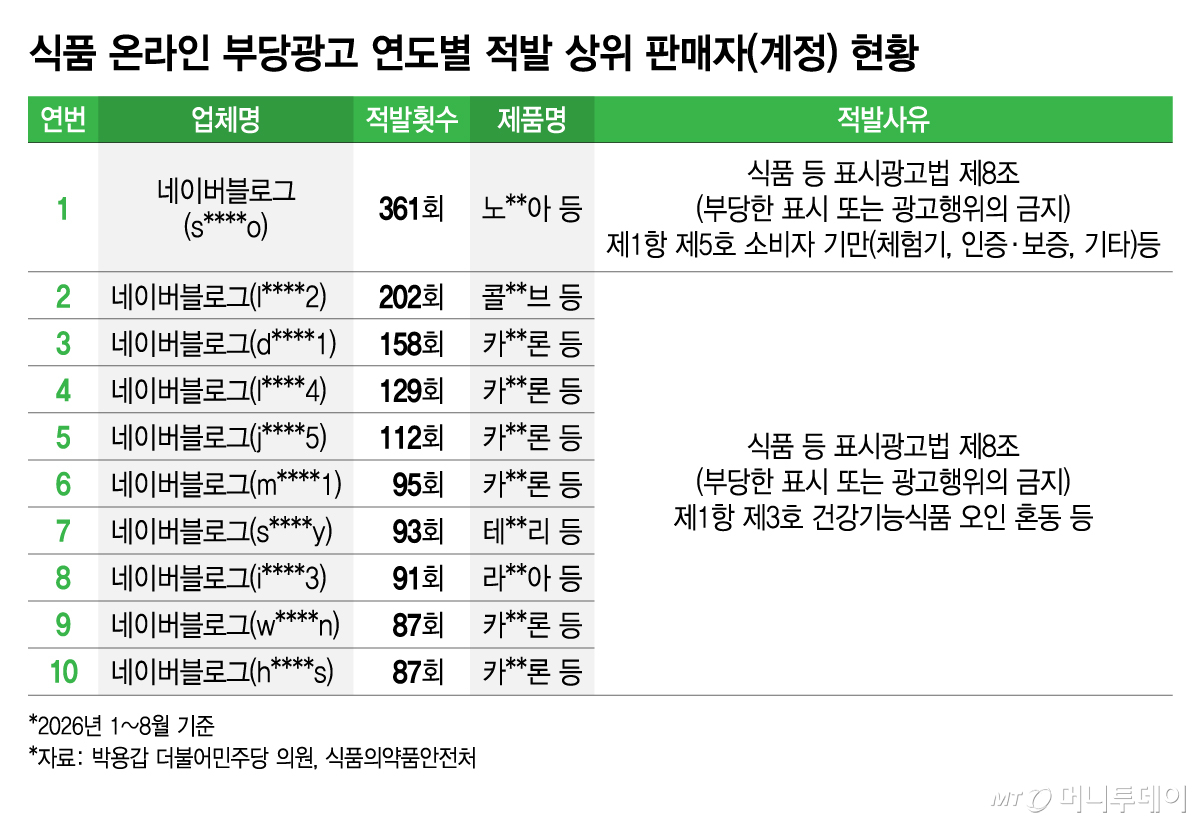
361 instances of 'consumer deception' unfair advertising detected annually on blogs, but no prosecution... measures needed such as strengthening responsibility for celebrities and platforms
As a result, one portal blog this year continued to post consumer-deceptive food advertisements despite hundreds of detections. According to materials received from the Ministry of Food and Drug Safety by Park Yong-gap, a Democratic Party of Korea lawmaker, one Naver blog was detected 361 times this year for violating the Food Labeling and Advertising Act. However, regarding this, the Ministry of Food and Drug Safety stated, "In the case of personal blogs and SNS, the poster's personal information cannot be verified, so no prosecution measures were taken."
Accordingly, suggestions have emerged that responsibility needs to be strengthened for platforms that expose false and exaggerated advertising by celebrities and influencers as is. Jung Ji-young, Secretary-General of the Korea Consumers' League, emphasized, "We must create new regulations that hold influencers who commercially exploit popularity and platforms that create a point of contact between them and consumers responsible in proportion to the risk of unfair advertising."
Lee Eun-hee, a professor in the Department of Consumer Studies at Inha University, stated, "Measures are needed to prevent consumer damage for models or influencers who advertise and explain products," adding, "Even just requiring that when detected for unfair advertising, the reason and type of penalty received be disclosed on the influencer's broadcast screen can raise awareness. We can consider information disclosure such as displaying it in a certain font size at the bottom of the screen for a few seconds."
Attorney Kim pointed out, "It is difficult to enforce against unfair advertising by influencers etc. with only Ministry of Food and Drug Safety personnel, so it is necessary to secure budget to jointly monitor unfair advertising with consumer groups, etc."
Kwon Oh-sang, a professor in the Department of Food Technology at Seoul National University (former Deputy Director of the Ministry of Food and Drug Safety), emphasized the importance of "smart consumption" along with strengthened government management and supervision to eradicate false and exaggerated advertising. Professor Kwon stated, "Consumers should not blindly believe advertisements but verify objective grounds, and actively inquire about or report suspicious advertisements to the Ministry of Food and Drug Safety," adding, "The more smart consumers there are, the less room false and exaggerated advertising will have, and companies will compete with trust rather than exaggeration."

 in THEBIO

