

It was pointed out that regulations designating botulinum toxin production technology and strains as national core technologies to protect them are actually hindering domestic companies’ overseas expansion.
The argument is that because manufacturing techniques already commercialized worldwide have been tied up in regulatory restrictions, unnecessary time and costs are incurred in joint investments, the establishment of local production facilities, and technology transfers in overseas markets.
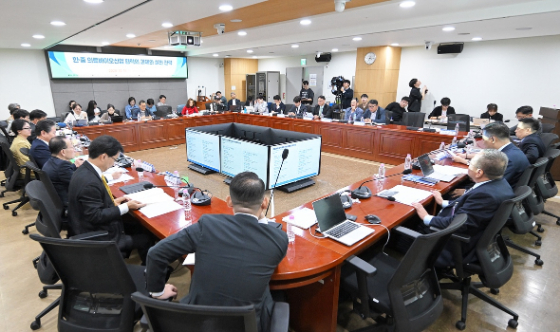
According to the pharmaceutical and biotech industry on the 16th, the designation removal of botulinum toxin from the national core technology list and rationalization of regulations were presented as key tasks at the “Challenges and Practical Strategies for Korea-China Medical-Biotech and Beauty Industry Cooperation” forum held at the National Assembly the previous day.
Attendees emphasized that in order to link Korea’s research and development and quality management capabilities with China’s production base and market, cooperation on mutual licensing between the two countries is necessary, in addition to improvements in domestic technology export regulations.
Currently, in South Korea, botulinum toxin production processes and strains are designated as national core technologies under the Industrial Technology Protection Act. The production process was designated in 2010, and the strain in 2016. Accordingly, when transferring this technology overseas or pursuing joint ventures with foreign companies, approval or notification procedures from the Ministry of Trade, Industry and Energy must be completed according to relevant requirements.
Lee Sang-soo, head of the Korea Citizens’ Education Union, pointed out in his presentation that day that “the designation of botulinum toxin production technology as a national core technology is a representative regulatory case restricting domestic companies’ overseas expansion.”
He said, “Approval procedures for overseas technology exports and the establishment of local production facilities take an average of four to six months, and up to about one year in some cases,” explaining that “economic losses due to canceled overseas contracts and delayed market entry are estimated to reach 90 billion to 100 billion won annually.”
Domestic companies’ demands for regulatory removal were also found to be high. In a survey conducted last September by the K-Bio Expert Advisory Committee of the Korea Citizens’ Education Union targeting 18 domestic botulinum toxin companies, 14 out of 17 responding companies (82.4%) supported the removal of the national core technology designation.
A separate survey conducted by the Korea Pharmaceutical and Biotech Association in January 2024 also showed that 70.5% of responding companies supported removal.
Lee said, “The competitiveness of the botulinum toxin industry lies not in the strain or manufacturing technology itself, but in GMP (Good Manufacturing Practice) capabilities to maintain high quality, licensing response, and global branding and commercialization capabilities.”
The argument is that while safety management of strains should be maintained, export regulations applied to already commercialized production technologies should be rationalized.
Choi Kyu-jin, a lawyer at Daeryung Aju Law Firm, also questioned the effectiveness of the national core technology designation. Attorney Choi said, “The botulinum toxin manufacturing process is a culture and purification technology known since the 1960s, and there is not a large enough technological gap between nations to warrant designation as a national core technology.”
It was explained that China has also been producing botulinum toxin for a long time through the Lanzhou Research Institute, and recently has been developing toxins using gene recombination methods.
Choi explained that national core technology regulations can act as a burden not only in overseas joint investments or production base construction, but also in the export process of finished products.
He said, “Even for simple finished product exports, there are cases where technical documents related to the production process must be submitted during the importing country’s item licensing process, which can fall under the Ministry of Trade, Industry and Energy’s technology export control.” It was explained that the level of security management required for national core technology protection is strict, resulting in a significant cost burden for relatively small toxin manufacturing companies.
Choi emphasized that it should be re-evaluated whether it is appropriate to continue managing already commoditized botulinum toxin manufacturing technology as a national core technology in a situation where advanced biotechnologies such as bispecific antibodies, antibody-drug conjugates (ADCs), messenger ribonucleic acid (mRNA), and gene editing are rapidly developing. He stated his position that designation removal is necessary, arguing that the regulatory costs borne by companies and the loss of overseas business opportunities outweigh the protective effects gained from the national core technology designation.
Along with the removal of the national core technology designation, strengthening Korea-China licensing cooperation was also proposed. Lee said, “The Ministry of Trade, Industry and Energy should promptly review the removal of the national core technology designation for botulinum toxin production technology and strains,” proposing that “before removal, procedures applied to overseas technology exports and local factory establishment need to be simplified through post-notification systems or rapid review methods.”
It was also proposed to establish a system for phased mutual recognition of licensing data and rapid review cooperation between the Korea Ministry of Food and Drug Safety and China’s National Medical Products Administration (NMPA), and to promote cooperation projects linking the biotech industry hubs in Osong, South Korea, and Lanzhou, China.
The policy recommendations presented at the forum that day included demands not only for shortening review periods but also for removing the national core technology designation itself. The intent is that biological safety management of botulinum strains should be maintained through relevant laws and security systems, while industrial technology protection regulations regarding commercialized manufacturing technologies should be separately re-evaluated.

 in THEBIO
