

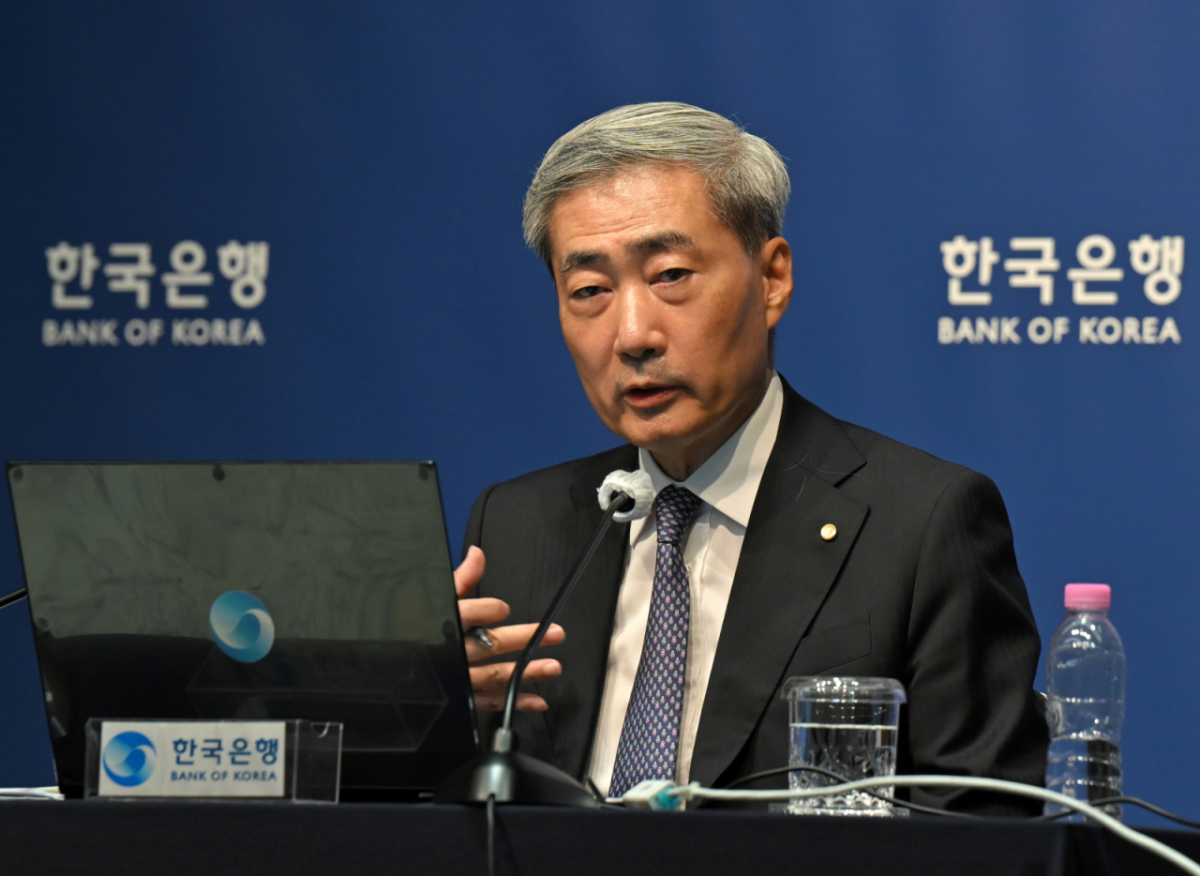
Governor Shin explained that the background for the second consecutive increase in the base rate was akin to the Korean proverb "using a hoe to stop what should have been stopped with a rake," stating, "(We used) a hoe instead of a rake" in policy implementation. The intention was to take preemptive action before inflation became entrenched.
Governor Shin said at the press conference held immediately after the Bank of Korea Monetary Policy Board (hereinafter referred to as the Monetary Policy Board) raised the base rate from 2.75% to 3.00%, an increase of 0.25 percentage points (p), that "this consecutive hike was an unconventional measure, sending a strong signal to the market."
On this day, the Bank of Korea Monetary Policy Board raised the base rate for the second time in succession, following last month's move. The Bank of Korea's consecutive interest rate hikes are highly unusual, occurring for the first time in three years and seven months since the seven consecutive rate increases from April 2022 to January 2023.
Governor Shin emphasized, "Preemptive action is truly important," explaining that "preemptive measures help control expected inflation and reduce the ultimate economic cost by addressing issues early before price increases spread further."
He further noted that preemptive interest rate responses align not only with inflation goals but also with financial stability objectives such as exchange rates, household debt, and housing prices in the Seoul metropolitan area. He added, "Such measures are expected to help ease the recent upward trend in housing prices in the Seoul metropolitan area and the rise in household debt."
Regarding future monetary policy direction, he stated, "Over a six-month horizon, 3.25% emerged as the median point on the dot plot," and explained, "There are four Monetary Policy Board meetings this year; since we have already raised rates once more than before, we can expect a gradual pace of increases."
Explaining the rationale behind expecting gradual hikes, he said, "Since we have raised interest rates twice in succession, we need to assess their effects."
In response to a question pointing out the 'misalignment' between monetary and fiscal policies, he replied, "If fiscal spending is directed toward investments that can further boost future growth, it may raise the potential growth rate without creating misalignment."
Meanwhile, Governor Shin commented on the won/dollar exchange rate, which recently fell to the high 1300s range, stating, "Historically, it remains at a somewhat elevated level," and added, "Considering the rise in import prices, a stronger won would be more desirable for controlling inflation."
He continued, "By effectively utilizing monetary policy and having the Bank of Korea anchor the foreign exchange market, we believe it is fully achievable," emphasizing, "We will continue to pay close attention to exchange rates going forward."

 in ECONOMY
