

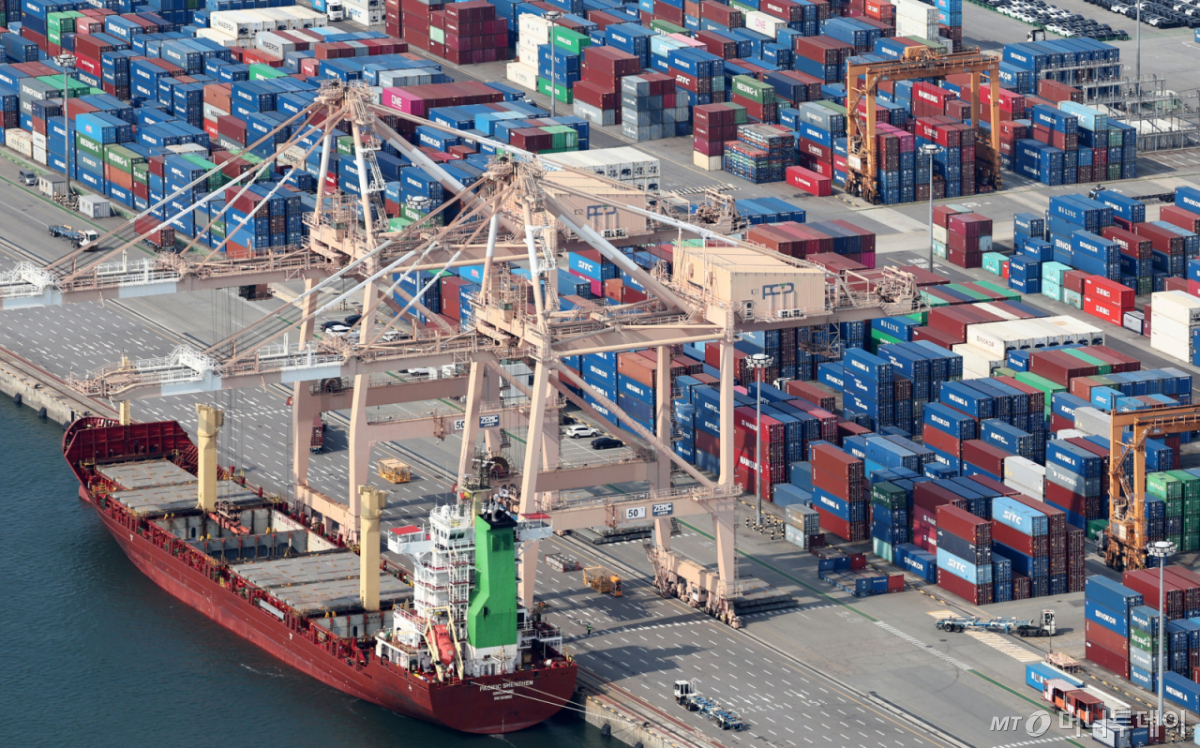
South Korea’s exports surpassed the monthly mark of $120 billion for the first time in history. As semiconductor exports broke through $60 billion for the first time as a single product category, September exports recorded an all-time high. Additionally, cumulative exports from January to September this year exceeded $800 billion, signaling a green light for achieving annual exports of 1 trillion won.
According to the “September 2026 Export and Import Trends” released by the Ministry of Trade, Industry and Energy on the 1st, last month’s exports recorded $120.94 billion, an increase of 83.5% year-on-year. This is the first time monthly exports have exceeded $120 billion. It is more than $18.9 billion higher than the previous record of $102 billion set in June this year.
Cumulative exports from January to September this year reached $814.5 billion, up 56.8% from the same period last year. This surpassed the all-time annual export record of $709.3 billion set last year within just nine months. Daily average exports also exceeded $5 billion for the first time in history, reaching $5.63 billion, a 105% increase from the previous year.
Semiconductors led the export growth. Semiconductor exports reached $60.3 billion, surging by 262.8%, marking the first time they have exceeded $60 billion. This was driven by increased memory demand, expanded export volumes, and a continued rise in fixed prices.
Growth continued in major product categories other than semiconductors as well. Computer exports surged by 435.3% to $7 billion, influenced by the spread of agentic AI (artificial intelligence) and increasing demand for AI infrastructure. Wireless communication device exports increased by 23.4% to $2.14 billion.
Petroleum product exports rose by 72.0% to $7.22 billion, recording a high growth rate due to rising international oil prices. Ship exports increased by 29.9% to $3.76 billion, driven by an increase in deliveries of LNG carriers and very large gas carriers (VLGCs). Secondary battery exports also grew by 14.0% to 7.2 billion won, with both export volumes and unit prices improving due to the expansion of the ESS market and rising mineral prices. Cosmetic exports increased by 31.4% to $1.51 billion, setting a new all-time high.
In contrast, automobile exports decreased by 5.5% to $6.05 billion. This was influenced by base effects due to the shift in timing of the Chuseok (Mid-Autumn Festival) holiday, while daily average exports increased by 5.5%.
By region, exports to China, the United States, and ASEAN grew significantly. Exports to China rose by 122.7% to $26.01 billion, exports to the U.S. increased by 137.0% to $24.33 billion, and exports to ASEAN grew by 92.6% to $21.29 billion. In particular, exports to ASEAN surpassed $20 billion for the first time in history.
Imports recorded a 26.0% increase to $71.09 billion. Consequently, the September trade balance posted a surplus of $49.85 billion, exceeding $40 billion for the first time in history. The cumulative trade balance from January to September recorded a surplus of $252.5 billion.
The goal of 1 trillion won in annual exports is now within reach. With cumulative exports reaching $814.5 billion through September, only $185.5 billion remains to hit the 1 trillion won mark. Achieving 1 trillion won is possible if monthly average exports of approximately $61.8 billion are maintained in the fourth quarter.
Minister of Trade, Industry and Energy Kim Jung-gwan stated, “September exports exceeded $120 billion for the first time in history, and cumulative exports from January to September broke through $800 billion, surpassing last year’s all-time high of $709.3 billion ahead of schedule.” He added, “This is a valuable achievement that once again demonstrates the resilience of our industries and companies, thanks to the sweat and efforts of our business people who have fiercely competed in global markets.”
Kim (Minister) noted, “While the achievement of 1 trillion won in annual exports is anticipated, strengthening global protectionism and tensions in the Middle East region remain significant variables for our exports.” He stated, “The government will keep high-level channels with trade authorities of major countries constantly active and closely monitor export regulation trends. We will proactively respond to ensure that unforeseen external variables do not negatively impact our exports, continuing the upward momentum of exports into the remaining fourth quarter.”

 in ECONOMY
