

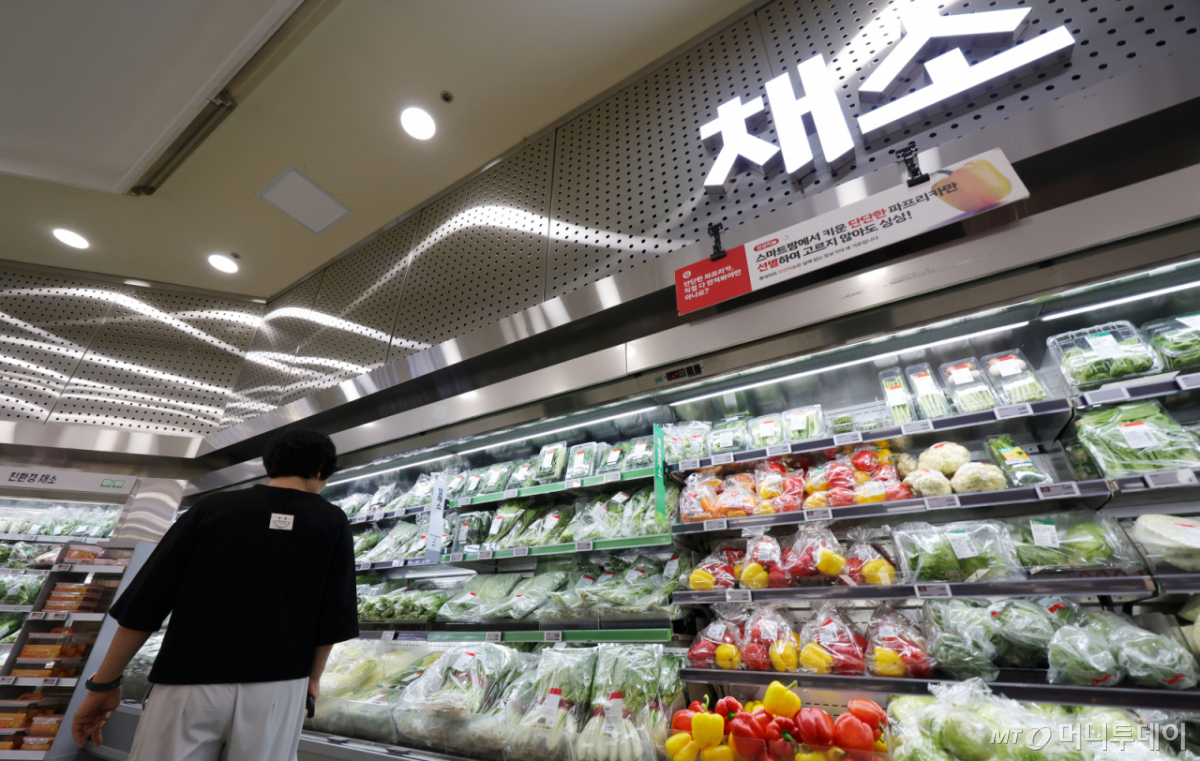
The consumer price index growth rate, which had surged to 3.1% in August last month, has returned to the 2nd% range. This is due to the end of the base effect from telecommunications tariff discounts.
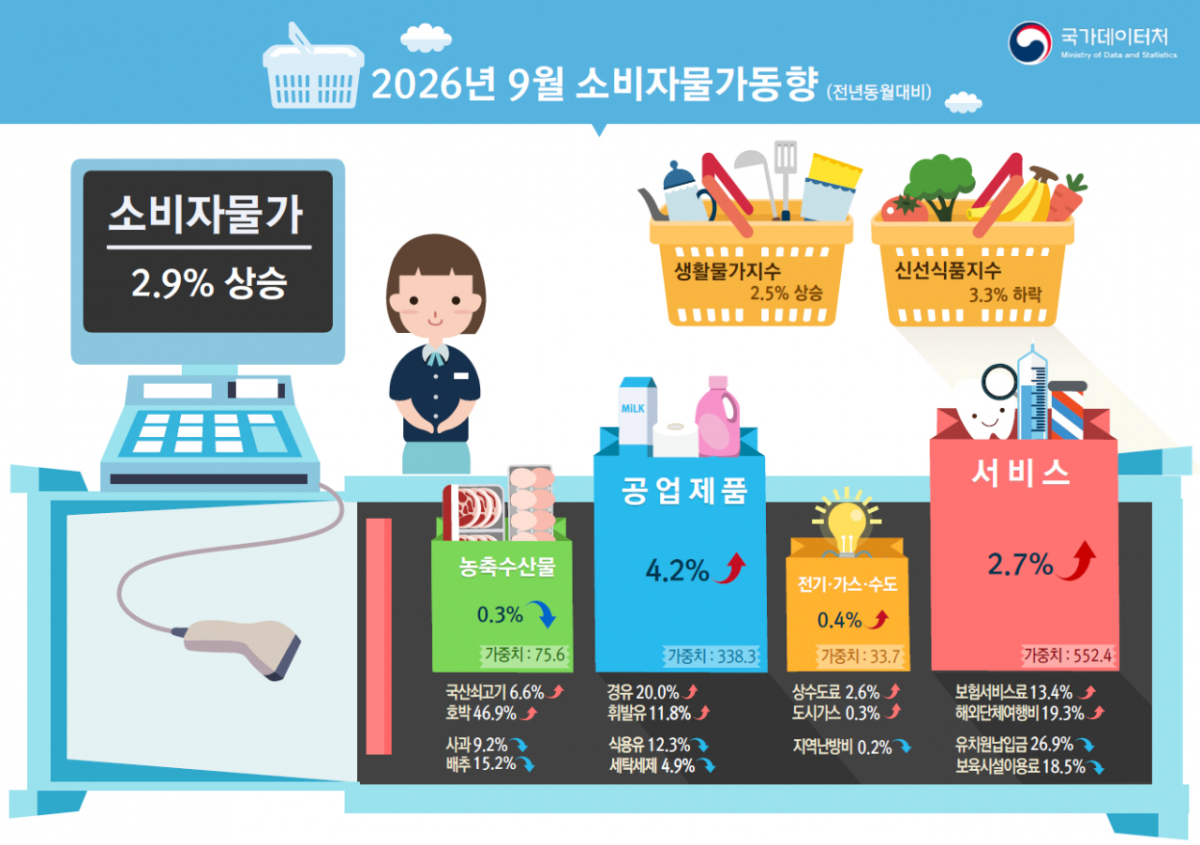
According to the "September 2026 Consumer Price Trends" released by the National Data Agency on the 2nd, the consumer price index for last month rose 2.9% year-on-year (same basis hereinafter) to 120.43 (2020=100). The consumer price growth rate fell back to the 2nd% range after temporarily recording a 3% level in August due to the base effect of SK Telecom tariff discounts.
By item nature, petroleum prices rose by 14.8%. This was influenced by increases in diesel (20.0%) and gasoline (11.8%) due to the aftermath of the Middle East war. The rate of increase narrowed compared to the previous month (14.2%). Industrial product prices were found to have risen by 4.2% due to the increase in petroleum prices.
Agricultural, livestock, and aquatic product prices fell by 0.3% compared to a year ago. The rate of decline decreased significantly compared to the previous month (-2.6%). Agricultural products fell by 4.0%, while livestock and aquatic product prices rose by 3.7% and 4.5%, respectively.
In detail, domestic beef (6.6%), pumpkin (46.9%), pork (1.9%), mackerel (8.6%), and rice (2.3%) increased, while apples (-9.2%), napa cabbage (-15.2%), peaches (-14.7%), and spinach (-12.0%) decreased.
The Data Agency analyzed that although there was an impact from the discount support of the government's Chuseok livelihood stabilization measures, the rate of increase expanded for livestock and aquatic products due to reduced supply or increased demand during the Chuseok holiday season.
Service prices rose by 2.7%. In detail, housing costs rose by 1.3%, public services by 1.5%, and personal services by 3.5%. In particular, international airfares (22.5%) rose significantly in public services, and overseas group travel expenses (19.3%) rose significantly in personal services.
The core inflation indicator, the index excluding agricultural products and petroleum, which shows the underlying trend of prices, rose by 2.7%. The index excluding food and energy, based on OECD standards, rose by 2.8%.
The cost-of-living index rose by 2.5%. The fresh food index fell by 3.3%. Fresh fish (5.0%) rose, while fresh vegetables (-0.1%) and fresh fruits (-11.1%) fell, respectively.

 in ECONOMY

