

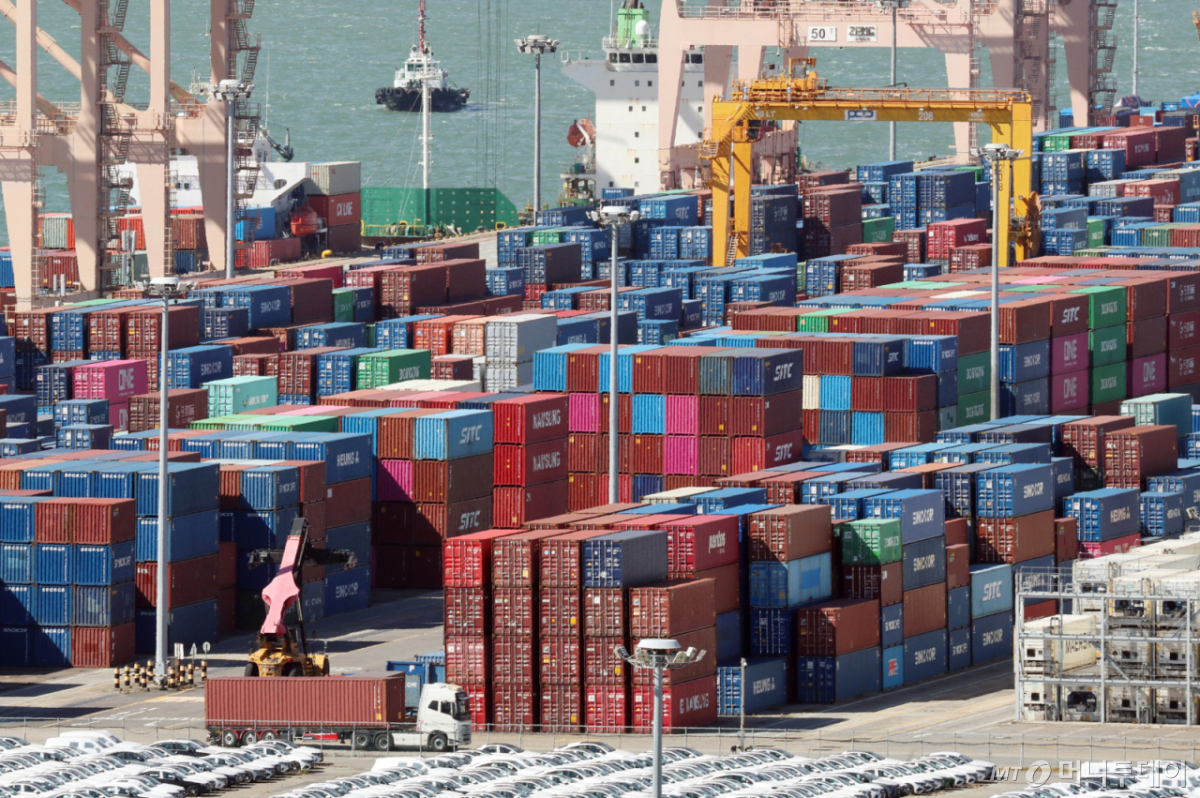
The August current account balance recorded the second-largest surplus in history, driven by strong exports of IT items such as semiconductors. Goods exports exceeded $100 billion for the third consecutive month.
According to the "Provisional Balance of Payments for August 2026" released by the Bank of Korea on the 8th, the current account balance in August was recorded at a surplus of $46.11 billion. This marks the 40th consecutive month of surplus. The surplus widened by $4.04 billion compared to the previous month.
It is the second-largest amount following the record high of June last month ($49.73 billion). It has exceeded $40 billion for three consecutive months. The cumulative current account balance from January to August this year recorded a surplus of $279.2 billion. This is approximately four times the level of the same period last year ($69.67 billion).
The goods balance recorded a surplus of $46.81 billion, marking the second-largest amount in history following June last month ($47.89 billion). Goods exports were $104.8 billion, an increase of 82.1% year-on-year. They exceeded $100 billion for three consecutive months. Goods imports were $57.99 billion, up 23.8%.
Customs-based exports were $98.28 billion, a 68.7% increase from the same month last year. IT item exports increased by 162.6%, leading the growth trend. By item, △computer peripherals and SSDs (+366.8%) △semiconductors (+206.1%) △wireless communication devices (+3.9%), among others, showed increases.
Non-IT item exports also increased by 8.1%. △petroleum products (+64.9%) △chemicals (+14.1%) △steel products (+13.4%) △machinery and precision equipment (+9.2%), among others, increased, while passenger car exports decreased by 30.1%.
Customs-based imports were $63.5 billion, a 22.4% increase from the same month last year. Raw material imports increased by 13.1%, and capital goods by 42.9%. Consumer goods, which had decreased in the previous month, also turned to growth with a 4.3% increase. The increase in capital goods imports was notable, particularly for semiconductor manufacturing equipment (+96.5%) and semiconductors (+70.6%).
The services balance recorded a deficit of $1.68 billion, narrowing the deficit compared to the previous month (-$1.97 billion). The travel balance saw its deficit expand from $340 million to $770 million due to increased travel payments associated with the peak overseas travel season.
Conversely, the transport balance saw its surplus widen from $60 million to $520 million, influenced by recent rises in export freight rates. The intellectual property use fees balance saw its deficit shrink from $540 million to $390 million as industrial property usage fee income increased more than payments.
The primary income balance recorded a surplus of $1.92 billion, narrowing the surplus compared to the previous month ($4.35 billion). The dividend income balance decreased from $3.83 billion to $1.18 billion due to seasonal factors such as quarterly dividend payments on securities investments being concentrated in May, August, and November.
Net assets in the financial account increased by $40.23 billion. In direct investment, domestic residents' overseas investment increased by $6.22 billion, while foreign investment in Korea decreased by $1.61 billion.
In securities investment, domestic residents' overseas investment increased by $16.6 billion, recording the second-largest increase in history. Stock investment increased by $10.15 billion, and debt securities investment increased by $6.44 billion as the investment appeal of overseas bonds rose, recording the largest increase in history.
Foreign securities investment in Korea decreased by $4.85 billion. Stock investment decreased by $470 million as the temporary increase effect from SK Hynix's issuance of American Depositary Receipts (ADRs) in the previous month disappeared. Bond investment also decreased by $4.38 billion as carry trade incentives deteriorated.

 in ECONOMY
