

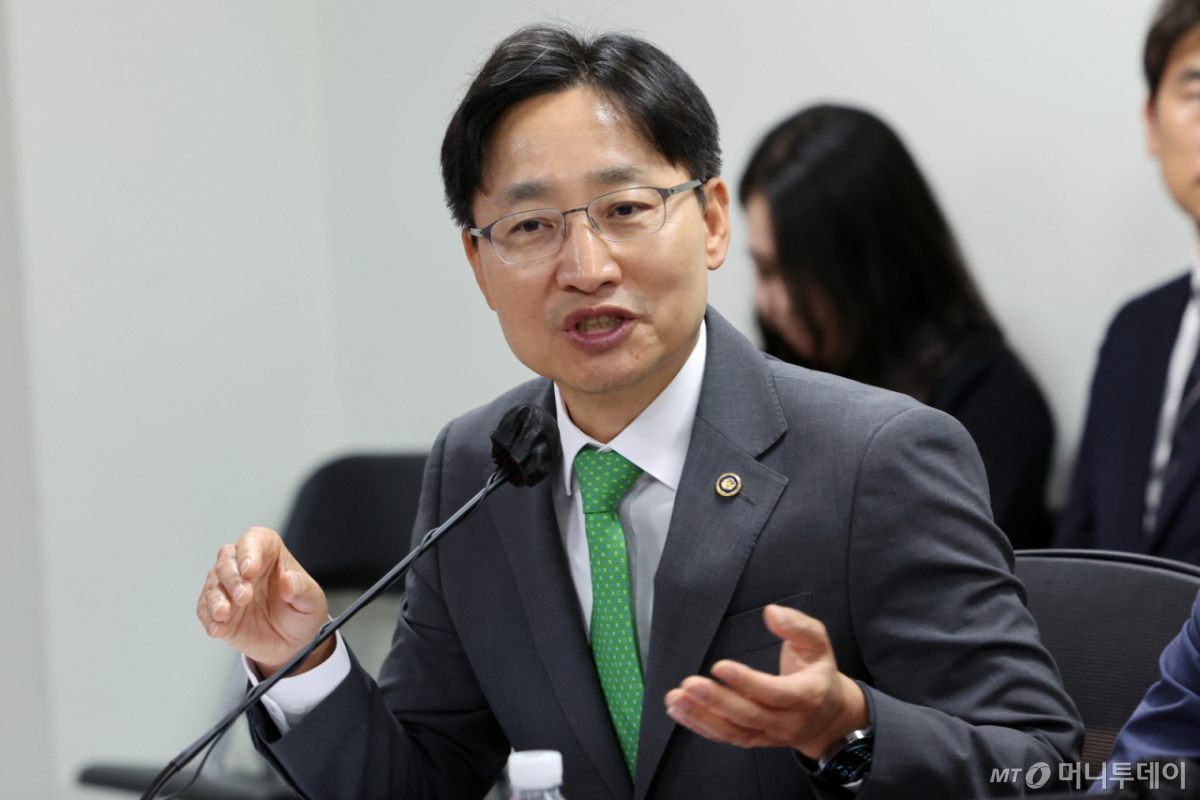
Lim Gwang-hyun, Commissioner of the National Tax Service, stated regarding the decision by Kwon Hyuk, Chairman of Sudo Group, known as the “Shipowner,” to pay 393.8 billion won in unpaid taxes, that “it seems the attempt to seize his overseas assets became a burden for him.”
Lim (Commissioner) appeared on MBC’s “Focus” on the morning of the 8th and, when asked, “How did you pressure and persuade Kwon (Chairman)?” said, “We focused on meeting with the National Tax Service Commissioner in Panama and Liberia to grasp the status of ship ownership,” revealing this.
Kwon (Chairman) is a figure who has been called the “Shipowner” for operating shipping companies in Japan, Hong Kong, and South Korea since the 1990s. In 2011, a tax audit by the National Tax Service revealed suspicions of offshore tax evasion through nominee shares and overseas paper companies, resulting in the imposition of large amounts of taxes and surcharges. However, he failed to pay for 15 years, leading to his inclusion on the list of high-value, habitual tax delinquents.
The National Tax Service announced on the 7th that Kwon (Chairman) had submitted a plan to pay off all of his personal unpaid taxes amounting to 393.8 billion won. He made an initial cash payment of 100 billion won in July. Additionally, he offered five overseas ships as collateral.
Regarding the ships provided as collateral, he stated, “The appraised value of the five ships currently far exceeds 300 billion won, and they are clean collateral items with no prior-ranking claims,” adding, “In such cases, if unpaid taxes are not paid, we can dispose of them to cover the amount. Seizing overseas ships is a first-time case, so we have filed an application for proactive administration with the Board of Audit and Inspection.”
Lim (Commissioner) noted, “The public seems curious about why interest or late fees were not collected despite 15 years of non-payment,” explaining, “Naturally, an amount equivalent to half of this sum (393.8 billion won) is included in the total as surcharges, additional charges, and so-called late fees.”
Lim (Commissioner) said, “Awareness regarding tax evasion has improved significantly compared to the past,” adding, “In the past, our country’s underground economy was assessed to be quite large, but now, due to advances in information technology (IT), payments and such areas are almost transparently exposed, so we assess that the scale of the underground economy has shrunk considerably.”
Regarding tax evasion utilizing corporate names, such as “private use of supercars” and “imperial residences,” he emphasized, “We will conduct secondary and tertiary investigations until incorrect practices are corrected.”

 in ECONOMY
