

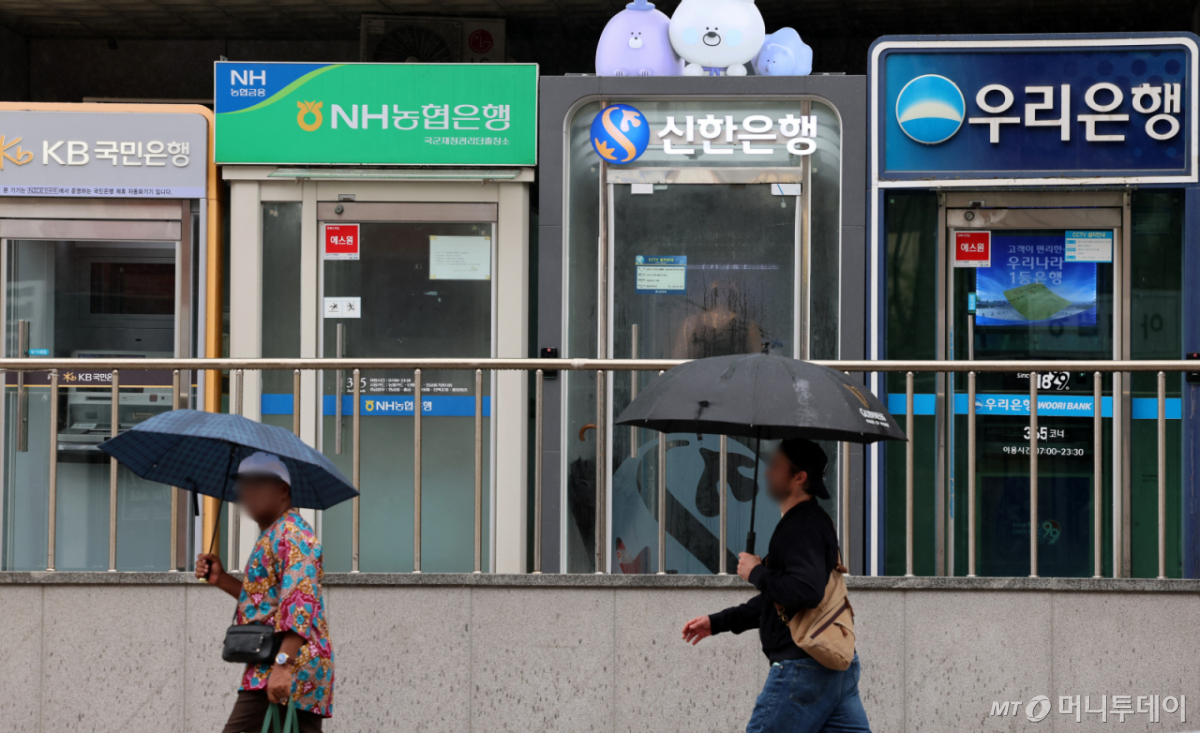
The Financial Supervisory Service confirmed that it imposed a penalty on NH NongHyup Bank for exceeding its target by the end of June while allocating additional household loan limits to each bank under the the 13th measures. Although the target was presented as an annual management standard, applying a disadvantage based on a semi-annual basis resulted in NH NongHyup Bank receiving a smaller allocation of loan volume for the second half of the year.
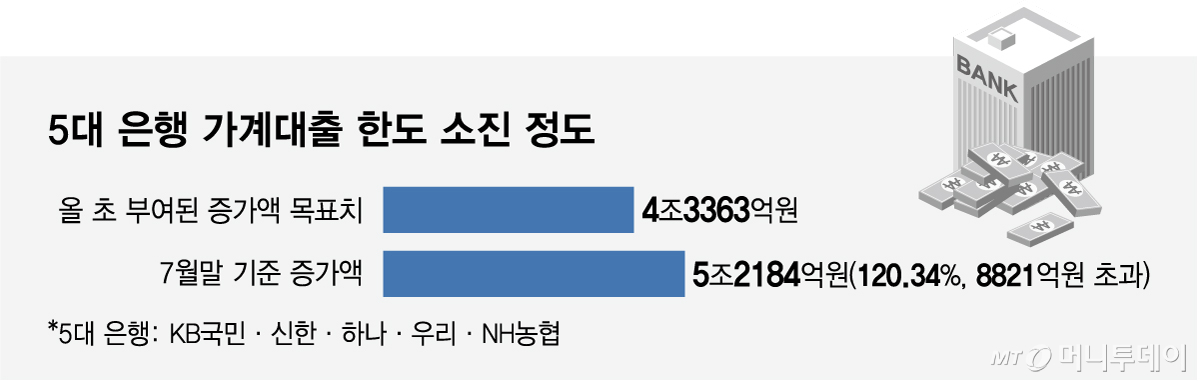
According to the financial sector on the 27th, the Financial Supervisory Service individually notified banks of additional limits under the the 13th measures on the 25th. This adjustment was made to revise the annual household loan total limits per bank that were confirmed at the beginning of the year, following the the 13th real estate measures which raised the household debt growth rate target for this year from 1.5% to around 3%.
In this process, the Financial Supervisory Service applied a penalty only to NH NongHyup Bank among the five major banks (KB Kookmin, Shinhan, Hana, Woori, and NH NongHyup). The reason was that its household loan balance exceeded the target by approximately 500 billion won as of the end of June.
However, since the target set by authorities at the beginning of the year was based on the end-of-year standard, questions are being raised about whether it is appropriate to impose a penalty for exceeding the target at a specific point in time. In fact, NH NongHyup Bank significantly reduced its household loans during July, bringing the increase as of the end of July below the target level.
In contrast, Bank A and Bank B, which significantly exceeded their targets as of the end of July and the current date, were not subject to penalties. This is because they had not exceeded their targets as of the end of June.
Since the target for household loan increases is typically based on the end of December, banks plan their management on an annual basis. If household loans show an upward trend mid-year, they take voluntary measures such as temporarily restricting recruitment channels to align with the net increase target by year-end. Since the amount automatically repaid each month across banks reaches hundreds of billions of won, it is possible to meet the target through loan restriction measures; however, in this case, a penalty was applied based on an unprecedentedly announced end-of-June standard without prior notice.
The financial authorities initially announced at the beginning of April that they would manage household debt growth within 1.5% for this year, stating, "We plan to manage concerns about year-end loan cliffs that have been raised annually by setting monthly and quarterly management targets." However, this was meant only to indicate more detailed and tighter management through subdivided management units, not to change the penalty assessment criteria to quarterly, semi-annual, or monthly intervals.
The controversy over the financial authorities' total volume regulation standards is not new. Last year, when the the 27th real estate measures were announced, the target for household loan increases in the second half of the year by banks was reduced to about 50% of the previous level, causing banks to suddenly reduce their total volumes and accelerating the occurrence of loan cliffs.
Meanwhile, it is reported that as a follow-up measure to the the 13th measures, authorities have additionally allocated approximately 70% of the household loan total limits previously notified to major commercial banks at the beginning of the year. Group loans related to housing supply, such as moving expenses, interim payments, and final balance loans, are excluded from the total volume.

 in FINANCE

