

[For more diverse corporate information on the startups mentioned in this article, please visit Unicorn Factory's big data platform 'Data Lab'.]
"Business models, items, and markets can all change. However, the density of people who believe this venture will succeed does not easily shift."
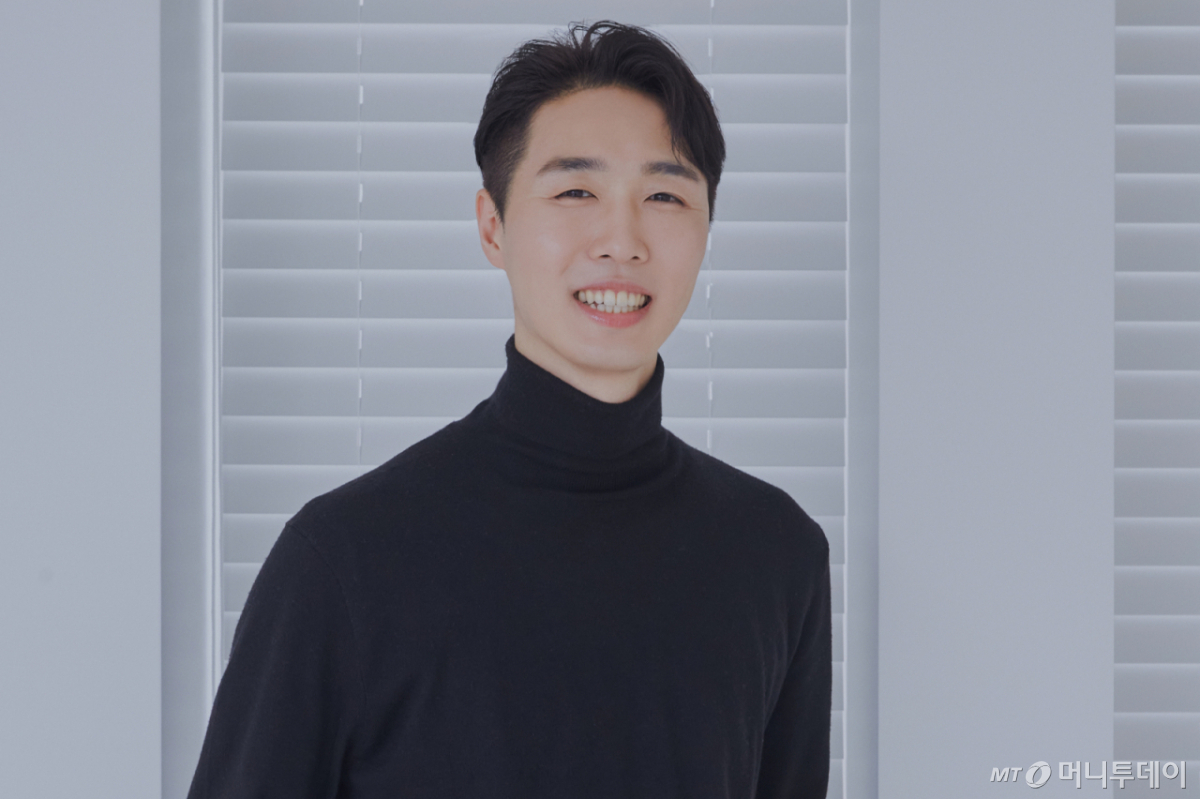
Park Eun-woo, Managing Director and Chief Investment Officer (CIO) at Mashup Ventures, identified 'belief' as the most critical factor in early-stage startup investments. He explained that it is not merely about whether talented individuals have gathered, but rather how strongly the founding team recognizes each other's capabilities and shares a unified vision.
Park began his career as an engineer and is an investor who has experienced both venture capital (VC) and deep-tech startups. He entered the investment industry in 2014, worked at a VC firm for about three years, then moved to the deep-tech startup Near's Lab, where he served as Chief Strategy Officer (CSO) for approximately six years. In 2023, he joined Mashup Ventures. Last July, he was appointed Managing Director and CIO, overseeing the investment firm's overall investment direction and framework.
Regarding his role as CIO, Park stated, "This is a position where individual thoughts must now be transformed into company-level direction and conviction." He added, "In this rapidly changing AI era, it is crucial to establish a central point that guides each partner's judgment." At the same time, he explained that another key responsibility of the CIO is to communicate investment strategies externally and quickly learn from mistakes in the market to redefine them.
Park's perspective on founding teams has shifted significantly after experiencing both VC and startup environments. Before joining a startup, he believed that "the more smart people gather, the higher the probability of success." However, after working at a startup for six years, he realized that what matters more is "how many people believe this venture will succeed."
The 'density of belief' he refers to differs from mere closeness or loyalty. It means recognizing each other's capabilities for the company's vision and roles, and being willing to step down from one's own title or authority if necessary.
In actual invested companies, this trust was also evident in the equity structure among co-founders. When asked why they allocated a relatively larger share of equity to the CEO, one co-founder replied, "I am good at solving problems, but defining problems and leading people is better done by the CEO." The CEO, in turn, explained, "I appointed him as CTO because he is the smartest person I have ever met." Park described this as "a case demonstrating that direction was already established during the team-building process."
To verify this 'density of belief,' Mashup Ventures aims to engage in long-term interactions lasting six months or more before a startup's founding. When investment decisions must be made within a short timeframe, they closely examine the relationships among co-founders and the cap table (equity structure).
Another capability Park values highly in founders is 'metacognition' and 'long-term thinking.' He believes that founders who can objectively assess their own abilities and limitations, and are willing to step aside for someone with more suitable capabilities when necessary, are more likely to drive the company's long-term growth.
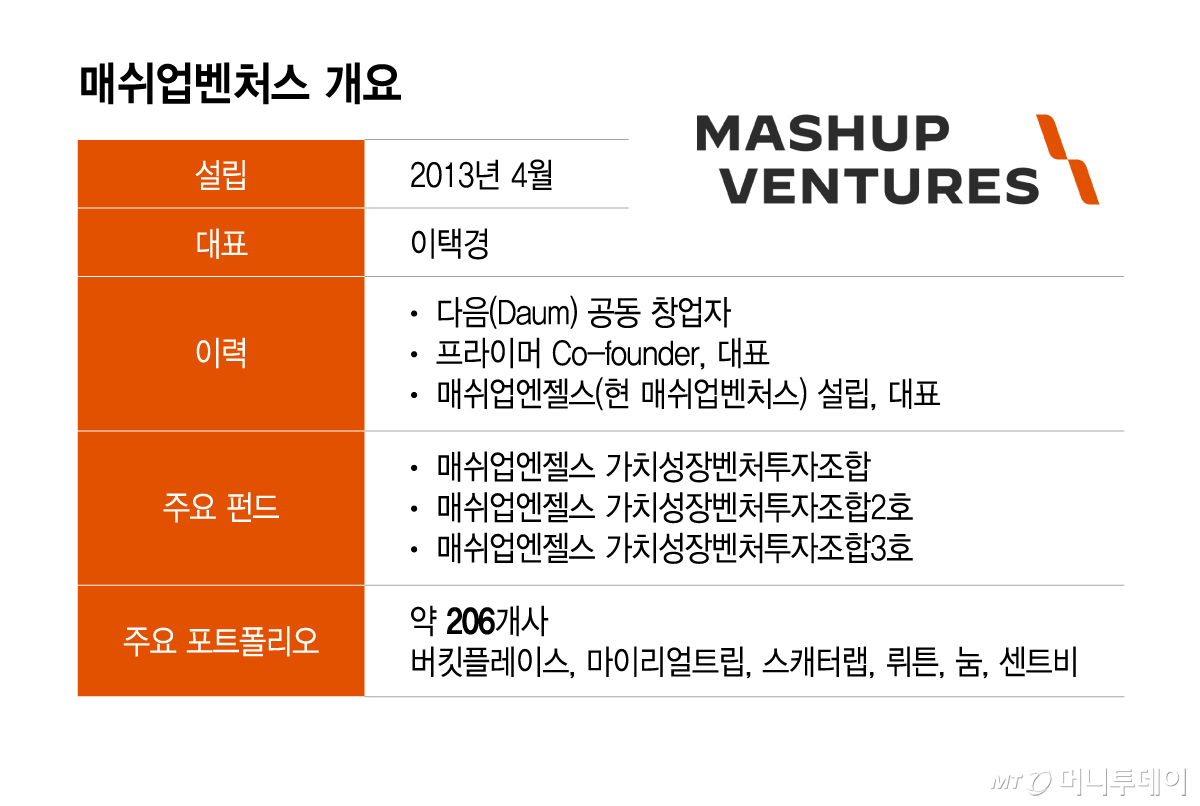
Mashup Ventures seeks to identify companies at the forefront of the latest trends while also actively seeking opportunities in areas where market attention is relatively low. Park stated, "The technology stack of physical AI, which has recently gained attention, is not significantly different from that of 10 years ago." He added, "Rather than chasing popular trends that everyone focuses on, real opportunities may exist in places no one is watching."
While early e-commerce companies that were once highly regarded during the venture investment boom are now considered outdated fields, Park explained that new unicorns could emerge through the combination of e-commerce and emerging technologies like AI. However, Mashup Ventures excludes sectors such as biotechnology and healthcare from its investment review targets due to insufficient internal expertise and low industry understanding in those areas.
Park also offered practical advice to startup founders. He advised them not to focus solely on the reputation of an investment firm but to identify investors appropriate for their company's current growth stage and prepare fundraising accordingly. Park noted, "Investors in later stages, such as Series C or pre-IPO rounds, prioritize short-term exit possibilities, so they examine whether the company's business narrative is genuinely being proven." Conversely, he added, "Early-stage investors place greater importance on fundamentals that can sustain for seven years or more, making it crucial to demonstrate a long-term vision and the execution capability to support it."
He also cautioned against 'simple localization' strategies when expanding globally. Instead of forcing domestically developed products into local environments, he argued that starting technology development and commercialization directly in target countries from the outset increases success rates. However, Park clarified, "For deep-tech companies possessing top-three global technology or targeting narrow markets, overseas expansion is essential. Yet, not every company must aim for global markets unconditionally." He urged strategic choices tailored to each industry's characteristics.
[MoneyToday startup media platform Unicorn Factory]

 in FUTURE

