

[For more diverse corporate information on startups mentioned in this article, please visit the Unicorn Factory Big Data Platform 'Data Lab'.]
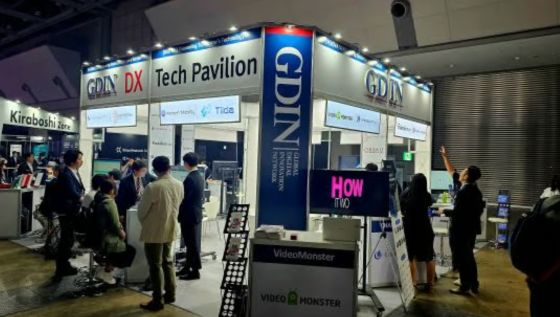
The Ministry of Science and ICT, as the competent authority, has come into direct conflict with the Global Digital Innovation Network (GDIN), a private foundation that has supported the global expansion of domestic startups, over the reappointment of its president. The core issue is how far the government can intervene in personnel decisions of a private foundation established without government funding.
According to relevant industry sources on the 31st, the GDIN Foundation Kim Jong-gap (CEO) recently filed an application with the Suwon District Court for an injunction to suspend the validity of a board resolution. This follows the rejection of a reappointment proposal at a board meeting held in June ahead of the expiration of Kim (CEO)'s term.
GDIN traces its origins to the B2G Global Center, which was established as an institutional investor under the Korea Information and Communication Technology Association (KAIT) during the Ministry of Science, ICT and Future Planning era in 2013. Kim (CEO) joined the B2G Global Center in 2015, led its transition to a private foundation, and became the first president when GDIN was established as an independent non-profit foundation in August 2023.
Since its launch until December last year, GDIN has supported 3,335 companies, achieving results including 23,184 consulting cases, 1,407 overseas patent applications, establishment of 159 overseas subsidiaries, and investment linkage totaling 5.2582 trillion won. Among the supported companies, 13 are listed on KOSDAQ, and three are unicorn startups.
Based on these achievements, GDIN determined that to further expand the domestic startup ecosystem and continue sustained support, it would be more effective to strengthen private sector expertise and autonomy rather than relying on government projects. Accordingly, in 2023, it transitioned into a privately independent foundation and established a new operational system.
Since building self-reliance as a privately independent foundation was the main purpose of the transition, GDIN did not receive any government funding at the time of its establishment. The B2G Global Center's 2021 mid-to-long-term development plan also included content calling for reducing dependence on government fund projects and shifting to a sustainable public-private cooperation model.
However, even after becoming an independent private foundation, GDIN has maintained the position of the Minister of Information and Communication Industry Policy at the Ministry of Science and ICT as an ex officio board member in its articles of incorporation and has continued to carry out government projects such as entrusted projects by the National Information Society Agency (NIPA). This structure, where both government and self-operated projects are conducted simultaneously, became the background for the current conflict.
The controversy erupted during a board meeting last June. According to Kim (CEO), five people attended the meeting: Kim (CEO) and board members from the Ministry of Science and ICT, Min Gan-gi-eop (CEO), and legal professionals. A proposal for Kim (CEO)'s reappointment was presented, but a board member from the Ministry of Science and ICT opposed the reappointment and demanded Kim (CEO)'s resignation. While another director's re-election proposal passed while Kim (CEO) was absent, the proposal for Kim (CEO)'s reappointment was rejected, according to Kim (CEO).
It is reported that the meeting minutes included remarks by a board member from the Ministry of Science and ICT stating, "We oppose reappointment as part of the government's new reform efforts," and some private directors saying, "Since the competent authority opposes it, supporting reappointment will be difficult." Following the board meeting, the Ministry of Science and ICT sent an official letter to the foundation urging the prompt establishment of a candidate nomination committee.
Kim (CEO) views this as government interference in personnel matters. Kim (CEO) stated, "The current president was excluded under the leadership of government-appointed directors without following the dismissal reasons and procedures specified in the articles of incorporation," and added, "We also suspect that the regulations for the candidate nomination committee proposed by the government, with a public notice period of only 10 days, may be a mere formality to install a bureaucrat."
Furthermore, __NAME_1__ added, "Government projects require full repayment of remaining balances after completion, so there is no profit from policy projects," and noted that net profits have been steadily increased through self-operated projects.
The Ministry of Science and ICT denied the claim of unilateral government interference in personnel matters. It argued that since government budgets are injected annually, it has a responsibility to manage and supervise the foundation to ensure proper operation and achievement of results.
It also maintained that the rejection of reappointment was not unilaterally decided by the government. The explanation stated that Kim (CEO) was given sufficient opportunity to express opinions before board members other than Kim (CEO) voted to make the decision. Regarding the successor, it was announced that a private expert would be appointed through an open recruitment process rather than sending a government official.
Ultimately, the legal issue is whether the government's supervisory authority encompasses the appointment and reappointment of Min Gan-jae-dan (CEO). According to the Ministry of Justice's management and supervision manual, the affairs of non-profit corporations under civil law are inspected and supervised by the competent authority that granted establishment permission, which may require submission of relevant documents or inspect office and property conditions when necessary. However, whether such supervisory authority over operations and property implies personnel authority over the appointment and reappointment of the president is a separate issue.
The industry points out that relevant regulations do not clearly define the scope and requirements for intervention by the competent authority. There is room for broad intervention in articles of incorporation and major decision-making based on supervisory authority. In particular, for GDIN, which has become an independent private foundation but continues to carry out government projects, the key issue is where to draw the line between government budget supervision and the foundation's personnel autonomy. This is why this case has attracted attention. It will serve as a benchmark for determining how far to recognize government supervisory authority and the independence of private corporations when organizations that started with government support transition into privately independent foundations but continue to perform government projects.
Regarding Kim (CEO)'s application for an injunction, the court has conducted one hearing and requested additional materials and opinions from both parties. A decision is expected next month.
[MoneyToday Startup Media Platform Unicorn Factory]

 in FUTURE
