

[For more diverse corporate information on the startups mentioned in this article, please refer to the "Data Lab" section of the Unicorn Factory big data platform .]
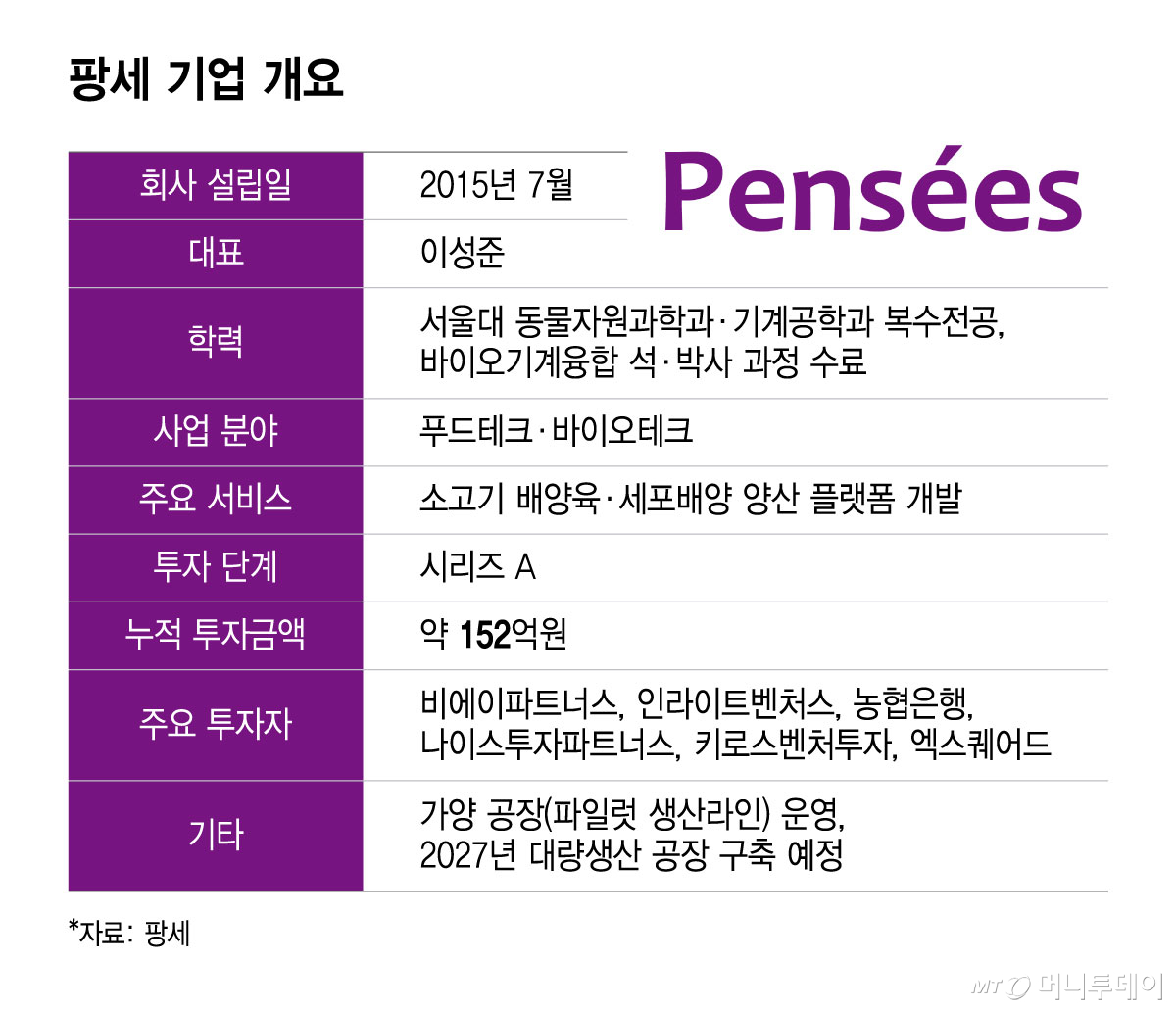
South Korea’s first cultured beef is expected to reach consumers’ tables as early as next year. This follows Pangse, a biotech company established in 2015, becoming the first domestic cultured meat company to apply for marketing approval from the Ministry of Food and Drug Safety in May last year. The review results are scheduled to be released by the end of this year at the earliest. If approved, Pangse will become the first company to commercially sell cultured beef in South Korea.
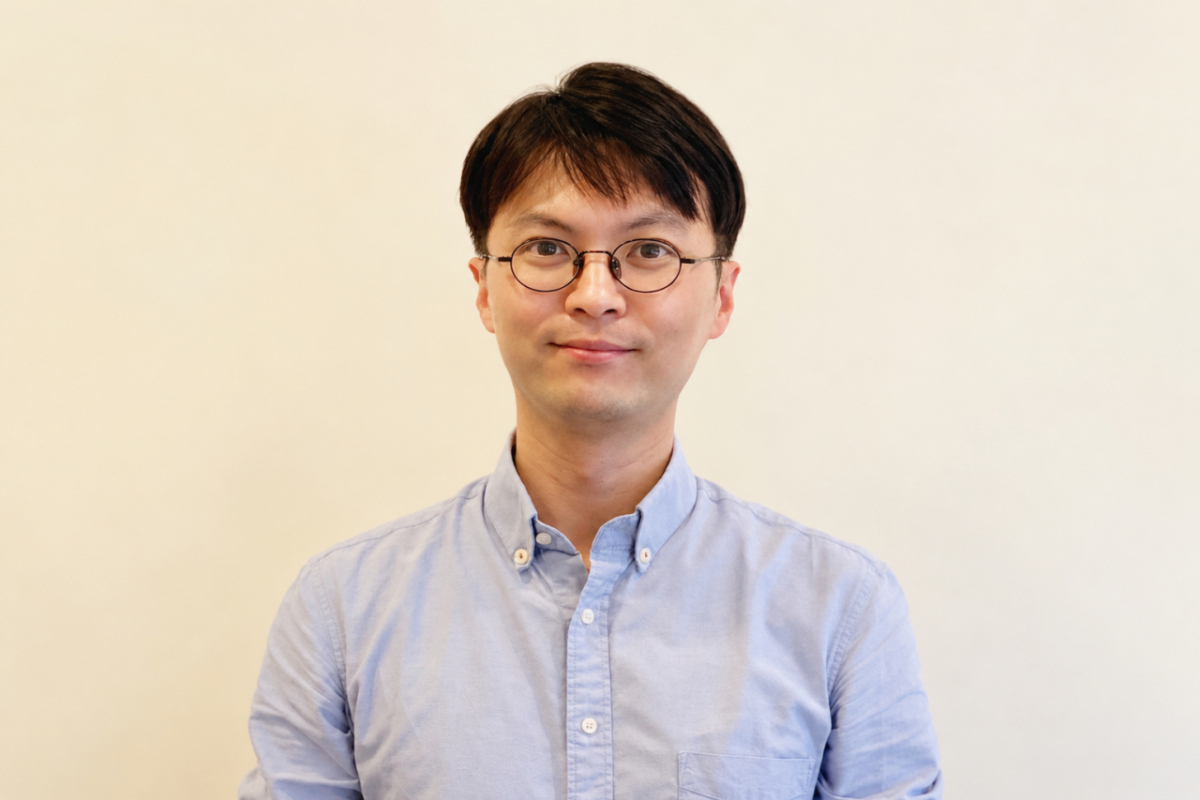
Lee Seok-jun, Pangse's representative, stated, "We are preparing to ensure that our product is always supplied at a lower price than regular beef." He added, "Ultimately, for food to be chosen by consumers, it must be both reasonably priced and delicious."
Cultured meat is a technology that produces meat by cultivating small amounts of cells obtained from livestock. Unlike plant-based alternative meats, which replicate the taste and texture of meat using plant-derived ingredients, cultured meat is grown from actual animal cells, giving it a relative advantage in reproducing the flavor and mouthfeel of conventional meat.
Several domestic foodtech companies have entered the cultured meat development space, but the biggest reason they have yet to achieve commercialization is high production costs. This is because significant expenses are incurred for "media," the nutrients required for cell growth, and "bioreactors" used to cultivate cells on a large scale.
While companies that have already received approval to sell cultivated meat abroad have emerged, high production costs remain a challenge. Lee (CEO) stated, "The key is not the act of producing cultivated meat itself, but who can reduce production costs the fastest." He added, "Ultimately, the company that succeeds in mass production will be the winner in the market, and we could be that company."
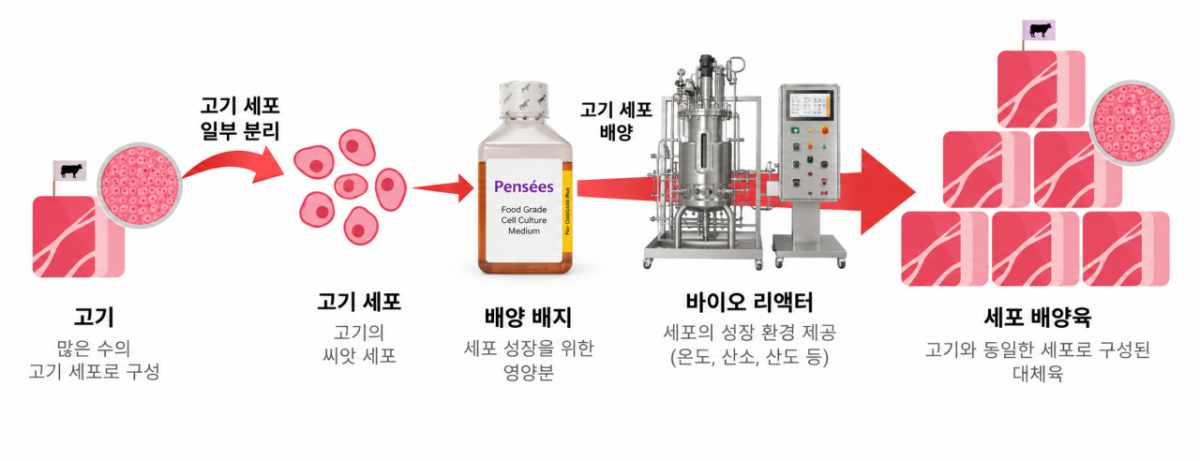
Lee (CEO)'s confidence in mass production stems from its development of proprietary media and bioreactors for cell culture using in-house technology. First, Pangse developed a medium suitable for cultured meat by utilizing food-grade materials instead of conventional cell-culture materials, reducing costs to less than one-hundredth of the previous level.
The second is the bioreactor. A significant number of domestic cultivated meat companies import cell culture equipment from overseas. Large-scale equipment can cost around 1 billion won per unit, meaning that as production scales expand, the burden of capital investment also increases. Pangse leveraged the strength that a majority of its co-founders, including Lee (CEO), are graduates of the Department of Mechanical Engineering at Seoul National University, to design bioreactors in-house and reduce capital investment costs to approximately one-twentieth of previous levels.
It also improved productivity. Cells consume nutrients and excrete waste during the culture process, and the accumulation of waste inhibits growth. Pang Se developed a gas exchange and medium regeneration module inspired by human lungs and hearts to remove waste and resupply nutrients. According to the company, this allows for the production of more than three times as many cells in bioreactors of the same size compared to conventional methods.
By reducing production costs and establishing a Yangsan-based facility, Pangse became one of the first domestic companies to be in a position to knock on the door of the Ministry of Food and Drug Safety. To gain recognition from the Ministry of Food and Drug Safety for new food ingredients such as cultured meat, small-scale samples developed in a laboratory are insufficient. Large-scale samples must be produced at an actual production facility (factory), and their safety must be verified through external accredited institutional investors. This means that companies must invest hundreds of millions of won to set up production facilities even before obtaining approval.
Pense established a pilot production line at its Gyang factory and produced large-scale samples using in-house developed media and bioreactors to secure safety data. Based on this, the company submitted an application to the Ministry of Food and Drug Safety last year, becoming the first domestic firm to do so, and also filed a related application with the U.S. Food and Drug Administration (FDA) during the same period.
Alongside price, the company emphasizes taste as a key competitive advantage. Pangse developed a prototype bulgogi-style burger using cultured meat patties in 2022 and held a tasting event. The company reported that participants noted the flavor and aroma were similar to those of conventional meat, with nine out of ten expressing satisfaction.
During the Series A fundraising round of 8.5 billion won earlier this year, investors also directly tasted the cultured meat. Lee (CEO) explained that the fact that the product achieved a taste and texture similar to conventional meat had a positive impact on the investors.
Based on its taste and price competitiveness, Pangse has identified food companies as its initial target market following regulatory approval. The company will supply cultured meat in the form of ground meat as a raw material and jointly develop products with food companies through a B2B (business-to-business) model. It has already conducted multiple proof-of-concept (PoC) trials with several large corporations and franchise chains, producing prototypes in actual menu formats such as spaghetti meatballs and hamburger patties. Following approval, the company plans to begin full-scale supply based on these collaborations.
Lee (CEO)'s confidence in B2B demand stems from "price and supply." This is because uncertainty in meat supply has increased due to climate change and livestock epidemics. According to the Ministry of the Interior and Safety, 604,636 livestock died from heatwaves between May 20 and July 10 last year, approximately 11 times the figure for the same period the previous year (53,238). At that time, retail prices for broiler chickens also rose by about 9%.
Livestock mortality and reduced productivity can lead to rising raw material prices and supply instability for food companies. In particular, because cattle have long rearing periods, it is difficult to quickly recover production levels if disruptions occur in the supply chain. In contrast, cultured meat can provide a relatively secure supply of raw materials once production facilities and ingredients are secured.
Pense plans to first target the B2B market, prioritizing food companies after obtaining its license, and subsequently launch its own B2C products once consumer experience has been accumulated. In the long term, the company aims to enter the market for whole cuts of raw meat. Lee (CEO) stated, "Pense is not a substitute for existing beef," adding, "Our goal is to become a new source of supply that can fill the gap when prices and supply fluctuate."
[Money Today Startup Media Platform Unicorn Factory]

 in FUTURE


