

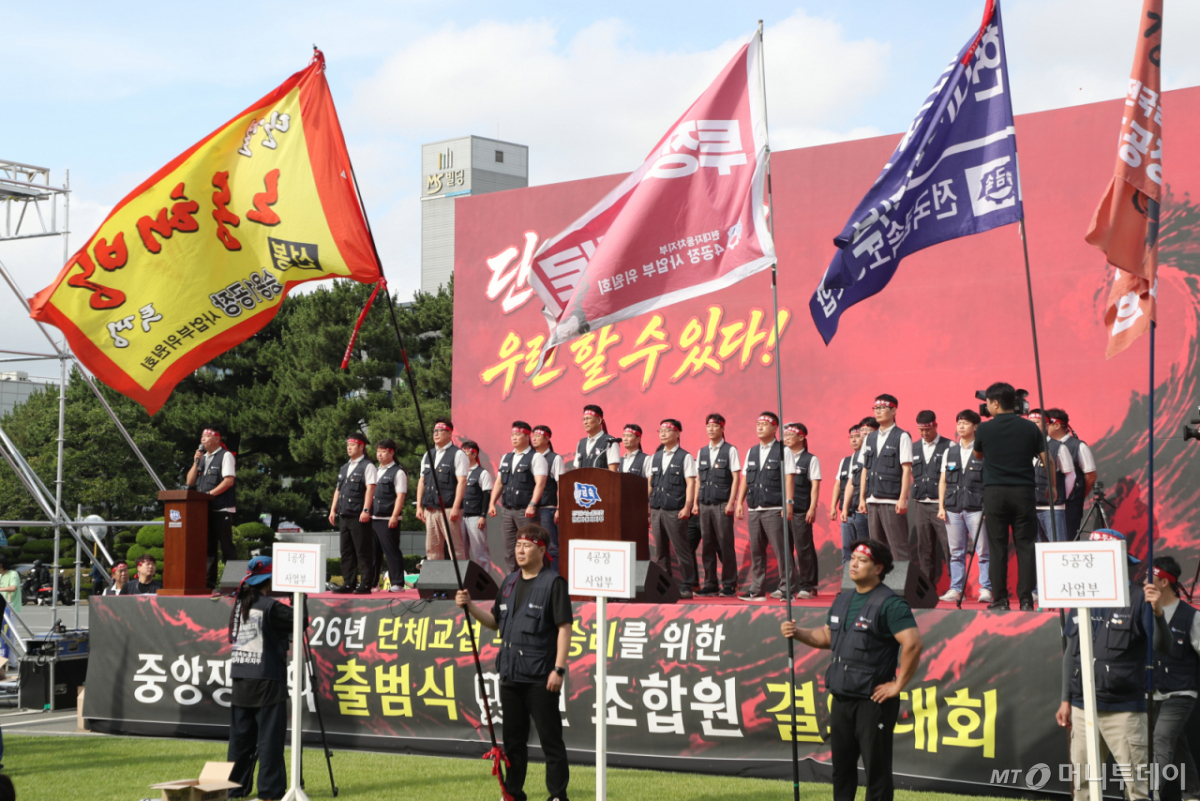
The Hyundai Motor Labor Union will resume partial strikes immediately after returning from summer vacation. Starting from the 12th, the union will conduct four rounds of partial strikes, with strike durations extended to six hours on the 14th and 18th.
According to the automotive industry on the 11th, the Hyundai Motor branch of the Metal Workers' Union held a meeting of the Central Dispute Countermeasures Committee (Dispute Committee) on that day to finalize the additional strike schedule.
On the 12th and 13th, both day and night shifts will conduct four-hour partial strikes each. On the 14th and 18th, both shifts will halt production lines for six hours each. If all scheduled activities proceed as planned, additional production line disruptions will total 40 hours.
Notably, this time the union has increased strike duration to a maximum of six hours, raising the level of struggle compared to last month. During last month's three partial strikes, daily strike durations for day and night shifts were each capped at four hours. With the union failing to narrow its stance with the company even after summer vacation, it has escalated strike intensity by one level.
However, the union has decided to suspend scheduled strikes on days when formal negotiations resume. While confirming additional strike dates, the union has kept the possibility of negotiation open. The next Central Dispute Committee is scheduled to convene on the 18th.
Last month, the Hyundai Motor union conducted partial strikes totaling nine days across three rounds. From the 13th to 15th, day and night shifts each struck for two hours; from the 20th to 22nd and again from the 29th to 31st, both shifts halted production lines for four hours each.
This resulted in 60 hours of production line disruptions. If all newly decided additional strike dates are carried out, cumulative disruptions will reach 100 hours. Hyundai Motor estimates that last month's three partial strikes caused production disruptions exceeding 42,000 units. In fact, Hyundai Motor's domestic production volume last month fell to 137,449 units, a 22% decrease from the previous month. Domestic sales also dropped by 14.4% year-on-year to 48,113 units. If this partial strike proceeds as scheduled, production disruptions are expected to occur again this month.
Management and labor have failed to narrow their differences over key demands for this year's wage negotiations. The union is demanding a monthly base salary increase of 149,600 won, performance bonuses equal to 30% of last year's net profit, and an increase in year-end bonuses from 750% to 800%. Other major issues include pre-agreement between management and labor before the legalization of extended retirement age and reinstatement of dismissed workers.
The company proposed a plan including an 89,000 won base salary increase, performance bonuses of 350% plus 10 million won, and distribution of 15 shares of company stock, but the union rejected it. The company maintains that if three demands—reinstatement of dismissed workers, pre-agreement before retirement age legalization, and year-end bonus increases—are resolved, it can present an additional proposal covering wages and performance bonuses.
Management and labor have alternated between strikes and negotiations since last month but have struggled to find common ground on core issues. With the union extending strike duration to a maximum of six hours this time, production losses could escalate faster than last month if negotiations do not resume.
However, since the union has decided to suspend strikes on days when formal negotiations resume, the scale of additional production disruptions will depend on whether management and labor continue negotiations. Whether both sides can return to the negotiation table before the next Dispute Committee meeting on the 18th is expected to serve as a turning point determining whether the strike will be prolonged.

 in INDUSTRY
