

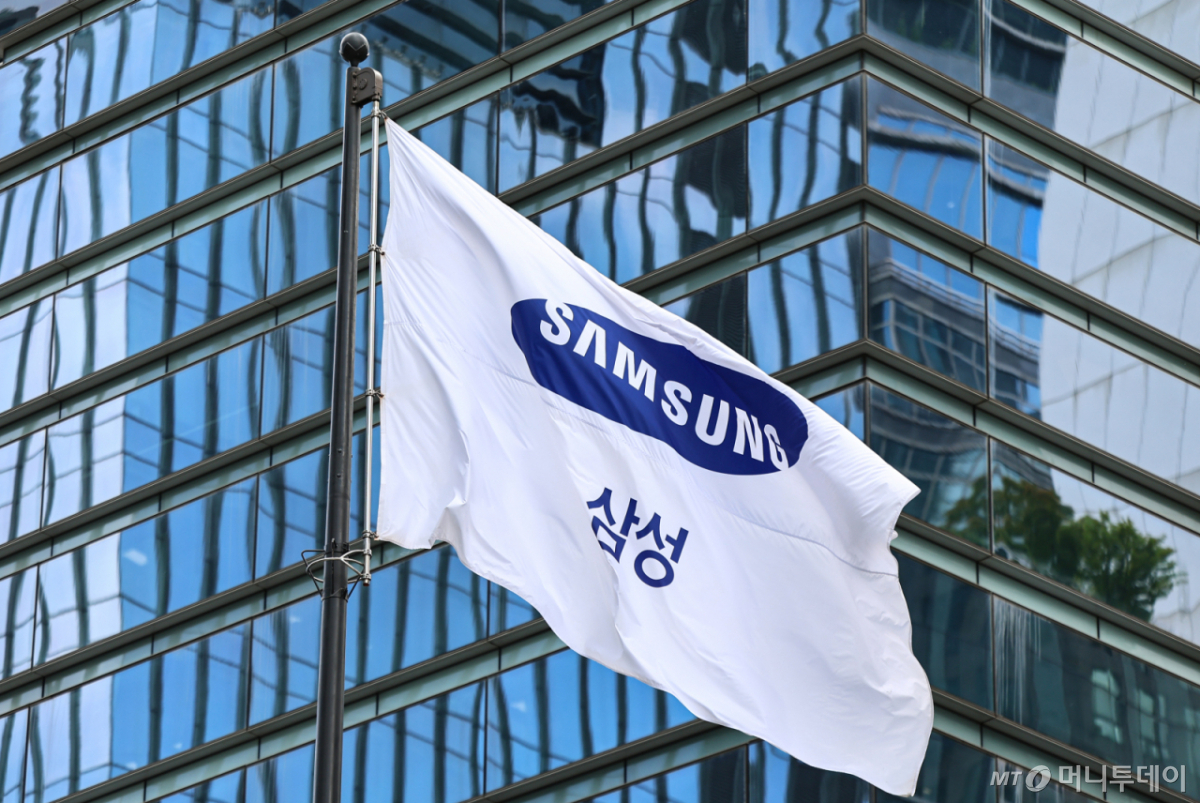
Samsung Electronics has opened a new era of shareholder returns exceeding 100 trillion won annually for the first time in its history, reaffirming the cash-generating power of the AI-driven memory semiconductor industry. Even if Samsung Electronics maintains its funding criterion of "50% of free cash flow (FCF)," the scale of shareholder returns is expected to surge even higher next year. Some evaluations suggest that Samsung Electronics and SK Hynix's shareholder return commitments based on FCF are clearer than those of overseas semiconductor companies that have pledged 100% of the vaguely defined "excess cash." (☞See our August 20 report [Exclusive]: Samsung Electronics formalizes historic maximum shareholder return in the 100th trillion won era... "More next year")
According to industry sources on the 23rd, while finalizing its shareholder return plan for this year, Samsung Electronics maintained its existing policy of allocating 50% of FCF to shareholder returns. It also announced that it held a board meeting on the 21st and approved an implementation plan for 2026 shareholder returns estimated at around 90 trillion to 110 trillion won. This is approximately five times larger than the previous maximum of 20.3 trillion won in 2020. Samsung Electronics plans to implement cash dividends totaling about 30 trillion won, including regular dividends, only in the third quarter this year, and will decide on the remaining return methods and scale—including cash dividends, share buybacks, and cancellations—at next January's board meeting when this year's management results are finalized.
Samsung Electronics did not change its "50% of FCF" criterion because the total funding itself has surged to an unprecedented level compared to the past. Although SK Hynix announced on the 19th a decision to acquire and cancel shares worth 40 trillion won, changing its shareholder return criterion from "within 50% of FCF" to "50% or more," industry observers largely view this as a symbolic move. In practice, it means maintaining the 50th% benchmark while more strongly demonstrating the company's commitment to enhancing shareholder value.
An industry insider emphasized, "Samsung Electronics' '50% of FCF' amount already exceeds 100 trillion won this year alone," and added, "SK Hynix's decision to change its criterion from '50%' to '50% or more' is interpreted as a gesture to show confidence in performance and build trust with the market and shareholders."
It is certain that next year's shareholder return scale will be larger than this year's. The semiconductor supply shortage, described as "cannot sell due to lack of supply," is expected to worsen by 2027, inevitably leading to better performance. Industry sources predict that demand for semiconductors centered on global big tech companies will surge by more than 50% compared to this year, while supply volumes will barely increase.
The market currently forecasts Samsung Electronics' FCF for next year at approximately 370 trillion won (average estimate from securities firms). A simple calculation suggests there is a possibility that the 2027 shareholder return scale could reach around 180 trillion won, representing an increase of about 80% compared to this year.

Some compare Samsung Electronics and SK Hynix's shareholder return policies with other memory semiconductor companies like Micron and SanDisk, which have recently announced intentions to return 100% of "excess cash" to shareholders. This is because the gap between "50%" and "100%" could be mistakenly interpreted as a direct difference in the scale of shareholder returns.
However, FCF and excess cash are different concepts and cannot be directly compared. FCF is calculated by deducting various facility and equipment investment amounts from operating cash flow based on operating profit. Although not explicitly stated in financial statements, it literally represents the concept of "cash in hand" for a company, with relatively clear calculation standards and methods.
In contrast, excess cash refers to the portion remaining after subtracting funds needed for daily operations and investments from a company's cash assets, but its specific calculation method is not clear. In particular, determining how much is "needed" falls under the company's discretion. Even Micron and SanDisk have only mentioned "100% of excess cash" without disclosing detailed funding calculation methods or plans.
Another industry insider stated, "Currently, Samsung Electronics and SK Hynix are making concrete efforts to link their explosive performance growth to enhanced shareholder value within the framework of their previously promised shareholder return policies," and added, "As additional implementation plans are expected to be announced sequentially starting from third-quarter earnings reports, market trust is also likely to increase."

 in INDUSTRY

