

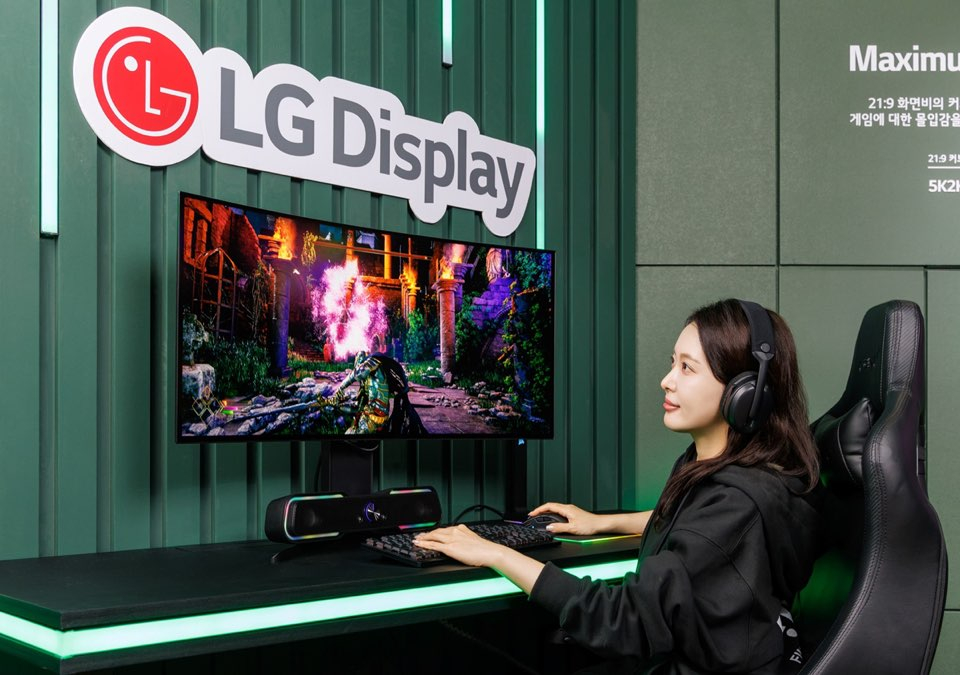
The growth of OLED (organic light-emitting diode) panels in the monitor market is steep. As technical shortcomings such as brightness and text clarity are improved and price barriers are lowered, OLED is expanding its territory in the monitor market, which has long been dominated by LCD (liquid crystal display). Samsung Display and LG Display, which essentially split the OLED monitor panel market, are intensifying their technology and production competition to secure a foothold in the market.
According to market research firm TrendForce on the 1st, this year's OLED monitor panel shipments are estimated at 4.8 million units, a 38.7% increase from last year. High growth is expected to continue, with annual shipments projected to surpass 10 million units by 2030.
The steep growth of the OLED panel market has been driven in part by lowered price barriers. While OLED offers advantages over LCD in terms of thinness, wide viewing angles, fast response times, and high contrast ratios, its relatively high price has long been seen as an obstacle to mass adoption. Recently, prices are falling rapidly due to increased production volumes, the completion of depreciation for production lines, and improved yield rates.
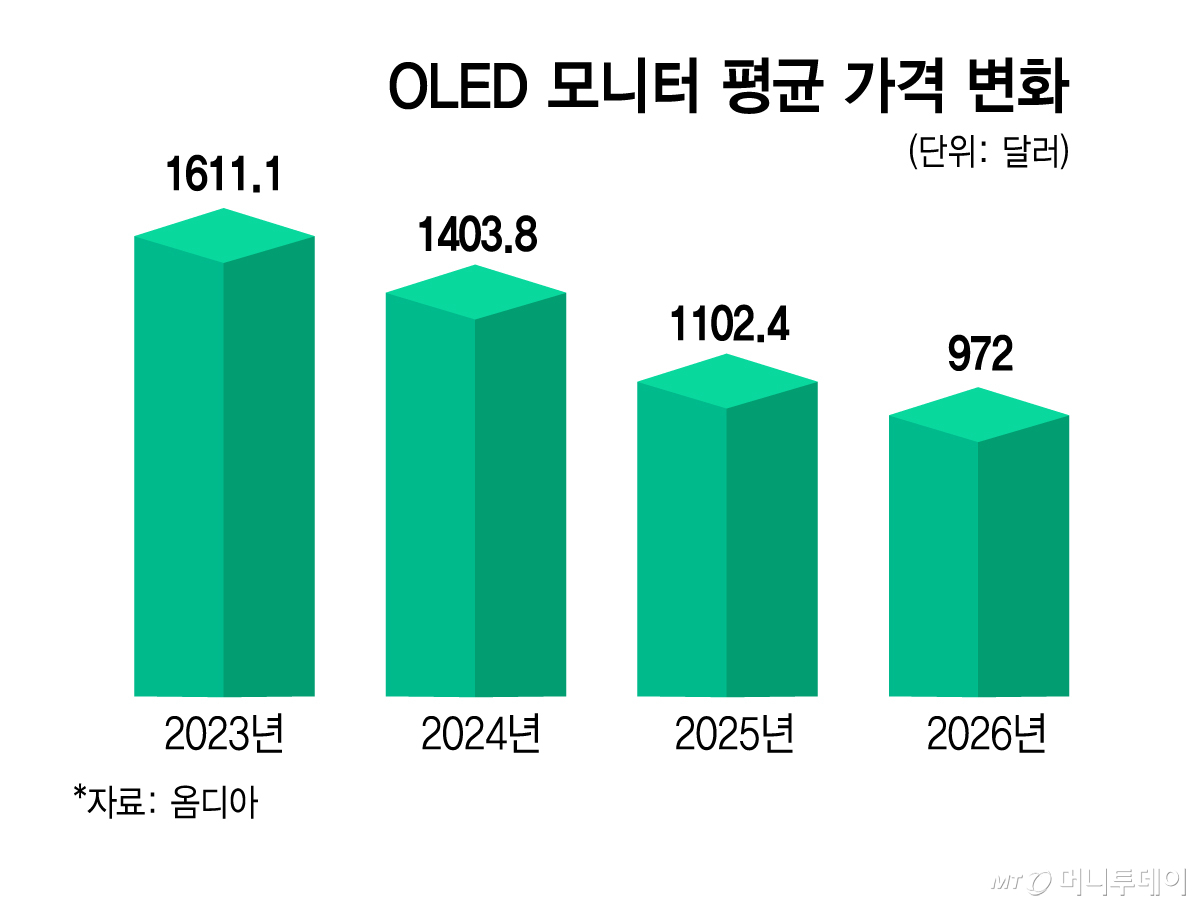
Omdia estimates that the average selling price (ASP) of OLED monitors will drop by about 40% in three years, from $1,611.1 in 2023 to $972 this year. This is due to display manufacturers enhancing cost competitiveness while expanding their product lines to include mainstream LCD sizes such as 27-inch and 32-inch models. LG Display recently also unveiled 'FLiPP (Flip)', a next-generation OLED technology that can reduce cost burdens.
Technical sophistication has also improved. Technologies are being continuously applied to address OLED panel weaknesses such as brightness, text clarity, burn-in, and heat generation. Samsung Display has implemented 'Penta Tandem' technology, which stacks five layers of blue OLED in a light-emitting structure, achieving stable brightness even at high luminance levels. The maximum brightness for monitors reaches up to 1,300 nits.
LG Display has improved text clarity by changing the arrangement of RGB (red-green-blue) pixels from a triangular layout to a striped structure that aligns them side by side. By maintaining narrow and uniform spacing between pixels, color bleeding and fringe effects caused by overlapping colors are minimized. With advancements in driving and management technologies for OLED panels by finished product manufacturers, issues such as burn-in, heat generation, and lifespan have also been significantly improved.
As technical shortcomings are addressed, more consumers are choosing OLED over LCD even at premium price points. The share of 600–800 dollar LCD products in total monitor sales dropped sharply from 16% in 2022 to just 2% last year. In contrast, OLED products priced above $800 expanded from 1% to 20% during the same period. This clearly shows that consumers who prioritize performance are increasingly willing to pay extra for OLED.
The biggest beneficiary of the expanding OLED monitor market is South Korea's display industry. Samsung Display and LG Display essentially dominate global supply of OLED monitor panels. At 'Gamescom 2026', the world's largest gaming exhibition held in Cologne, Germany from the 26th to the 30th (local time), numerous monitors equipped with both companies' latest OLED panels were on display.
In line with market growth, production competition between the two companies is intensifying. LG Display plans to increase the share of monitor panels in total large-size OLED shipments from just over 10% last year to about 20% this year. Samsung Display has officially launched its new 8.6-generation IT OLED production line in Yangsan since July.
Chinese competitors are a variable. Chinese firms BOE and TCL subsidiary CSOT are also expanding their investments in monitor-grade OLEDs. However, compared to South Korean display manufacturers, they still face technical challenges in yield rates, light-emitting efficiency, and material supply chains.
An industry official stated, "OLED monitors have seen improvements in previously identified weaknesses through technological advancements, expanding their usage beyond gaming to office and commercial applications." He added, "As prices drop, they are also attracting the existing customer base of LCDs."

 in INDUSTRY

