

Price increases are spreading throughout the semiconductor supply chain. Following rises in raw materials, wafers, and packaging materials, power semiconductor companies with relatively lower technical complexity are also raising product prices. The surge in demand for AI (artificial intelligence) data centers combined with rising costs is driving price hikes beyond memory semiconductors to the entire industry.
According to industry sources on the 27th, U.S. power semiconductor company ON Semiconductor recently notified customers of a broad-based price increase across its product lineup starting next month on the 10th. ON Semiconductor primarily supplies semiconductors that efficiently convert and control power, as well as image sensors. Recently, it has expanded its business scope into AI data centers and physical AI-related products.
ON Semiconductor cited rising costs for raw materials, manufacturing, energy, and infrastructure, alongside increased demand for semiconductors used in power systems, industrial applications, and data centers, as reasons for the price hikes. Renesas, a Japanese automotive semiconductor company that previously announced price increases for next year, explained that "the global semiconductor industry is facing structural cost pressures from raw materials, energy, advanced packaging, production capacity, logistics, and more."
Materials used in semiconductor manufacturing are also showing signs of price increases. According to Taiwanese media, silicon wafer prices across all sizes are expected to rise by at least 10% within three years. Additionally, prices for gases and chemical products required during semiconductor manufacturing, as well as packaging materials that protect semiconductors from external shocks and moisture, are fluctuating upward.
As investment in AI data centers expands, demand for semiconductors and related materials and components is growing, spreading price increase trends to power semiconductors, MLCCs (multilayer ceramic capacitors), and industrial gases. Even semiconductor supply chain companies that previously received less attention are gaining leverage in price negotiations with customers.
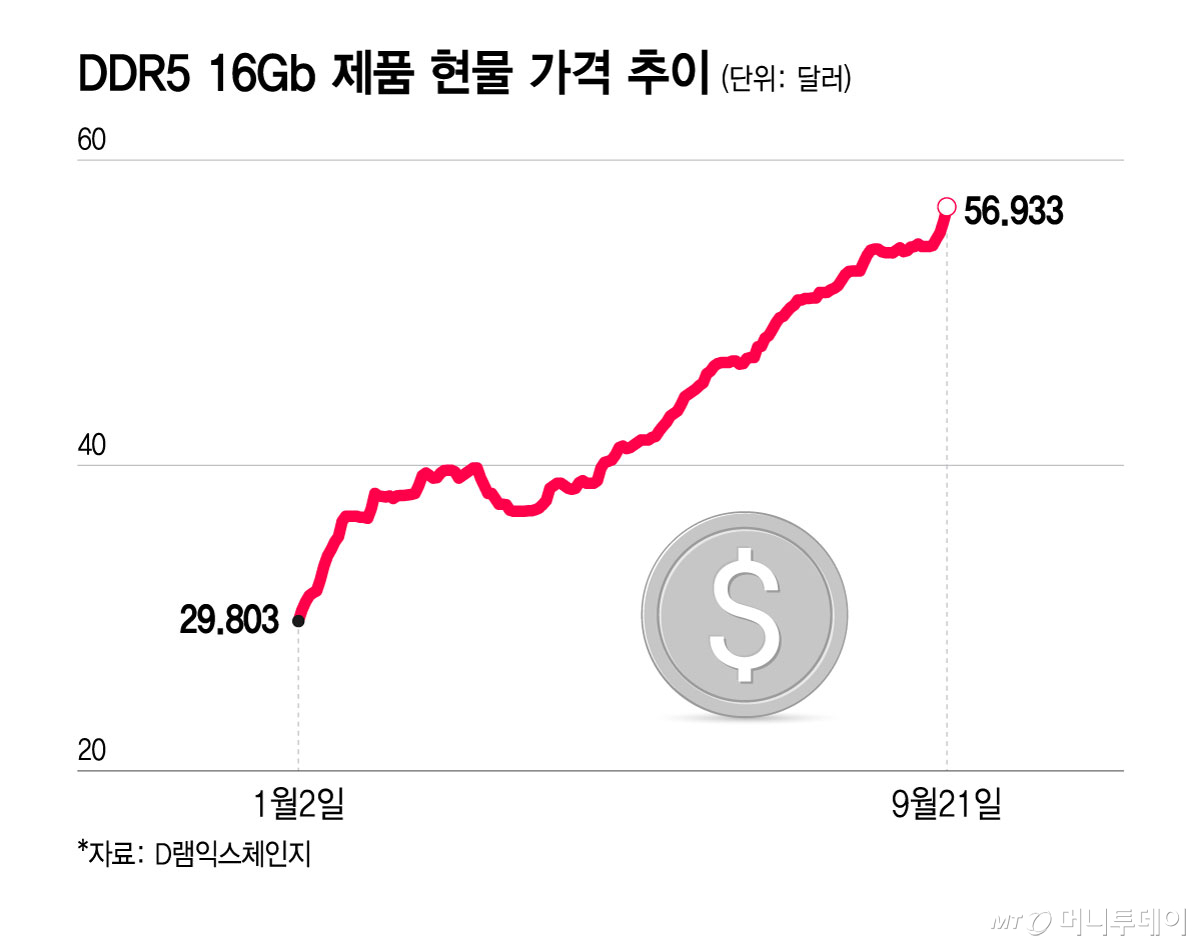
DRAM prices, which have surged continuously, continue to rise steadily. Despite discussions about moderating the pace of AI growth, as of the 21st, the spot transaction price for general-purpose DDR5 16Gb (gigabit) products reached a record high of $56.9. Prices rose by 5.6% this month alone—approximately double the level seen at the beginning of the year.
Price increase decisions in the semiconductor industry could benefit Samsung Electronics and SK Hynix. While rising costs for wafers and packaging materials may pose a burden, current profit margins are high enough to offset these increases. Instead, the "domino price hikes" may directly reflect the tight supply-demand situation in the semiconductor sector.
Analyses also suggest that the sharp price surge in DRAM has not yet been fully reflected in HBM (high-bandwidth memory) prices. Further price increases for HBM are expected in the future. According to JPMorgan, HBM supply is projected to remain 19% below demand next year as well, continuing a shortage scenario.

 in INDUSTRY
