

Samsung Electronics and LG Electronics are accelerating their push into the global B2B (business-to-business) market by leveraging hotel TVs. They are combining large-scale supply capabilities with customized services such as content based on proprietary OS (operating systems), device management, and data analysis. The strategy aims to expand business scope beyond simple hardware sales into a “hotel platform” model to generate sustainable revenue streams.
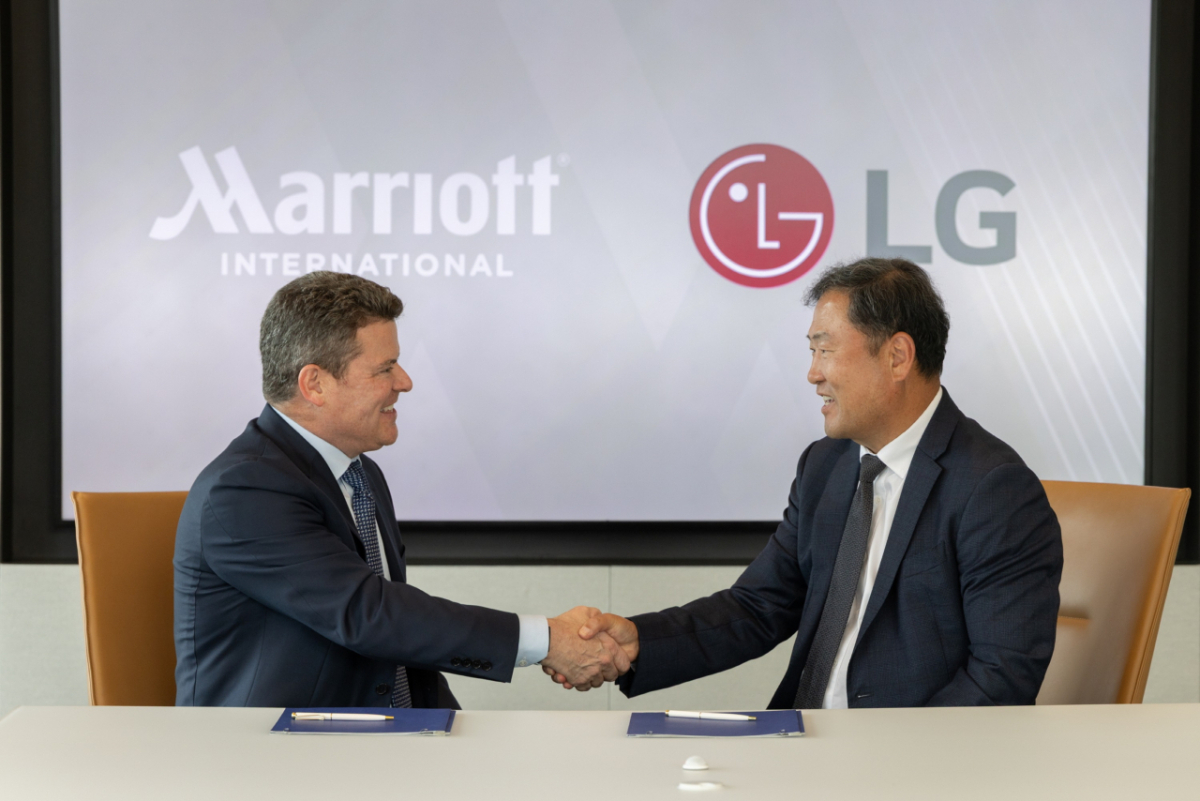
According to industry sources on the 27th, LG Electronics recently signed an MOU with global hotel chain Marriott International (hereinafter referred to as Marriott) to enhance room entertainment and technical platforms. The plan involves building a customized platform by combining Marriott’s hotel operation expertise with LG Electronics’ capabilities in integrated device management and operational technology support.
LG Electronics envisions using room TVs as “hubs” that connect various hotel services. Beyond providing live broadcasts and OTT (online video service) content, the company plans to expand its service range to allow control of functions such as room temperature and lighting directly from the TV in the future.
Management features for hotel operators are also being strengthened. By utilizing LG’s hotel TV platform “LG ProCentric,” hotels can monitor device status across rooms and properties and remotely update content and applications. This cloud-based approach enables unified device management without requiring on-site servers or set-top boxes per hotel, thereby improving operational efficiency. Both companies plan to first deploy the new platform in 40 hotels in the United States and Canada before expanding it to Marriott’s global portfolio.

Samsung Electronics added its lifestyle TV “The Frame” to its hotel TV lineup in June. Through the “Collection Hub,” guests can view art and photographs, making it a viable element for room interior design. The company has also enhanced AI (artificial intelligence) features. A standout capability is “real-time translation,” which allows guests to watch local broadcasts or Samsung TV Plus content in their native language. Support for “Google Cast” and “Apple AirPlay” enables users to enjoy content from personal devices on the room TV.
Data collected from hotel TVs can also be leveraged for customized services. Samsung Electronics’ hotel TV integrated management solution, “Link Cloud,” includes a “Business Intelligence” feature that analyzes data such as food orders and TV channel viewing habits. Hotels can utilize this information to create personalized services and generate additional revenue.
Both companies are investing heavily in the hotel TV market because large-scale supply contracts enable them to secure stable B2B demand. While consumer TV shipments saw a slight rebound in the second quarter of this year, driven by major sporting events like the World Cup, the sustainability of demand recovery remains uncertain due to rising prices and increasing memory semiconductor costs. Market research firm Omdia analyzed that “ongoing supply shortages and price hikes in memory semiconductors are likely to exert upward pressure on TV prices this year.”
In contrast, hotel TVs allow for the supply of hundreds or even thousands of units through a single contract, while also enabling customized services such as content delivery and device management based on proprietary OS. A key advantage is the ability to combine various solutions—including content updates, room management, and data analysis—even after the initial TV sale. Industry sources estimate that Samsung Electronics and LG Electronics together hold nearly 80% of the global hotel TV market share.
An industry executive stated, “Consumer TVs experience significant sales volatility depending on economic conditions and replacement demand, whereas hotel TVs can secure a certain level of demand based on large-scale contracts.” The executive added, “The importance of this segment is growing because it allows for ongoing business relationships with hotel operators even after hardware sales.”

 in INDUSTRY

