

#A transformer and a switchboard were housed within a single large unit. A container consolidating cooling equipment also made its appearance. Signs reading 'Modular' were posted throughout the exhibition hall. While their forms and functions differed, they shared the common feature of implementing data center infrastructure as a single 'module.'
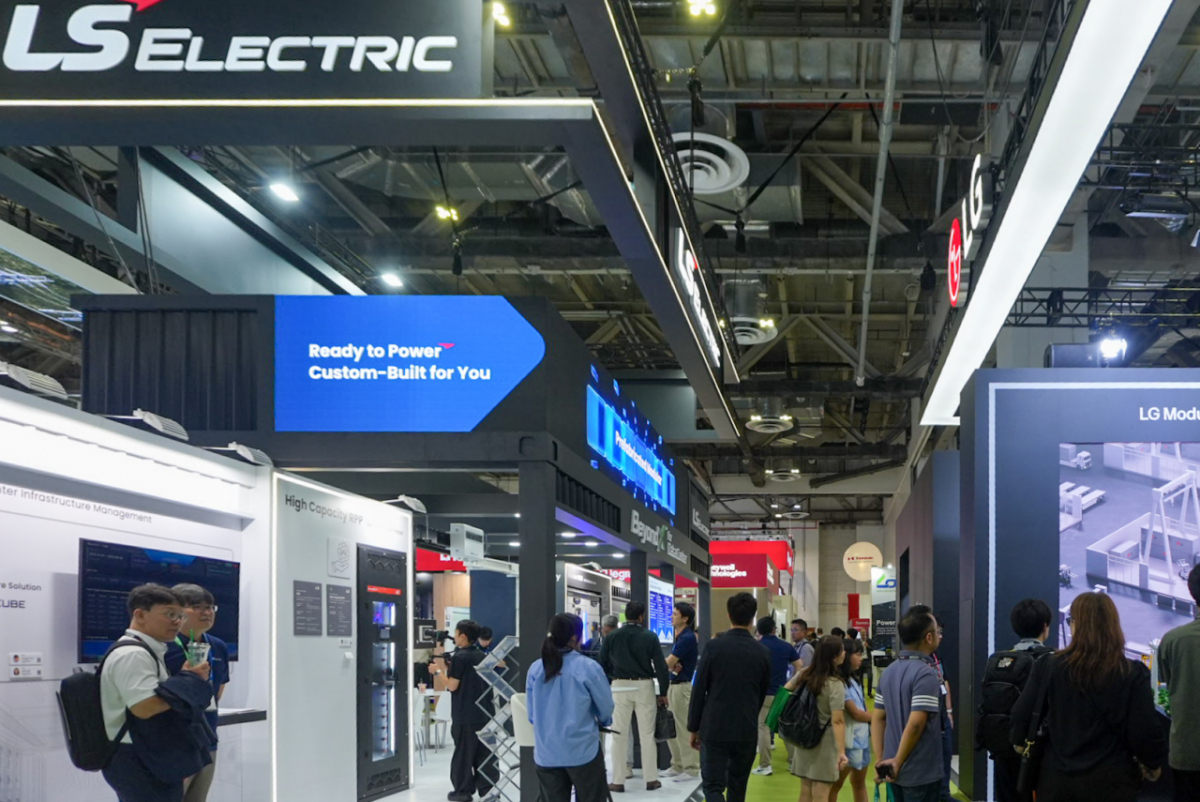
At the 'Data Center World Asia (DCWA) 2026,' the largest data center exhibition in Asia, held in Singapore on the 29th (local time), products featuring modular technology were easily found. Modular refers to a method where multiple pieces of equipment are pre-manufactured as a single unit and then assembled and installed on-site.
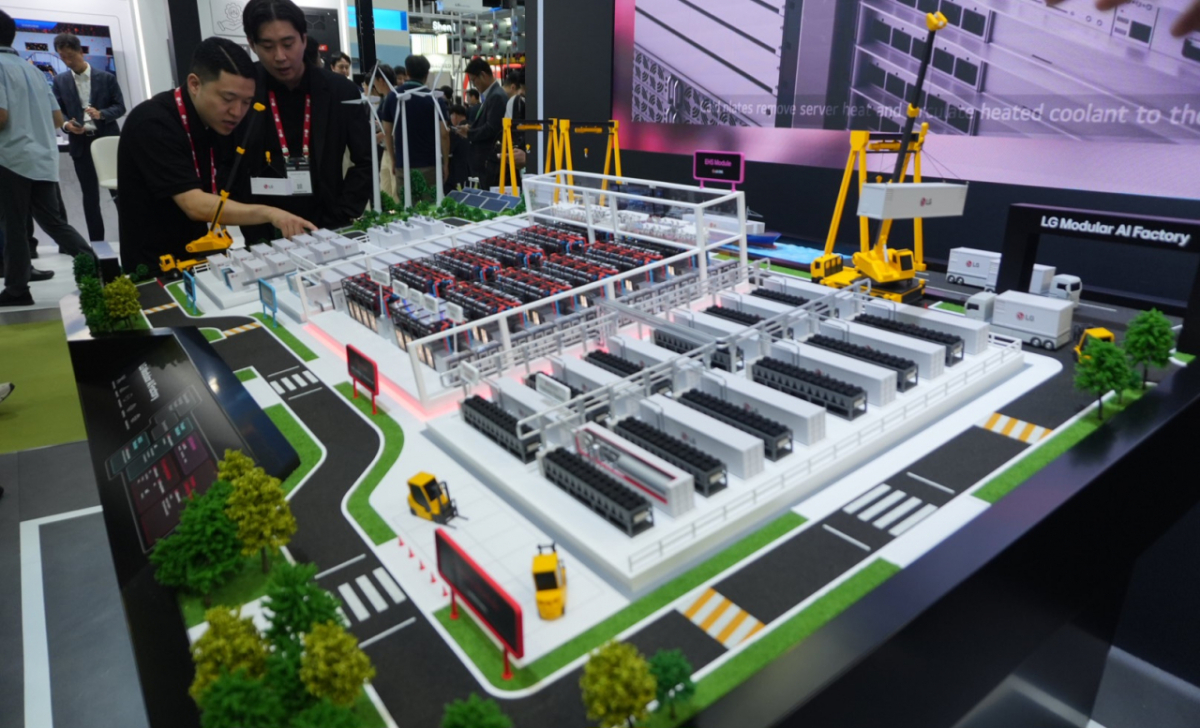
LG Group prominently displayed a model at its booth that aggregated the modular solutions of LG Electronics, LG Energy Solution, and LG CNS. The model fully embodied LG's AI (artificial intelligence) data center strategy, which combines the strengths of each affiliate in areas such as cooling and batteries with the speed and scalability of modular technology.
In particular, LG Electronics unveiled its 'Hydronic Modular' solution. This method integrates cooling equipment, including pumps, valves, and emergency buffer tanks, inside a container. On-site, a cooling system can be established simply by connecting chillers to the module, significantly reducing the time required for welding and assembling pumps and piping individually.
At the LS Electric booth, a scaled-down model of the 'CSS (Compact Secondary Substation / packaged substation),' which integrates transformers, switchboards, and other equipment into a single unit, was on display. Previously, an electrical room had to be prepared before each power equipment was installed separately; in contrast, CSS involves pre-manufacturing key equipment as a single unit at a factory for on-site installation. Its features include the ability to rapidly build power infrastructure by reducing on-site processes and to secure more server space by minimizing the area occupied by the electrical room depending on installation conditions.
An LS Electric official explained, "There are differences in the skill levels of construction personnel at each site, which can lead to quality variations. However, by supplying products that have been assembled and verified domestically, we can maintain consistent quality."
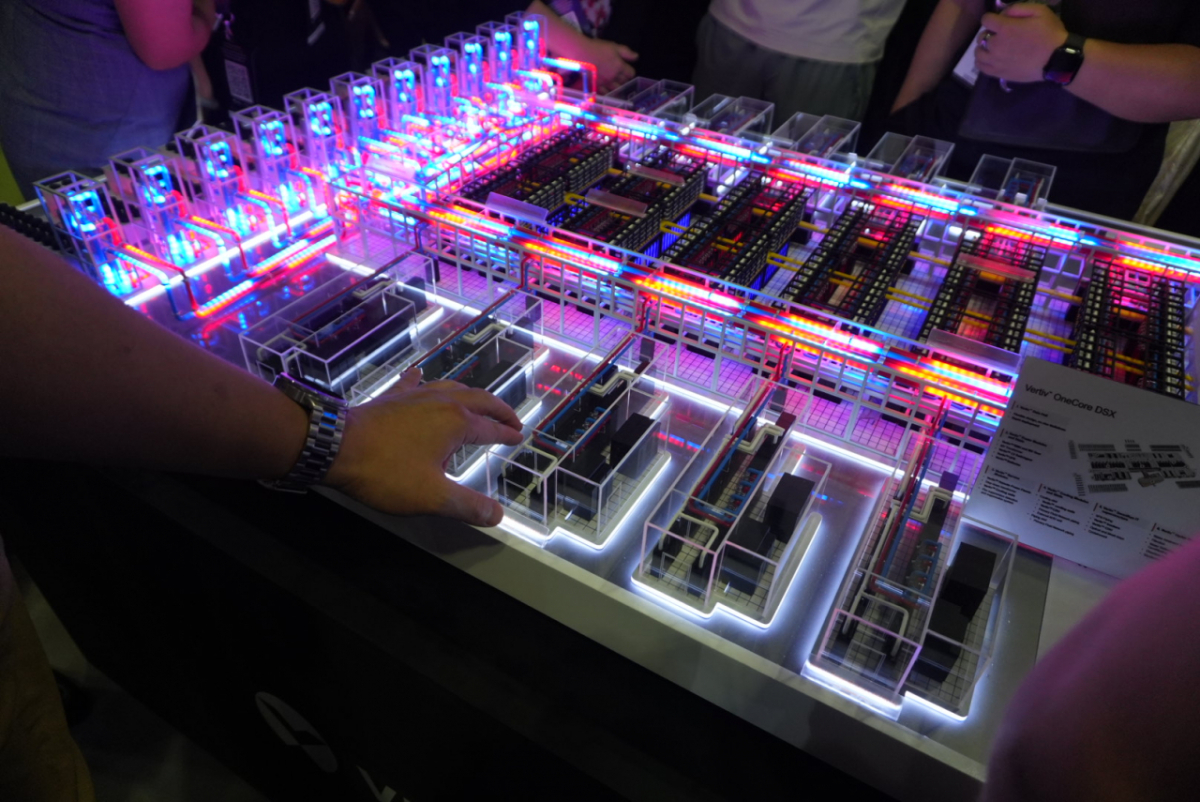
Foreign companies have also joined the modular ranks. Global data center infrastructure company Vertiv unveiled a model of its 'OneCore DSX,' which implements power and cooling equipment, as well as piping and power distribution infrastructure above server racks, as modules. The model depicted power and cooling infrastructure densely connected along red and blue lights. Delta exhibited an 'AI Modular Data Center' configured in modular form, featuring high-density server racks, power supply units, and liquid cooling equipment such as CDUs (Coolant Distribution Units) up to 280kW (kilowatts), centered on NVIDIA's next-generation 'Vera Rubin' platform.
The reason companies are rushing to focus on modular technology lies in the 'speed race' of AI data centers. With the spread of generative AI, demand for high-density data centers is growing rapidly, necessitating the construction of not only servers but also the supporting power and cooling infrastructure within a short period. The modular method, which involves connecting pre-manufactured equipment on-site, can shorten installation times and bring forward the operational start date of data centers. Furthermore, as server demand increases, phased expansion is possible by adding necessary modules.
An industry official met on-site said, "Until last year, not many companies prominently featured modular technology, but this year most vendors have brought related solutions." The official added, "As the construction speed of AI data centers accelerates, power and cooling infrastructure are emerging as bottlenecks, and modular technology is rising as a solution that allows for rapid construction and expansion."

 in INDUSTRY


