

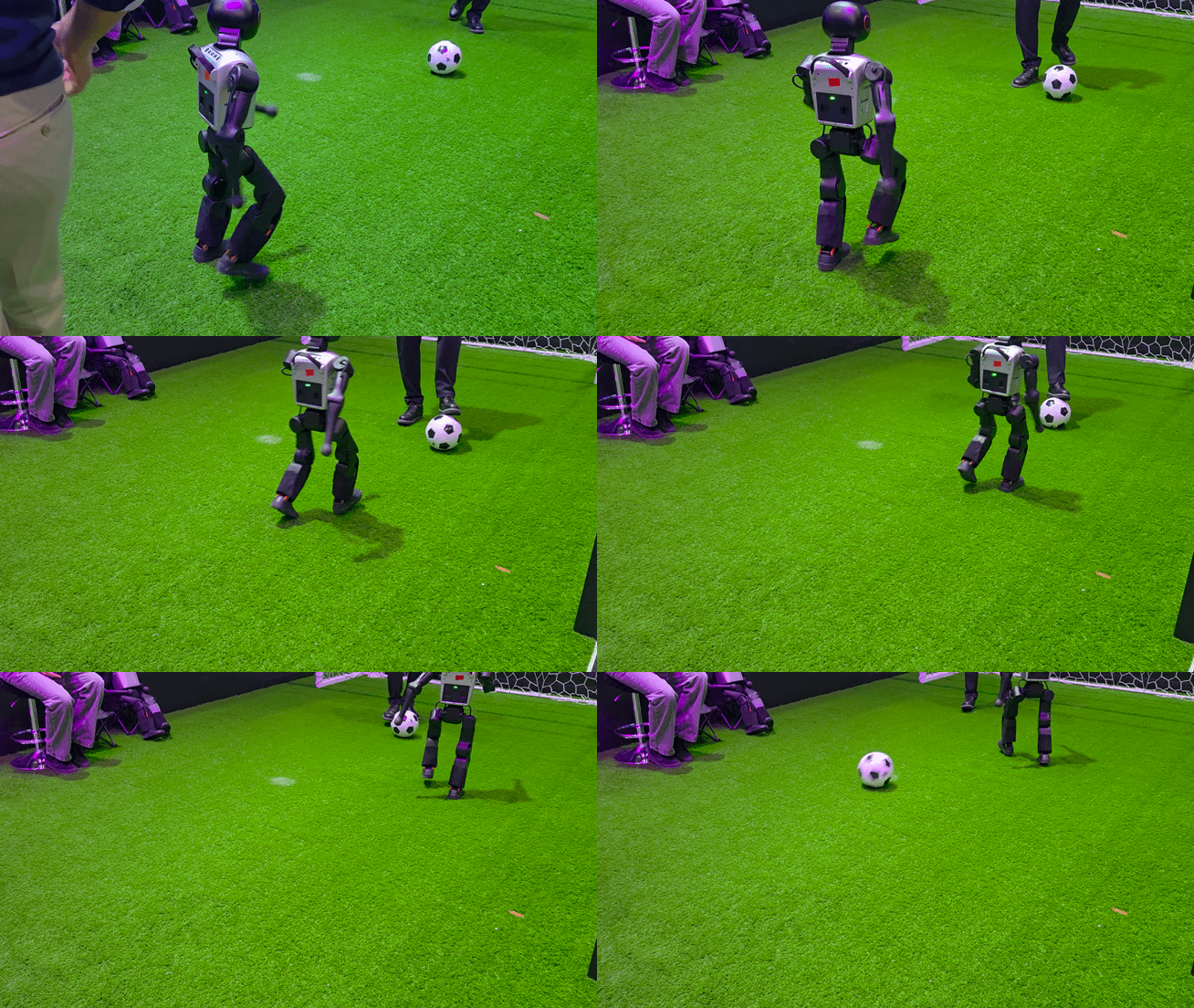
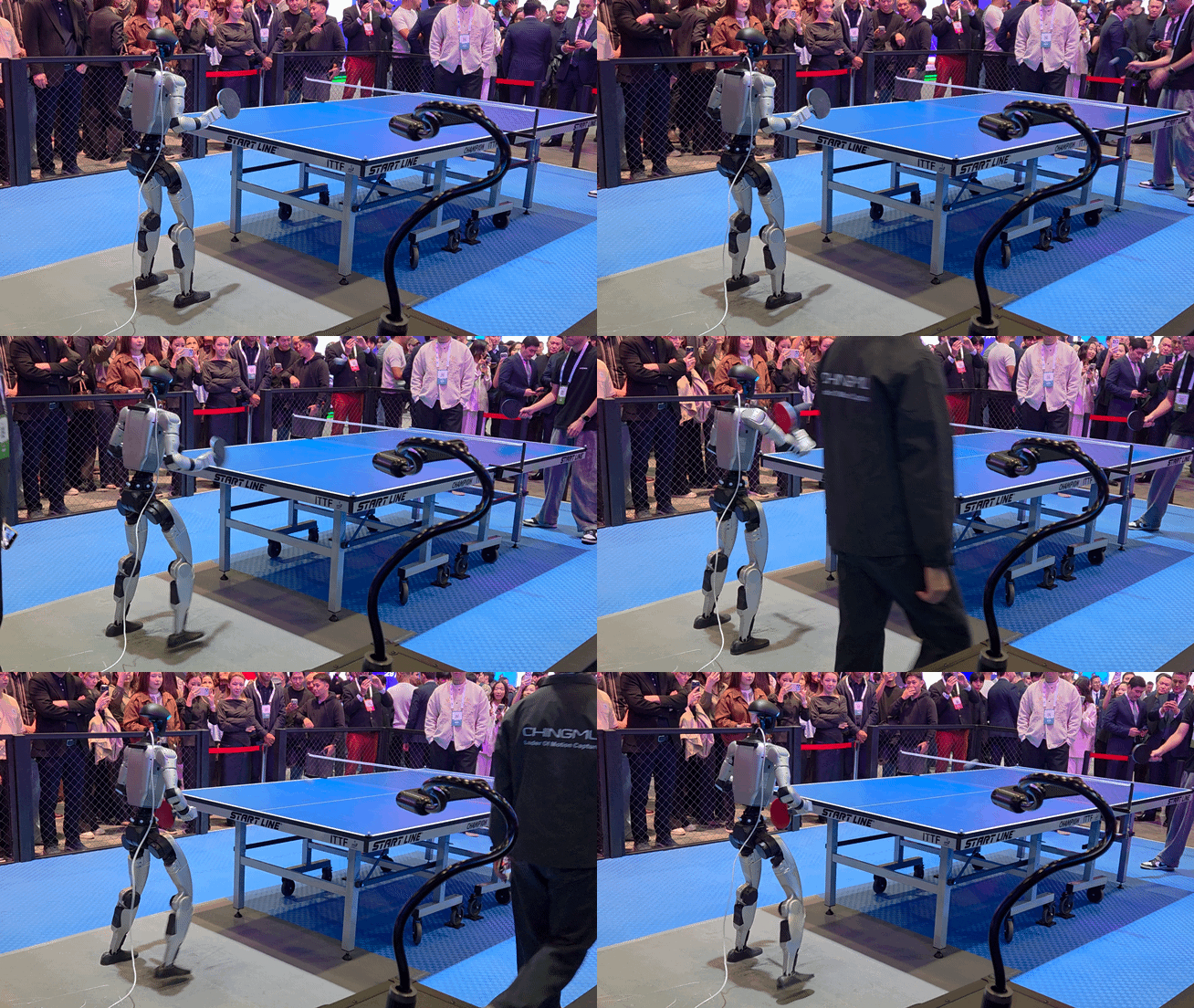
# A humanoid robot swings a table tennis paddle to return an incoming ball. Across from it, a bipedal robot chases a soccer ball across the field. Every time the robots struck the ball or extended their legs, spectators pulled out their smartphones. Among exhibition areas divided into startups, gaming, and IT companies, the "Robotics Zone" was particularly crowded with people.
The 'AI (Artificial Intelligence) & Digital Bridge 2026' exhibition held in Astana, the capital of Kazakhstan on the 2nd (local time), resembled a robot competition arena. China's Unitree showcased a humanoid table tennis demonstration, while Booster Robotics revealed a scene of robots playing soccer. Spectators flocked to the area each time a demonstration began.
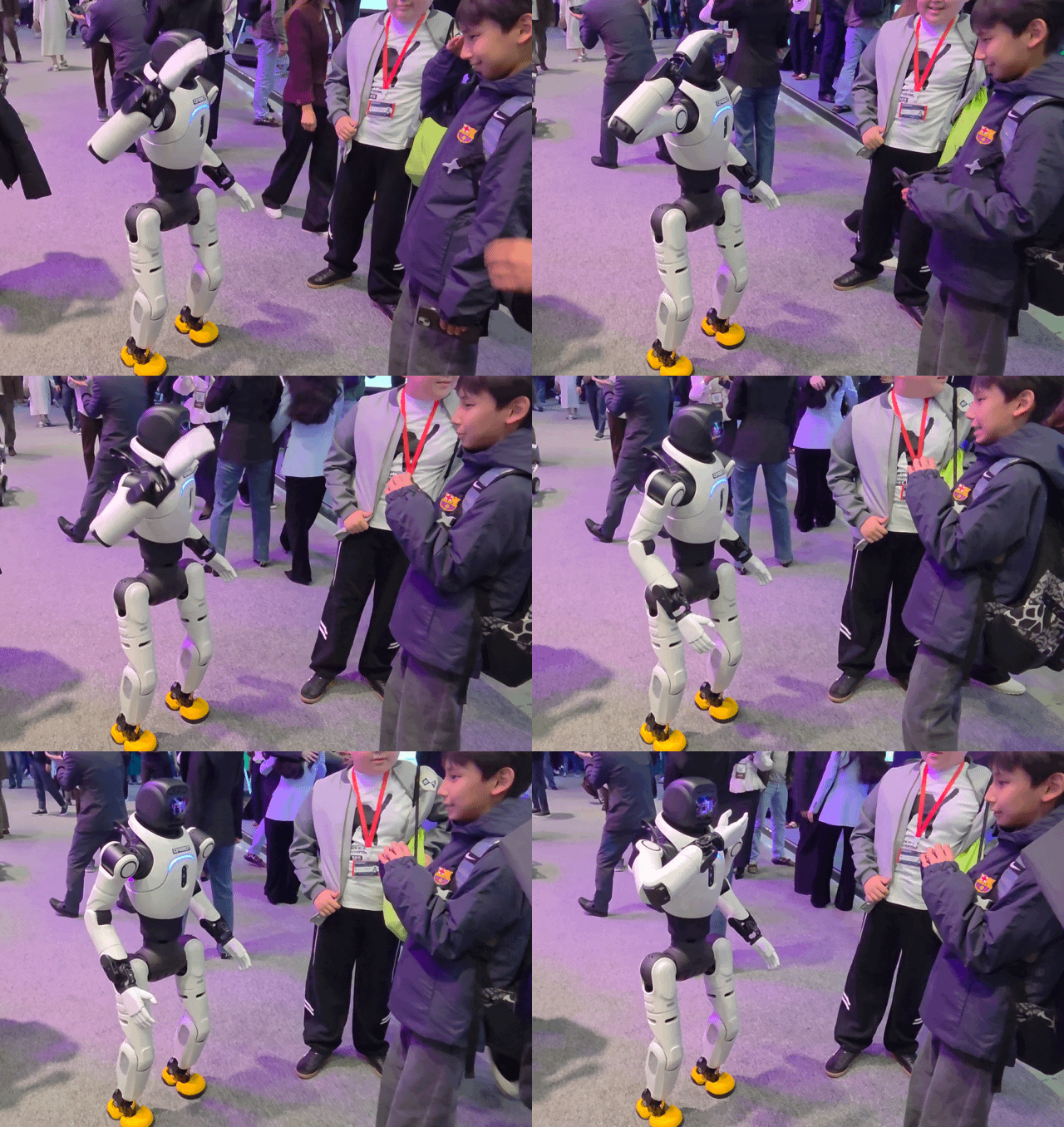
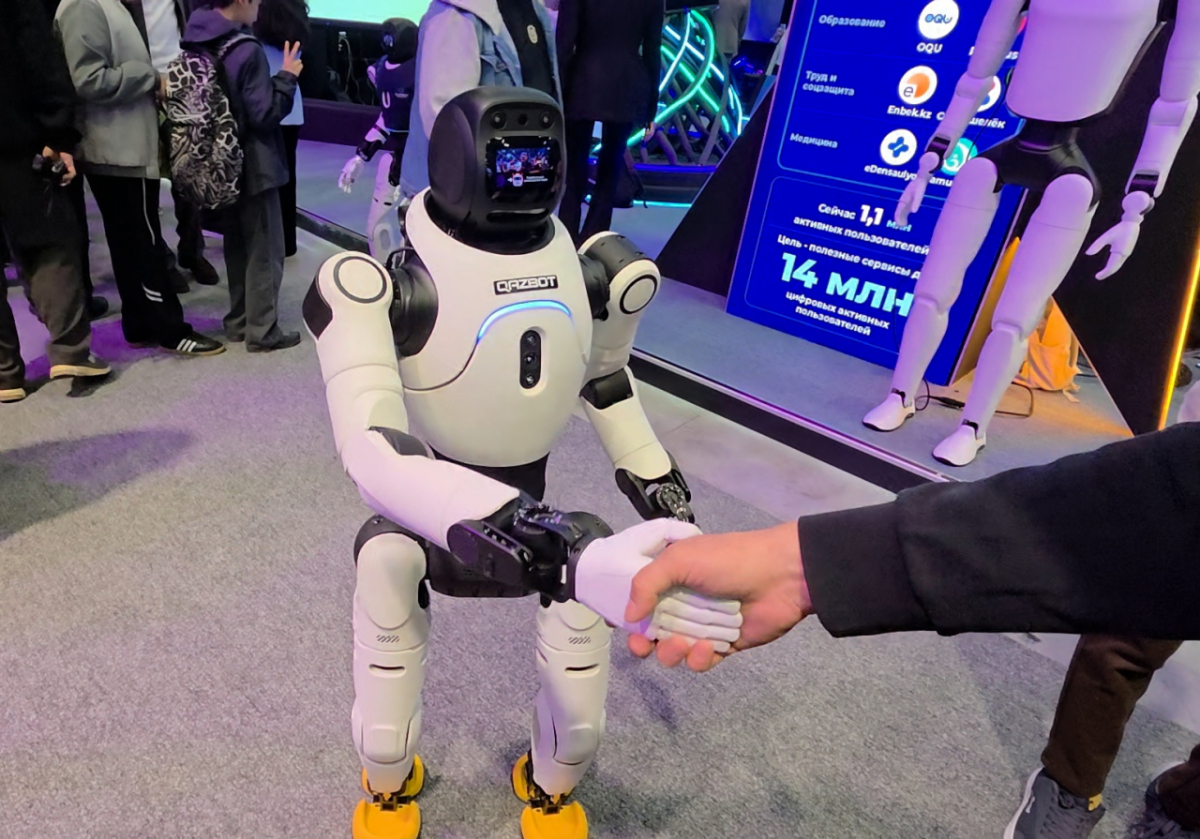
The QAZBOT robot, which freely roamed various parts of the exhibition hall interacting with spectators, also drew attention. This robot recognized people using a camera on its face and then mimicked the poses taken by spectators. However, it also showed limitations. When one spectator made a heart shape with their hands, the robot failed to recognize it properly and performed a different motion.
Another scene stood out at the QAZBOT booth, which was set up as the largest in scale within the venue. A large screen was showing renderings and on-site footage of a robot production plant currently under construction locally in Kazakhstan. QAZBOT is a Kazakh robot company leading from humanoid research to industrial application. Recently, it has formed a strategic partnership with China's AGIBOT, pushing for the establishment of a local production plant, sharing data and AI (Artificial Intelligence) models, and technology transfer.
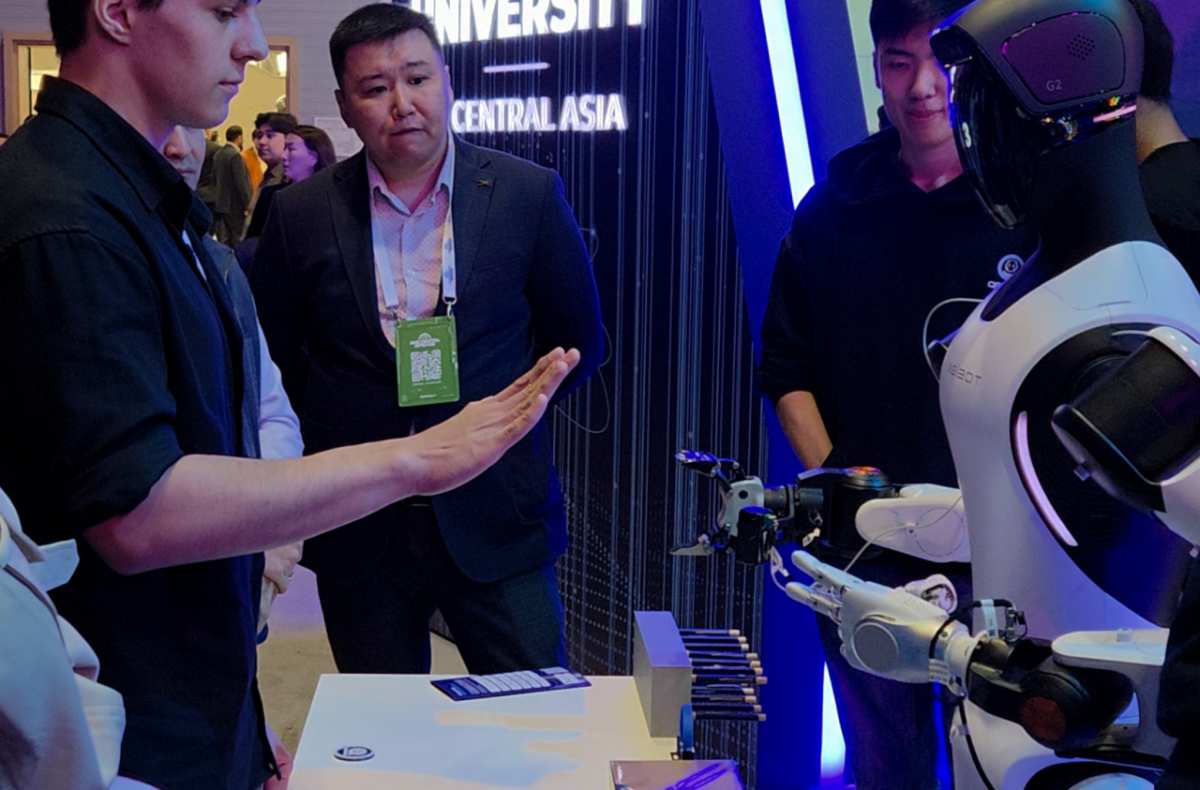
Azamat Yesmukhamedov, Chief Technology Officer (CTO) of QAZBOT, stated, "Currently, China is a leading country in the fields of AI (Artificial Intelligence) robotics and physical AI," adding, "We have formed a very deep partnership with AGIBOT, covering data collection, AI models, and knowledge transfer." QAZBOT has plans to build an ecosystem encompassing specialized personnel training, research, and industrial application. It aims to expand its business scope to Uzbekistan, Kyrgyzstan, Azerbaijan, Turkey, and other countries by adjusting robots developed in China to fit local environments.
Although technical challenges remain for humanoids to overcome, as revealed by the limitations in the demonstrations, the prevailing view on-site was that their area of application will expand into daily life in the future. CTO Yesmukhamedov said, "When robot vacuums came out 10 years ago, people asked who would buy them, but now they have become a common product," adding, "The road is still long, but eventually humanoid robots will become part of our lives."
As global companies are successively unveiling humanoids in actual field settings, responses from major domestic companies are also being fully activated. While externally disclosed bipedal humanoids remain limited, movements for on-site verification and commercialization are accelerating. Samsung Electronics is developing its own humanoid with the goal of revealing it at CES, the world's largest IT and home appliance exhibition next year, and established the RX (Robotics eXperience) Business Promotion Office in July last to bring forward deployment in manufacturing sites. LG Electronics is also expanding its robot business scope from industrial and commercial use to household applications, leveraging its wheeled home robot CLOiD and subsidiary Bear Robotics.
A representative of a robot company met on-site said, "Korean companies are strong in technological capability and manufacturing power, but there are not yet many products or actual application cases disclosed externally in the humanoid field," adding, "In future competition, it will be important not only to secure technology but also how quickly robots can be deployed in actual fields to accumulate data and achieve commercialization."

 in INDUSTRY


