

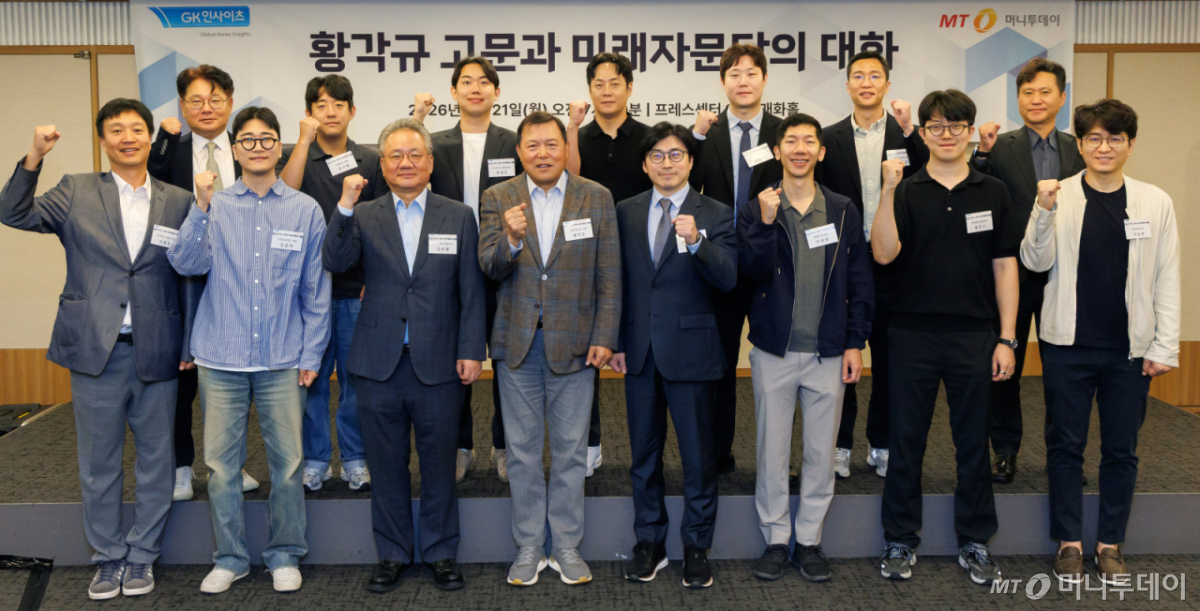
"Entrepreneurs must always be thinking about how to change the products and services they create. Have you made even one improvement that is different from yesterday's?"
This is a question posed by Hwang Gak-gyu, an advisor at Global Korea Insights (hereinafter GK Insights), to young entrepreneurs. For over 40 years, Hwang led the group's rapid growth and transformation at Lotte by overseeing new business ventures, mergers and acquisitions (M&A), and overseas operations. The work involves shortening the time customers wait for their coffee, improving products to match consumer preferences, and changing how a company operates. Advisor Hwang emphasized that consistently accumulating such small improvements day after day is the force that sustains a company's long-term growth.
Advisor Hwang (former Vice Chairman of Lotte Holdings) met with promising South Korean startup founders at the "Dialogue Between GK Insights Advisors and Future Advisory Council" held on the 21st at the Korea Press Center in Jung-gu, Seoul, sharing his management experience and insights for sustainable growth. Based on his experiences at Lotte regarding business expansion and failure, as well as cases of mentoring venture companies, Advisor Hwang addressed the challenges facing entrepreneurs, ranging from product and service improvements to business model innovation, mergers and acquisitions (M&A), and global expansion.
Advisor Hwang graduated from Masan High School and the Department of Chemical Engineering at Seoul National University, and joined Honam Petrochemical, the predecessor of Lotte Chemical. He subsequently served as Jeong Chaek-bon-bu (President) and Gyeong Yeong-hyeok-sin (Head) of the Lotte Group, as well as Vice Chairman of Lotte Holdings. He is widely credited with making significant contributions to the Lotte Group’s transformation from a domestic-focused company into a global enterprise by successfully closing major mergers and acquisitions.
GK Insights is a think tank established by Money Today to help foster the emergence of more global market-leading companies in South Korea. The Future Advisory Council is composed of young entrepreneurs who are poised to become key players of the future, bringing innovative ideas and technological expertise.
Advisor Hwang stated that innovation does not necessarily have to be thought of as grand changes. In reality, products sold under the same name for a long time continue to undergo improvements that customers do not notice.
He cited Cloud beer as an example, explaining, "The brand remains the same, but the contents are being improved in ways that customers cannot perceive, tailored to the company's technology or customer preferences."
Counselor Hwang also stated that the department store is continuously renovating some of its stores. This is to reflect new products and trends without causing inconvenience to customers. "Both products and customers are changing," said Counselor Hwang, adding, "Stores must gradually evolve in line with these changes among customers."
Advisor Hwang said, "You are starting a business now and will need to run it for at least the next 50 years," adding, "I believe that small daily improvements will lead to your sustainable growth." He continued, "If you correct your habits while your organization is still small, the organization will follow suit and adapt to your habits."
Hwang also introduced a robotic coffee startup, stating, "In the early stages, it took 45 to 50 seconds to make a single cup of coffee. From the customer's perspective, can they wait 45 to 50 seconds?" He added, "Through improvement efforts during that period, we have now reduced the production time to about 30 seconds."
He also said that people who could lead improvements together were needed. Counselor Hwang stated, "You must secure one or two people with whom you can work together for the next 10 or 20 years," and advised, "It is not an easy task, but you should make efforts from now on to secure such talent."
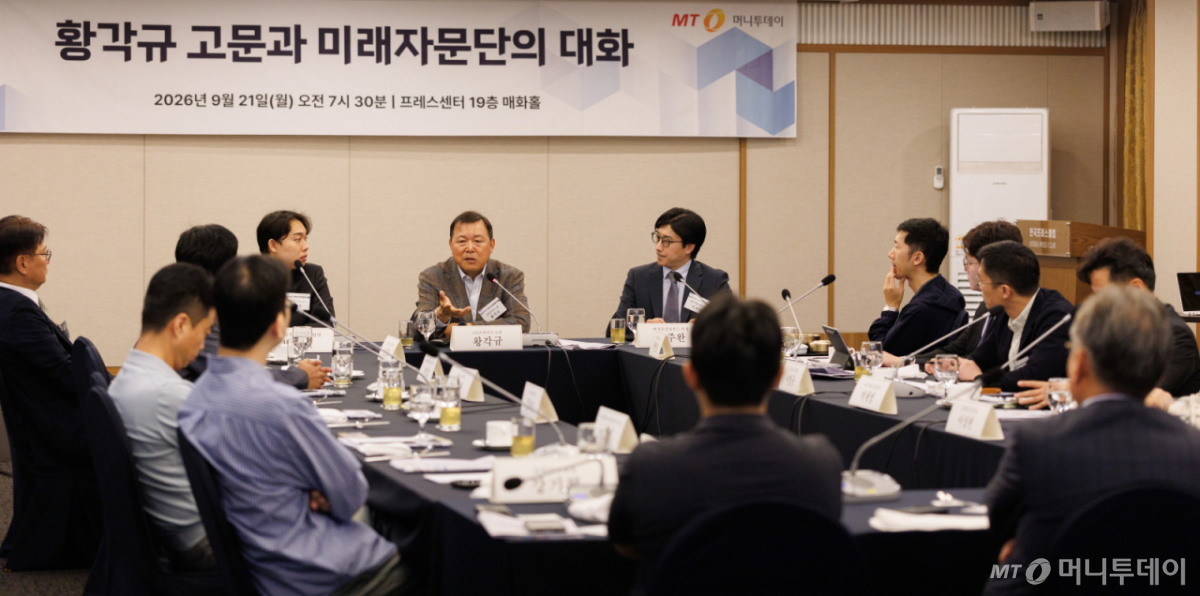
Hwang also emphasized that the company must continuously assess whether its current business model will remain viable going forward and whether the organization is structured to align with that business.
Advisor Hwang said, "Think again about whether the business you are currently running will still be profitable three years from now," adding, "Check whether your business is on the right track." He further stated, "There must always be signals indicating why customers in the market are distancing themselves from you," and emphasized, "You need to continuously consider your business model."
He advised that attention must also be paid to attracting talent. “When the store sales organization and the research and development organization are placed together, average wages tend to fall, which prevents top talent from joining the R&D team,” he said. “It is not desirable to place two departments with different wage levels within a single organizational structure. Therefore, it is necessary to restructure the company’s governance in advance to secure talent and streamline the organizational system.”
Advisor Hwang emphasized that caution regarding failure should not prevent challenges themselves. He stated that he had experienced both success and failure in the process of establishing and acquiring companies. “I have established numerous companies, and during the establishment process, some did not go well, leading to liquidation,” Advisor Hwang said. “Through that process, I experienced many twists and turns.”
He expressed concern that in the process of disseminating failure experiences within the organization, members might become overly conservative. Advisor Hwang stated, “What matters is how quickly one recovers from failure.”
He proposed timely mergers and acquisitions (M&A) as a method to strengthen the company's capabilities. He noted that it takes considerable time to independently secure all necessary technology, talent, and customers, making it essential to leverage external resources. Advisor Hwang emphasized, "You cannot have everything," adding, "Wouldn't acquiring smaller companies through M&A to obtain new technologies, people, or models you do not currently possess contribute to rapid growth?"
Advisor Hwang stated that to grow beyond the domestic market, companies must prepare for global expansion in advance. Advisor Hwang said, "I urge you to dedicate 10 to 20 percent of your time to preparing for global entry."
Counselor Hwang also stated that overseas conferences and meetings serve not only as opportunities to find partners but also as chances to review the company's business model. "If another country is already implementing a better business model than what you are currently doing, you are in a situation where you must innovate your business model," he said.
He advised that actual overseas expansion should be narrowed to a scope the company can manage. Counselor Hwang stated, "If you expand into multiple countries beyond your capabilities, your resources will ultimately be diluted, making success difficult," and added, "It would be better to designate one or two countries and attempt to enter those markets."
He noted that when dealing with overseas partners, it is also necessary to consider the counterpart company’s decision-making process and business culture. In fact, he explained that when a startup secured investment from an overseas investment firm, its management had expected to receive the funds within six months, but due to the country’s corporate culture, it took longer than anticipated for the investment to be disbursed, according to Counselor Hwang.
Counselor Hwang stated, "I had estimated that it would take at least one year, but it ultimately took 15 months," and urged, "When forming partnerships with overseas companies or expanding business operations, one should seek the advice of experienced individuals."
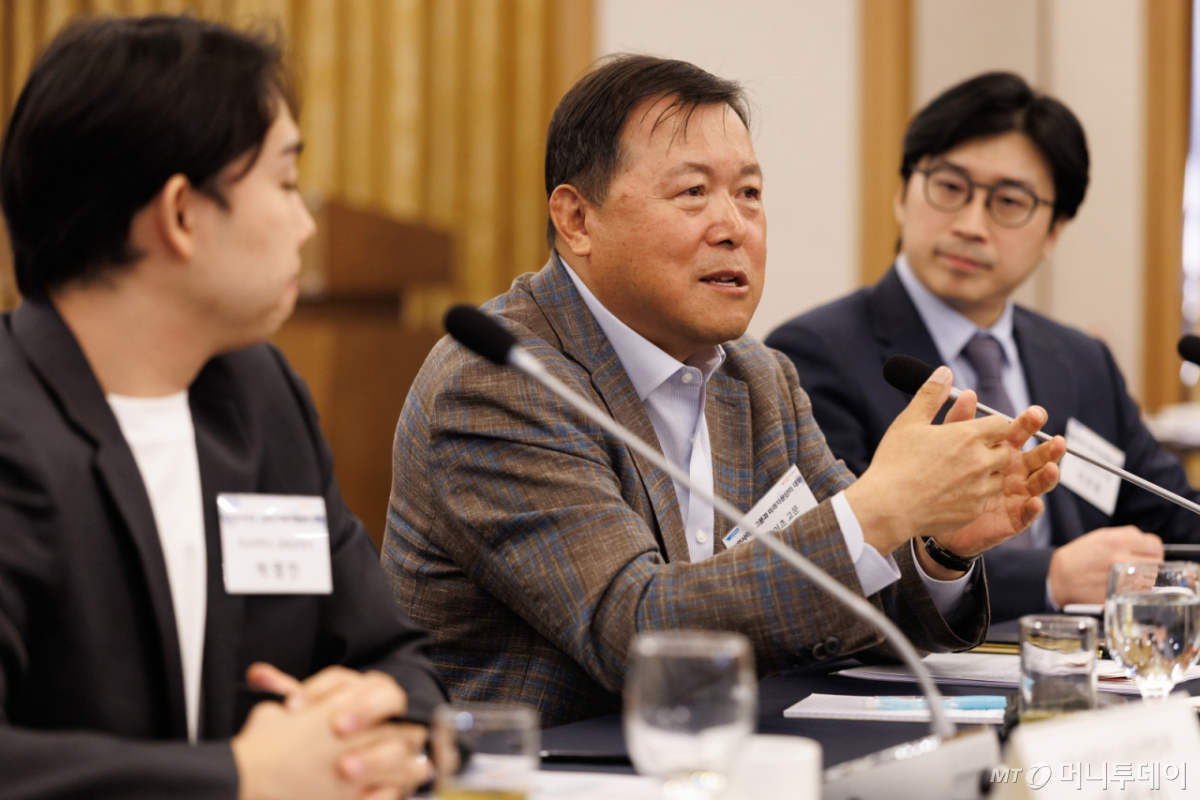
After the lecture, Counselor Hwang and the entrepreneurs belonging to the Future Advisory Group actively discussed together the difficulties they had experienced in running their businesses.
Park Young-min, co-founder of medical AI company Resorius, asked, “I am curious whether there is a specific benchmark for determining the exact timing of global expansion. You mentioned that entering overseas markets too hastily could actually have a negative impact, so I would like to know what a realistic direction would be.”
In response, Counselor Hwang stated, “I believe the only answer ultimately lies in the will of the entrepreneurs here,” adding, “Internal capabilities involve issues related to people and finances.”
Advisor Hwang stated, "If you expand overseas, you must endure for five to ten years there, and the probability of turning a profit within one to two years is less than 0.01%. Therefore, you must calculate the cumulative costs incurred over five years." He added, "If you believe you have the strength to endure, you should expand overseas now."
Bin Jun-gil, CEO of Neurofit, a KOSDAQ-listed company specializing in AI solutions for brain disease image analysis, said, "He told us that we must make small improvements every day. Our company has five division heads, including myself, and I have been concerned about whether we are as passionate now, one year after our IPO, as we were before the listing." He added, "I am curious about how to change our mindset."
Advisor Hwang said, "If you spend more than an hour discussing such concerns with three or four mentors, you can gain ideas and hints." He added, "The stress that founders are experiencing is like a balloon on the verge of bursting, but mentors can help prevent it from popping." He further stated, "After your company goes public, you must launch a second-stage rocket to reach the stratosphere. If you stop here, it is a dangerous point where you will fall, and one way to address this is through shock therapy."
Lee Beom-gyu, representative of Team Sparta, a company that supports AX (AI transformation) and AI education, asked, “I’m curious whether there are specific things you must always check when conducting M&A (mergers and acquisitions).” He added, “I’m also interested in how to develop talent within a company.”
Advisor Hwang stated, "When conducting M&A, there must have been an initial goal," adding, "Fundamentally, one should not acquire a company that does not generate profit; rather, even if the price is slightly higher, one should buy a profitable company." Advisor Hwang further remarked, "Ultimately, you need to give people a lot of work. You just need to support those who provide good feedback, discover new tasks, or treat the company's business as their own."
Kim Jeong-su (CEO), a specialist in pop-up stores, said, "We have reached a year of achieving profitability for the first time in 10 years, but we are concerned about how to break through and grow further as our growth has slowed and we seem to be hitting a ceiling."
In this regard, Advisor Hwang recommended M&A as one of the breakthroughs, stating, "You can ask investors in reverse which company they would recommend acquiring, review and gather information, and then decide whether to approach new clients," adding, "The CEO will likely know best."
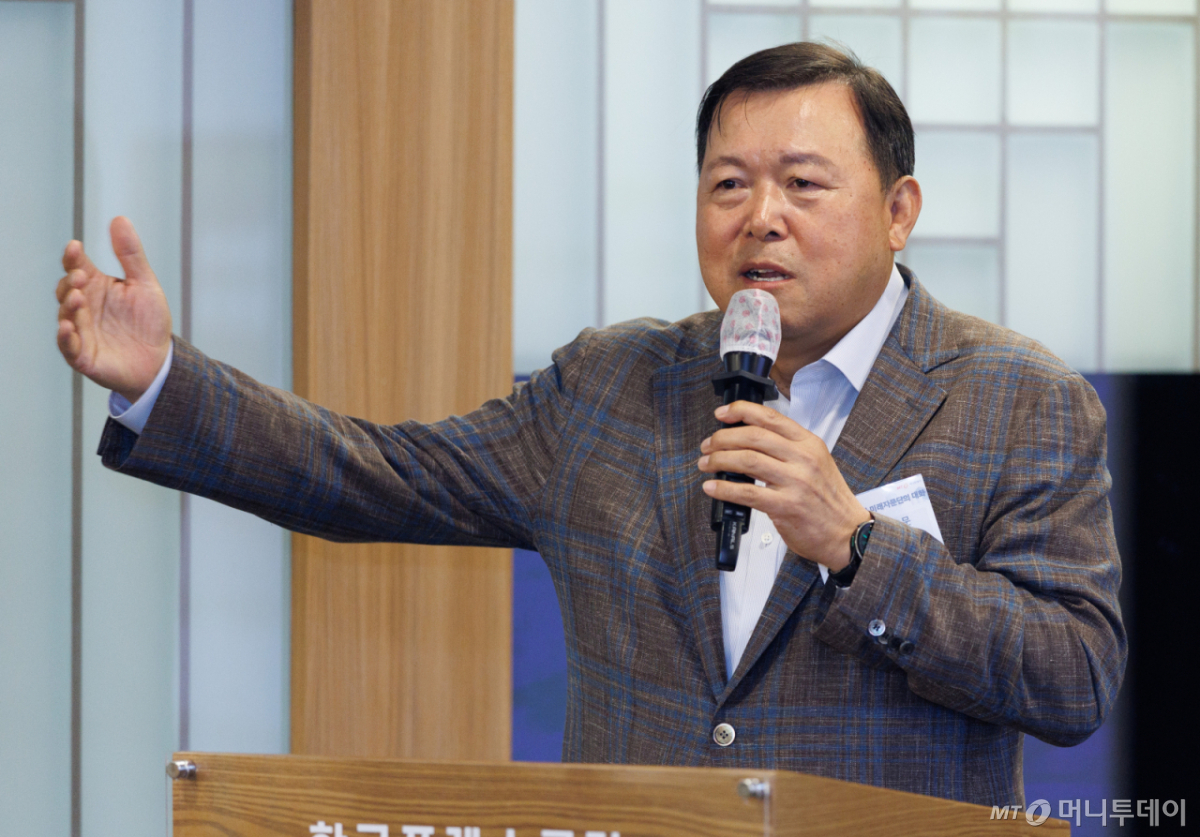
◇ Counselor Hwang Gak-gyu is
He graduated from Masan High School and the Department of Chemical Engineering at Seoul National University, and subsequently joined Honam Petrochemical (now Lotte Chemical). He has held various positions, including Director of the International Division and Director of Operations in the Policy Headquarters of Lotte Group, Gyeong Yeong-hyeok-sin (Head), and Vice Chairman of the Board of Directors at LotteJi Ju (CEO). A strategy and M&A expert, he led major mergers and acquisitions such as those involving H-E-Mart, KT Rental, and Samsung Precision Chemicals, and drove the expansion of overseas businesses, contributing to the growth of Lotte Group. Drawing on more than 40 years of management experience, he currently advises startup founders on business strategy, organizational management, and global market entry.
[Profile]
△ 1955 △ Masan High School △ Department of Chemical Engineering, Seoul National University △ Joined Honam Petrochemical (now Lotte Chemical) △ Director of the International Division, Policy Headquarters, Lotte Group (President) △ Director of Operations, Policy Headquarters, Lotte Group (President) △ Gyeong Yeong-hyeok-sin (Head), Lotte Group (President) △ Vice Chairman and Director, Lotte Ji Ju (CEO)

 in INDUSTRY


