

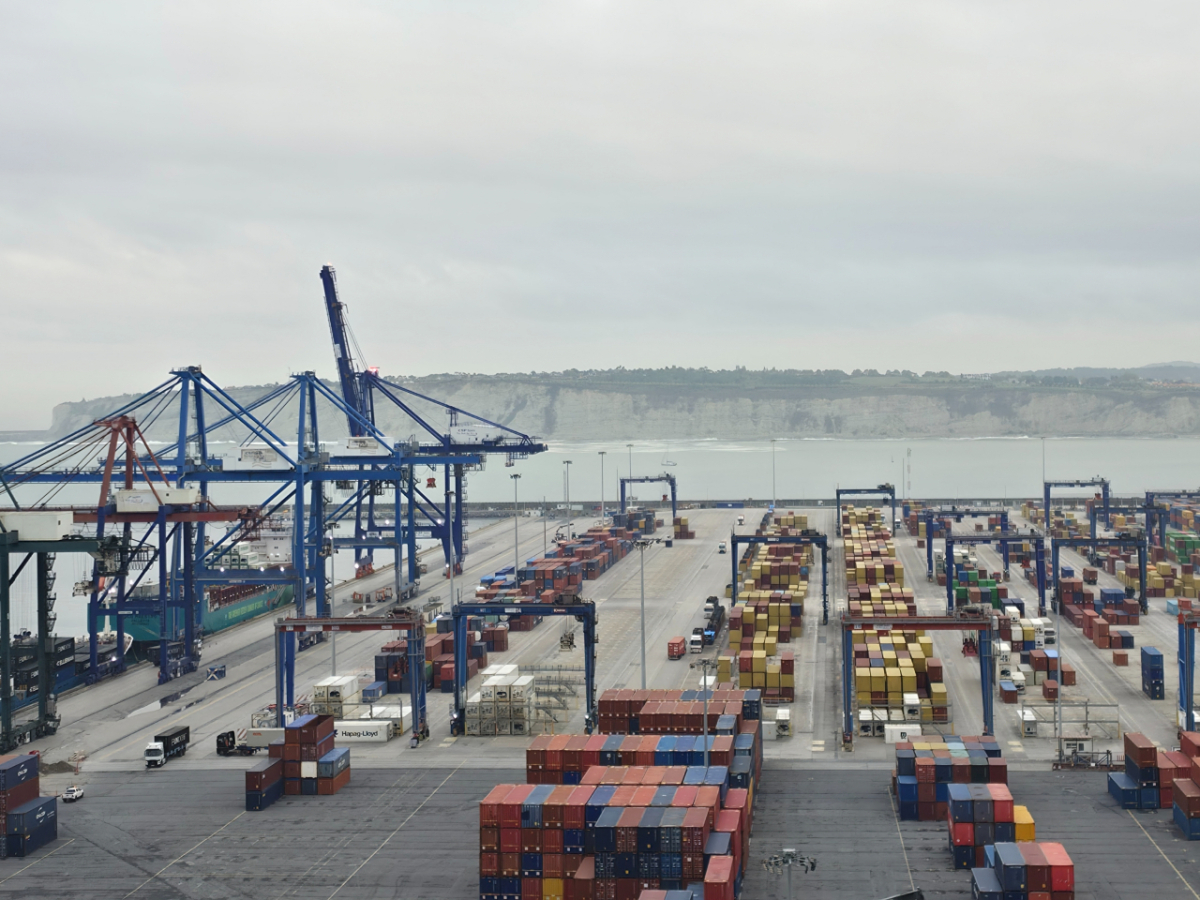
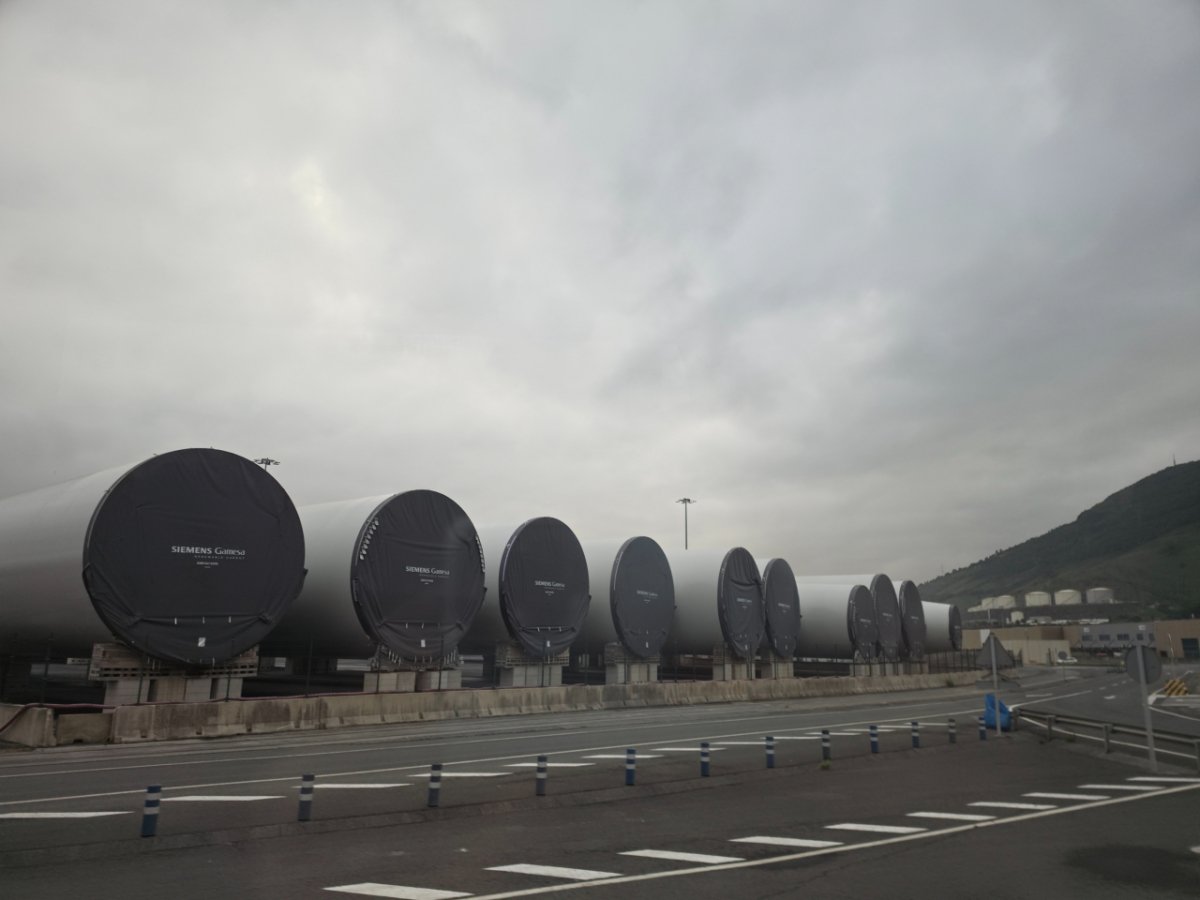
The Port of Bilbao in the Basque Region of northern Spain, visited on the 2nd (local time). Upon entering the wharf, giant wind turbine blades and towers were piled up in various locations. Ships carrying cargo came and went ceaselessly on the sea. The Port of Bilbao, with a total area of 430 hectares (approximately 1.3075 million pyeong) and a wharf length reaching 22 km, sees the entry and exit of 3,000 ships, 4,000 freight trains, and 1.5 million trucks annually. Jon Anasagasti, head of business development and combined transport at the Port of Bilbao, stated, "This is precisely the logistics hub for European wind power," adding, "Global companies such as Siemens Gamesa and Vestas store various components here before sending them to all corners of the world."
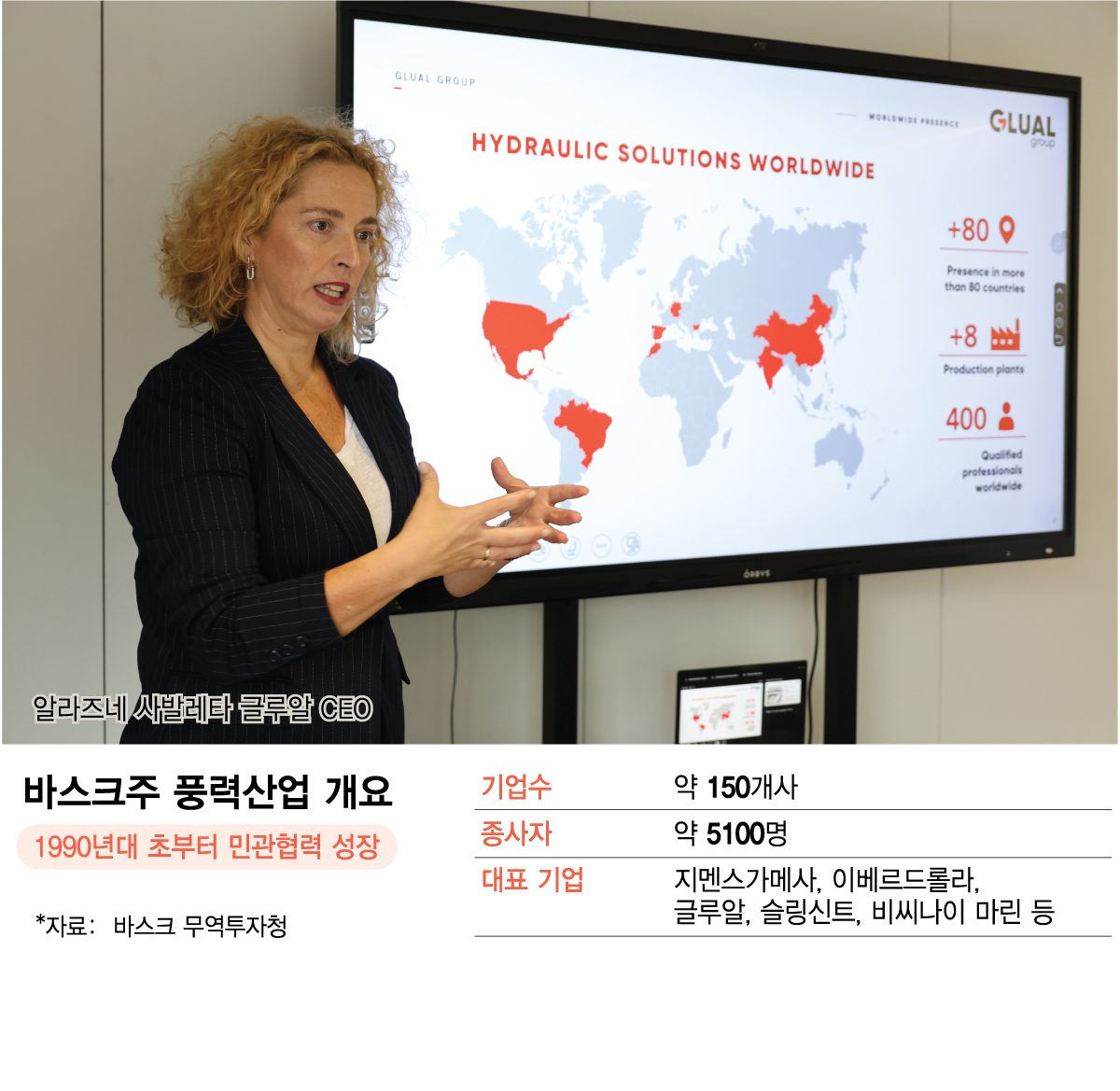
The scene at the Port of Bilbao, which is essentially the only port in Spain exporting wind equipment, provides a condensed view of the industrial landscape of the Basque Region, known as the "global mecca of wind power." As much as 38% of the total area of the Port of Bilbao is dedicated solely to the wind industry. The Basque Region is home to more than 150 wind-related companies, including Siemens Gamesa and Iberdrola, with approximately 5,100 employees. A dense value chain has also been established, capable of producing all wind equipment within the region except for blades. An ecosystem has formed in which equipment production, logistics, and export are organically interlinked around the port.
Representative Companies Such as Glual and Sling Sint… Wind Revenue Share Expands Annually
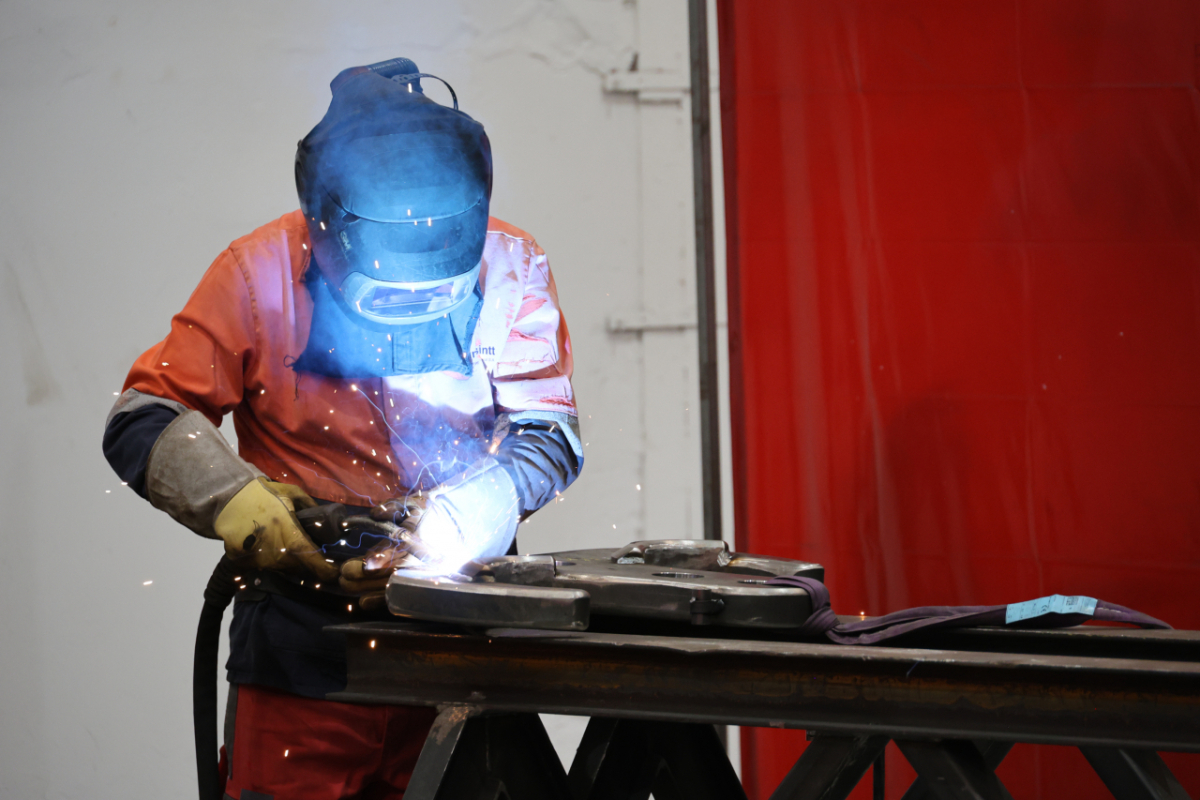
The Basque Region was not the center of the wind industry from the start. In the past, shipbuilding and steel industries sustained this region. However, as Korea, China, and Japan quickly caught up, traditional manufacturing began to decline. A breakthrough appeared in renewable energy. Shipbuilding and steel companies turned their eyes toward the wind industry, where they could utilize their existing technological capabilities. This was because technologies required for producing wind equipment, such as welding, forging, and metal processing, could be connected to existing industries.
The Basque company "Glual Group" Lee (CEO) is a case in point. Founded in 1969, the company, which specialized in hydraulic technology for hydropower, expanded its business area to hydraulic systems for wind turbines in the early 1990s. Currently operating nine production plants worldwide and supplying products to more than 80 countries, it has exported products to over 50 GW of onshore and offshore wind turbines, including up to 11 MW (megawatt) class units, targeting major global turbine manufacturers. Alazne Sabaleta, head of Glual, whom we met earlier on the 1st (local time), stated, "Because we knew well how hydraulic technology was actually applied, there was no great difficulty in transitioning from hydropower to wind power," adding, "Currently, the share of wind business in total revenue has increased to about 35%."
Sling Sint, which produced lifting equipment for transferring cargo at ports, is also one of the companies that expanded its business opportunities into wind power. Utilizing lifting technology accumulated over more than 40 years, it developed dedicated wind lifting equipment and currently supplies products to major global wind turbine manufacturers such as Siemens Gamesa and General Electric (GE). The wind business currently accounts for up to 80% of the company's total revenue.
Industrial Expansion Without Power Plants… Achievements Through Public-Private Cooperation
Behind the growth of the Basque Region into a world-class wind industry hub was not only wind power demand across Europe but also systematic cooperation between the regional government and companies. Rather than relying on local power demand, they built an industrial foundation where the public and private sectors joined forces to target the European market.
The foundation of this public-private cooperation is the cluster policy that began in 1991. Centered on an "energy cluster" that united companies, technology centers, and administrative institutional investors, collaboration between companies and technology development were promoted. Through support programs such as "Hasitek" and "Elkartek," funds were consistently invested in joint research and development (R&D) between companies and research institutional investors, while the Basque Trade and Investment Agency assisted companies with overseas expansion and network building. Of the 3.5 billion euros (approximately 5.27 trillion won) invested in the Port of Bilbao over the past 30 years, 1 billion euros (1.5 trillion won) came from the public sector.
Some argue that the industry grew naturally because large companies with competitiveness in the wind field, such as Siemens Gamesa and Iberdrola, were present. However, local industry assessments suggest that it would have been difficult to build an ecosystem like the current one based solely on the presence of these companies. In the early stages of industrial development, Siemens Gamesa and Iberdrola began contacting local SMEs (small and medium-sized enterprises) that manufactured machine tools and industrial machinery during their cooperation process. The energy cluster supported the exchange of knowledge and technology between companies in this process. Regional government-level support, such as tax benefits, also continued to enable existing large companies to remain in the Basque Region.
Emergence of New Companies… "Korea Also Has Sufficient Competitiveness in the Wind Industry"
Currently, they provide guideLINEs and specific roadmaps to companies regarding which technologies are important and promising. Based on this, when Basque companies apply for "transition projects," the government selects the projects and provides subsidies or funding. Ander Gonzalez Hernandez, head of international cooperation at the Basque Region Energy Cluster, explained, "Many companies have transitioned their businesses through this method," adding, "We support companies in creating new business relationships and turning them into actual commercial contracts or agreements."
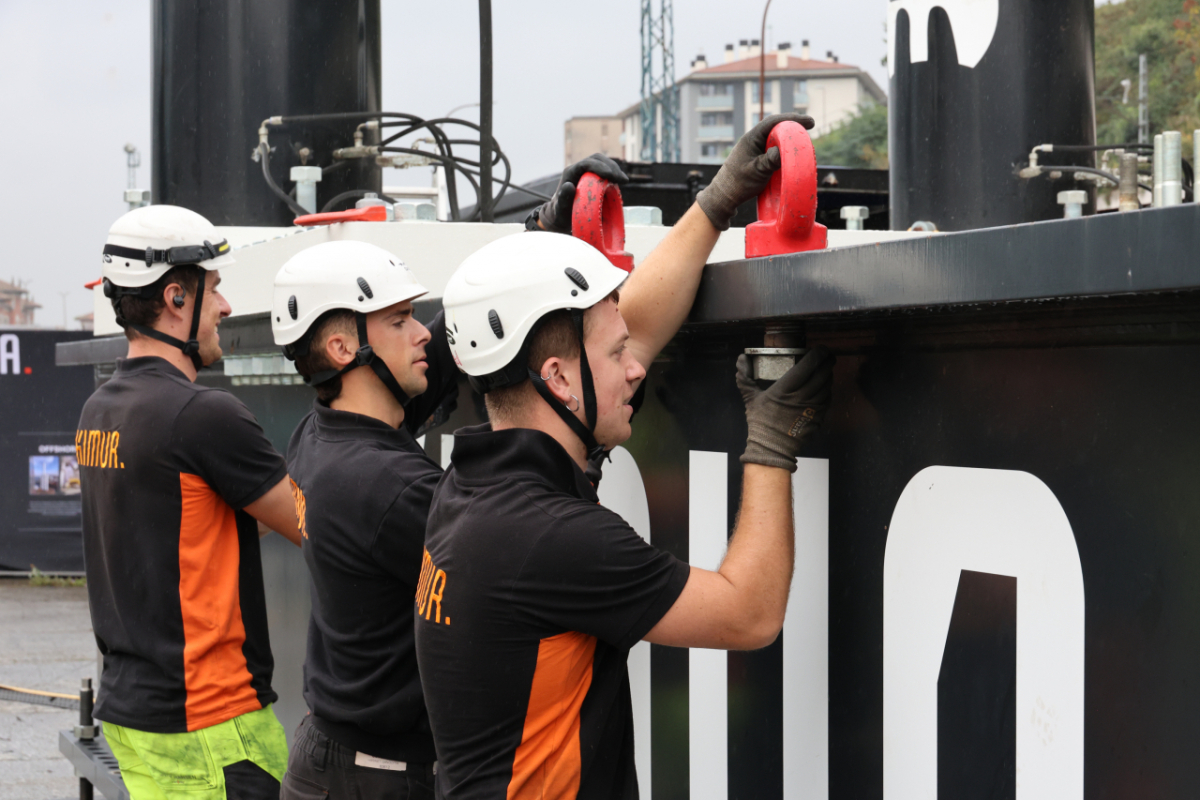
Based on a solid value chain, new companies are steadily emerging. Kimuwa, which participated in the construction of the Jeonnam Offshore Wind Power Plant 1 Complex domestically, is also a company established 14 years ago. Ben Lerea Astobiza, Chief Technology Officer (CTO) of Detrel, a startup manufacturing connectors for floating offshore wind power, said, "Through an introduction by the Basque Trade and Investment Agency, we were able to make contact with Korea's LS Cable & System and Daekorea Electric Power Corporation, and received cooperation requests."
The case of the Basque Region has significant implications for Korea. This is because Korea also possesses a similar manufacturing base in shipbuilding and steel. Most company officials met on site assessed that Korean companies have sufficient competitiveness in the wind industry. Head Sabaleta advised, "Korea has all the technology and infrastructure needed for the wind industry," adding, "As efforts to expand offshore wind power are being pushed forward, strategic choices are needed at the national level to build an energy mix."

 in INDUSTRY


