

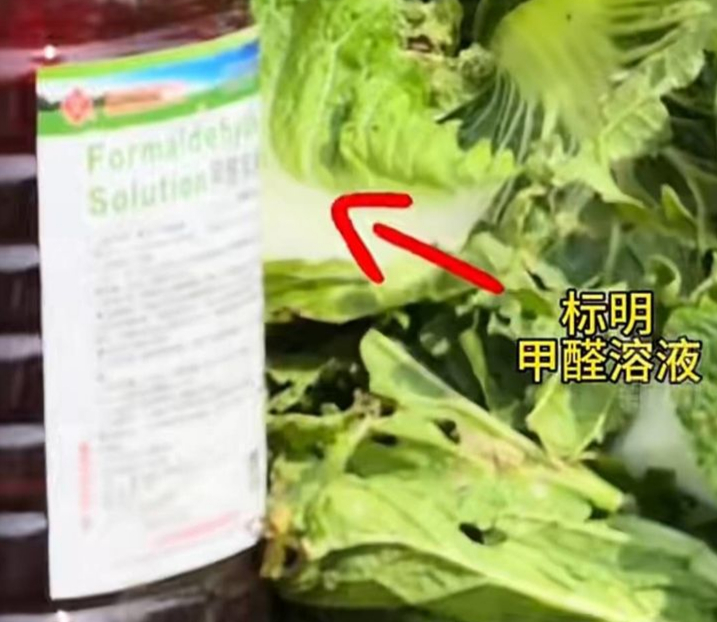
Reports that formaldehyde, a carcinogen used in cabbage storage in China, have surfaced are reigniting public anxiety over food safety from Chinese imports. Over the past five years, Chinese food products received the highest number of non-compliance rulings among all countries in domestic import inspections, with non-compliance rates also exceeding the overall average.
According to data released on the 25th by the Ministry of Food and Drug Safety and foreign media outlets, it was recently confirmed that some cabbage buyers in Kangbao County, Zhangjiakou City, Hebei Province, China used formaldehyde to maintain freshness. Chinese authorities have launched a special investigation to trace the distribution channels of the problematic cabbage, while the Ministry of Food and Drug Safety is also verifying whether such products were imported into Korea.
However, confirmation may take additional time. This is because once cabbage moves within China and is processed into kimchi or other products, export-import statistics are recorded based on the manufacturer's location rather than the original production site. Although approximately 96% of Chinese kimchi produced last year came from companies located in Shandong Province, the actual cultivation areas of the raw cabbage remain unknown.
Safety controversies surrounding Chinese food have persisted for decades. In 2005, parasitic eggs were repeatedly detected in Chinese kimchi, and in 2021, hygiene concerns erupted after a video titled "naked kimchi" spread online, showing a shirtless man handling cabbage in a saltwater tank.
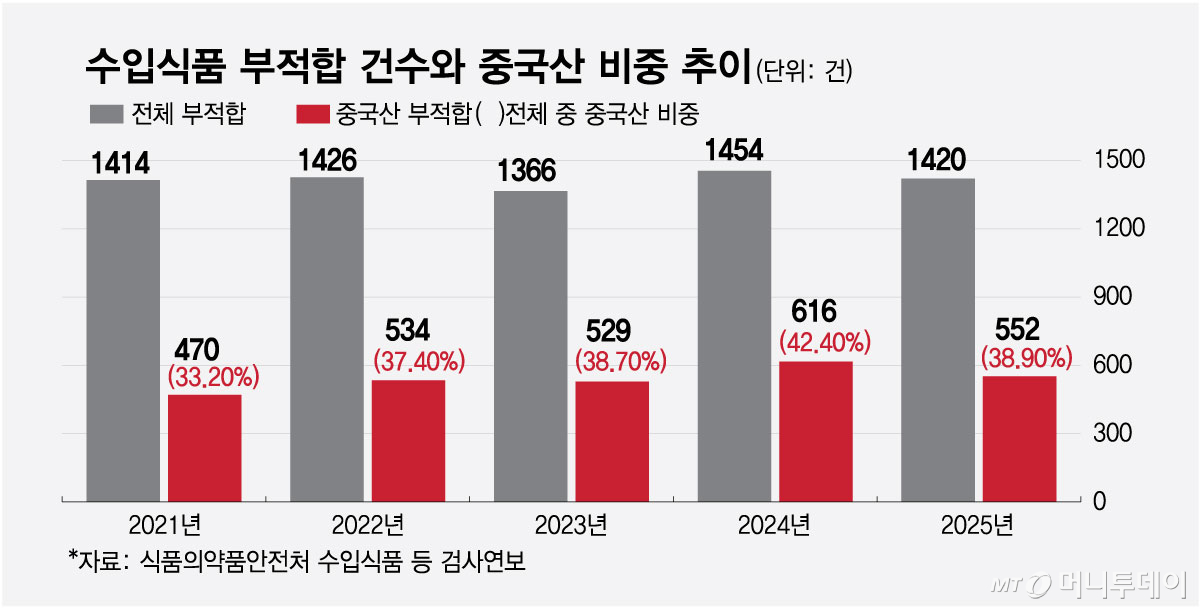
According to the Ministry of Food and Drug Safety's "2026 Yearbook of Imported Food Inspections," non-compliance cases for Chinese imported food last year totaled 552, the highest among all countries. This marks five consecutive years as China recorded the most non-compliant imports, following 470 cases in 2021, 534 in 2022, 529 in 2023, and 616 in 2024.
Non-compliance rates adjusted for import volume also exceeded the overall average. The non-compliance rate for Chinese imported food was 0.23% in 2022, surpassing the overall average of 0.18%, and remained at 0.21% during 2023–2024, higher than the average of 0.17%. Last year's rate stood at 0.18%, exceeding the overall average of 0.16%.
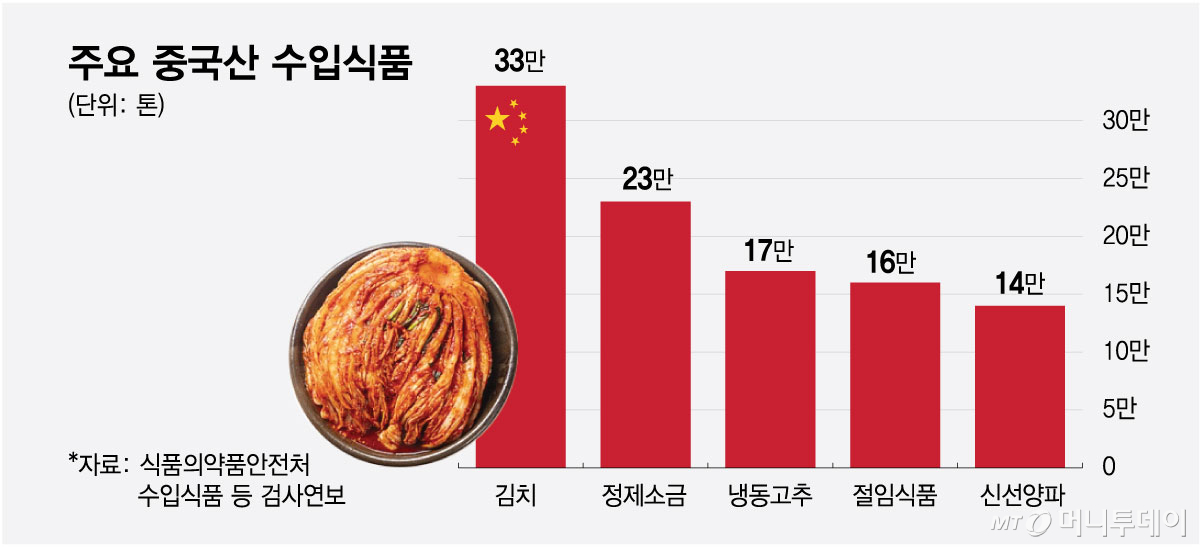
Despite recurring safety concerns, Chinese kimchi imports continue to rise annually due to their price competitiveness. According to export-import trade statistics from Korea Customs Service, Chinese kimchi imports last year reached 336,221 tons, a record high. This represents a 39.7% increase compared to 2021, and as of July this year, 194,401 tons had already been imported. Chinese kimchi accounts for 99% of total kimchi imports.
Especially, the restaurant industry has increasingly relied on imported kimchi. According to the "2025 Kimchi Industry Survey Statistical Report" by the Korea Rural Economic Institute, 44.1% of restaurants purchased imported cabbage for side dishes, up from 28.1% in 2020—a rise of 16.0 percentage points. For cooking-grade cabbage kimchi, the share of imported purchases exceeded half at 51.0%.
The food industry is closely monitoring whether this incident could escalate into broader distrust toward all Chinese ingredients. Last year, imports from China included not only kimchi but also refined salt, frozen peppers, pickled foods, and fresh onions totaling approximately 100,000 to 200,000 tons. Already, reactions such as "avoid Chinese ingredients" and "cannot eat restaurant kimchi" have emerged on mom cafes and social networking services (SNS), indicating heightened consumer vigilance.
A food industry official stated, "Regardless of the Ministry of Food and Drug Safety's findings, we are closely monitoring consumer responses to Chinese ingredients. However, considering the price competitiveness and dependency on Chinese products among small business owners and small restaurants, it will not be easy to replace them with domestic alternatives in the short term."

 in LIVING


