

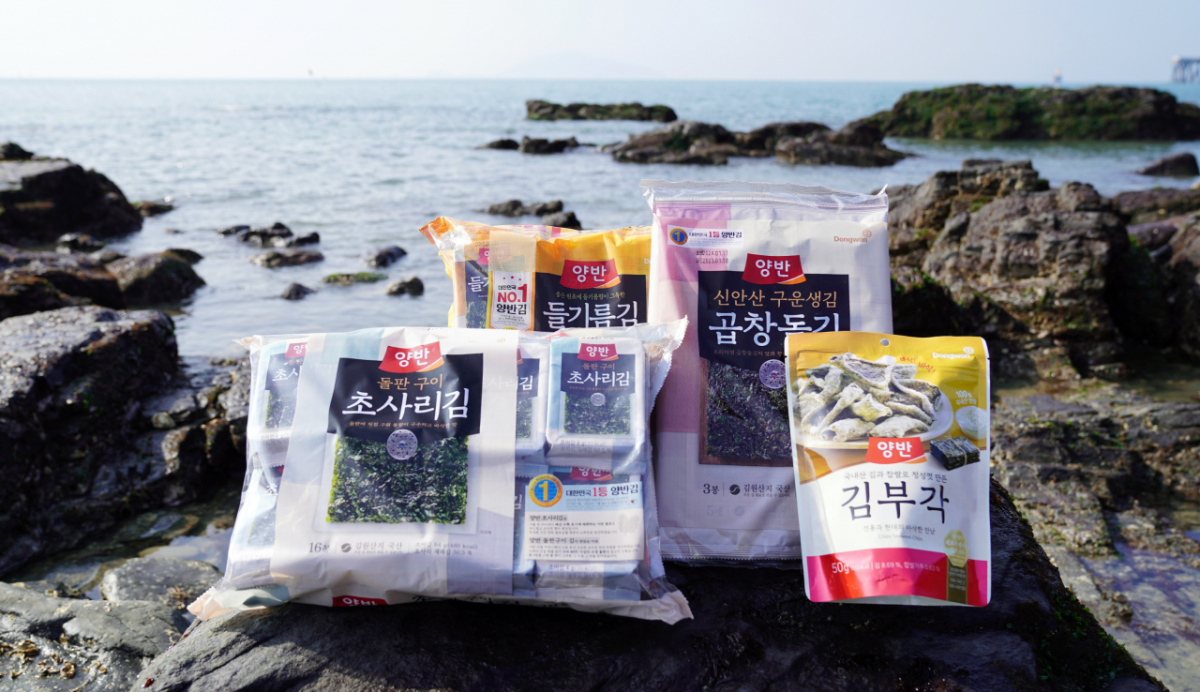
Dongwon F&B's Yangban Kim is accelerating its overseas market expansion and strengthening freshness by introducing a nitrogen-filling method to mark its 40th anniversary of launch.
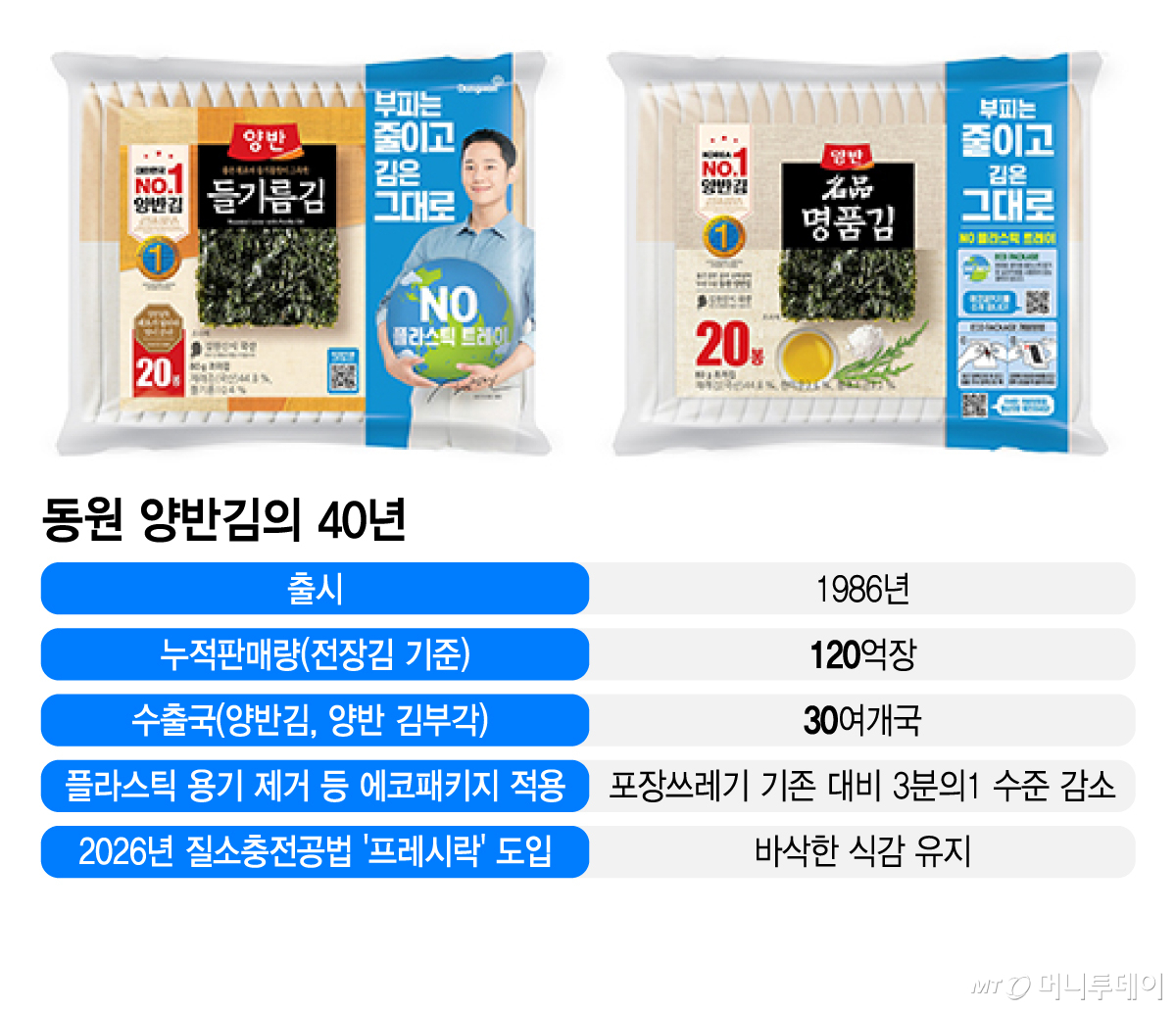
Since its launch in 1986, Yangban Kim has recorded cumulative sales of 12 billion sheets (based on full-size sheets). The brand has refined its quality control methods from raw material selection to roasting and packaging, and has now entered more than 30 countries, including Japan, the United States, and Thailand.
Yangban Kim emerged in the mid-1980s in line with the trend of consumers seeking simpler food lifestyles. Dongwon selected the name 'Yangban Kim' through a consumer brand naming contest at the time and launched the product in April 1986. To differentiate itself from competitors, the company also imported hygienic production lines from Japan.
After its launch, Dongwon focused on raising quality standards. In October 1990, it obtained the first KS mark for a seasoned seaweed product in Korea. Yangban Kim has focused on preserving the taste and aroma of the seaweed by applying a process that involves selecting premium raw materials and roasting them twice. Dongwon F&B operates the country's only raw material appraiser system, visiting production sites during harvest season to inspect and purchase raw materials.
Subsequently, Yangban Kim expanded its scope to be enjoyed as a snack or with alcohol. It introduced 'Yangban Chosari Kim,' made from young raw materials harvested early in the season, and 'Yangban Gopchangdol Kim,' using gopchangdol seaweed grown in the Shinan tidal flats of South Jeolla Province. In 2011, it launched 'Yangban Gimbugak,' a modernized version of a traditional food made by coating seaweed with glutinous rice paste and frying it.
Gimbugak is made by applying domestic glutinous rice paste to domestic seaweed raw materials and then roasting and frying them at temperatures above 200 degrees Celsius. The lineup was later expanded to include garlic gimbugak, which adds domestic garlic powder, and shrimp gimbugak, coated with shrimp powder.
Packaging methods aimed at reducing plastic use have been applied. 'Yangban Kim Eco Package' is a product that eliminates the plastic containers previously used for content protection, thereby reducing packaging volume and waste. According to Dongwon F&B, packaging waste such as vinyl and cardboard boxes has decreased by one-third compared to before.
The 'Yangban Perilla Oil Kim Eco Package' introduced laser-cutting film, a first in the seasoned seaweed industry. To reduce the problem of seaweed tearing when opening the package, small holes are made on the surface of the film using a laser to make it easier to open. Dongwon F&B developed this packaging material after more than two years of research with Wonsystems, an affiliate of the Dongwon Group.
The nitrogen-filling method 'Fresh-Lock,' introduced this year to mark the 40th anniversary, reduces oxygen inside the product and fills it with nitrogen to maintain the crisp texture and flavor of the seaweed. Dongwon F&B explained that nitrogen filling alone allows the company to maintain existing quality without silica gel, enabling a reduction of approximately 300 tons of silica gel annually. For overseas export products, both the nitrogen-filling method and silica gel are applied together, extending the shelf life from six months to 12 months.
Dongwon F&B plans to expand Yangban Kim's overseas presence based on raw material management and product development. A Dongwon F&B official said, "We introduced the nitrogen-filling method to provide consumers with higher-quality seaweed," adding, "We will continue our efforts to improve quality from raw material management to packaging."

 in LIVING

