

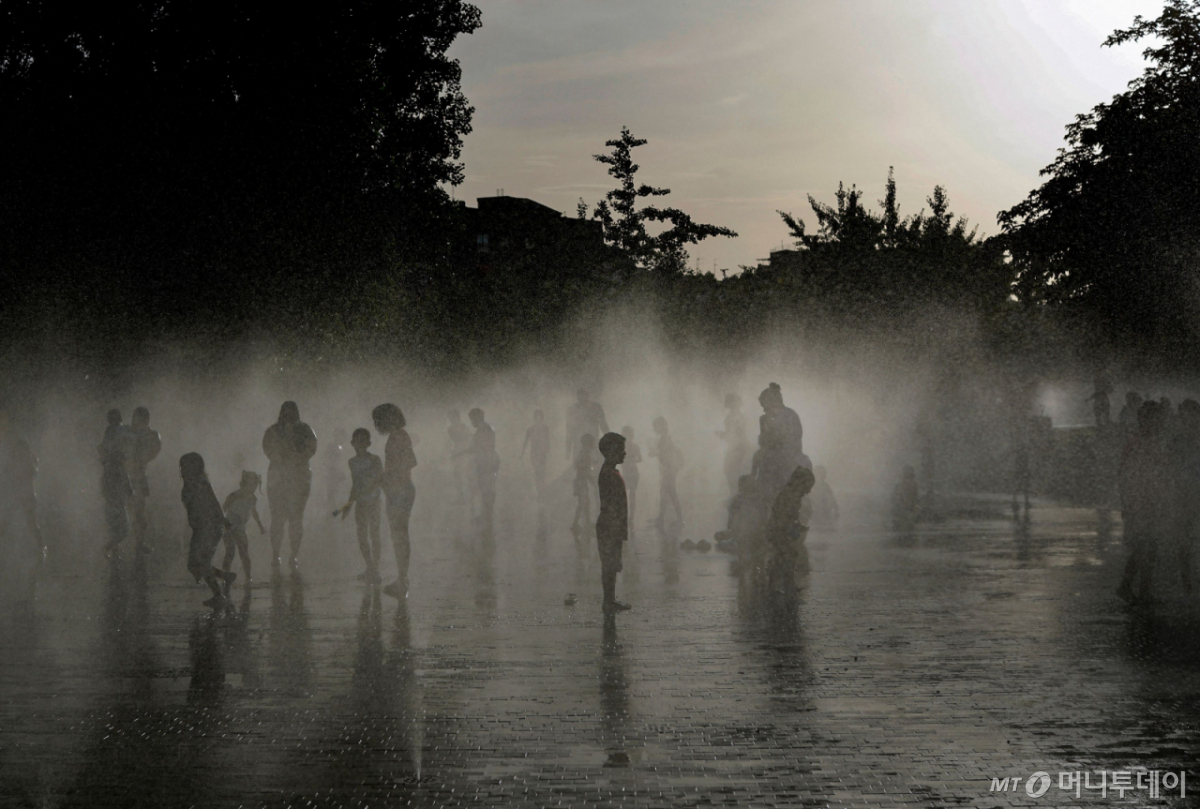
The summer marked by record-breaking heatwaves around the world has passed. Europe suffered a double blow from extreme heat and wildfires, with countries including Germany and the Czech Republic recording their highest temperatures ever. In South Korea, Yangsan in Gyeongnam Province recorded 42.5 degrees Celsius, the highest temperature in the nation's 122-year meteorological history. In Nepal, at least 6,000 people were killed or went missing due to catastrophic flooding. While the extreme heat has subsided, climate change has not. We need forward-looking countermeasures.
Europe saw more than 35,000 additional deaths compared to the average since the heatwave began in late June. The economic impact is also massive. Dutch bank Triodos Bank estimated that this year's heatwave could reduce the European Union's gross domestic product (GDP) by about 1 percent. This amounts to approximately 180 billion euros (about 281 trillion won), a scale capable of offsetting the EU's projected growth rate of 1.1 percent for this year. The largest economic impact from heatwaves is expected to be a loss in labor productivity equivalent to 0.6 percent of EU GDP. Reduced agricultural output, rising food prices, higher electricity bills, and disruptions to road and rail transportation further exacerbate the damage. The effects of global warming are not limited to heatwaves. Nepal's flooding was not merely a landslide but a result of rapid temperature increases across the Himalayas causing glaciers to melt, thereby increasing instability in surrounding terrain.
South Korea is also not exempt from climate disasters. The number of hot days has doubled compared to the 1970s over the past decade, and last month, nearly 1,000 millimeters of rain fell on Geoje in Gyeongnam Province within four days. This is a result of increased climate variability. According to Professor Yoo Jong-hyun of Seoul National University, the cost of climate change damage nationwide is projected to reach 12.36 trillion won by 2040 and rise to about 34 trillion won by 2050. The capital region, including Gyeonggi Province and Seoul where population and economic assets are concentrated, is particularly vulnerable to climate change and is expected to account for nearly half of the total damage.
While the fiscal burden of responding to climate change is significant, proactive investment to prevent declines in labor productivity and industrial damage will ultimately be more economical. The deep-level rainwater tunnel in Sinwol-dong, Seoul, serves as a good example. That area has been freed from flooding since the tunnel was constructed. It is important to establish fundamental countermeasures rather than superficial or politically motivated projects. Both government and public awareness must change. We should not forget heatwaves just because summer has passed; instead, we must now fully embark on comprehensive climate response efforts.

 in OPINION
