

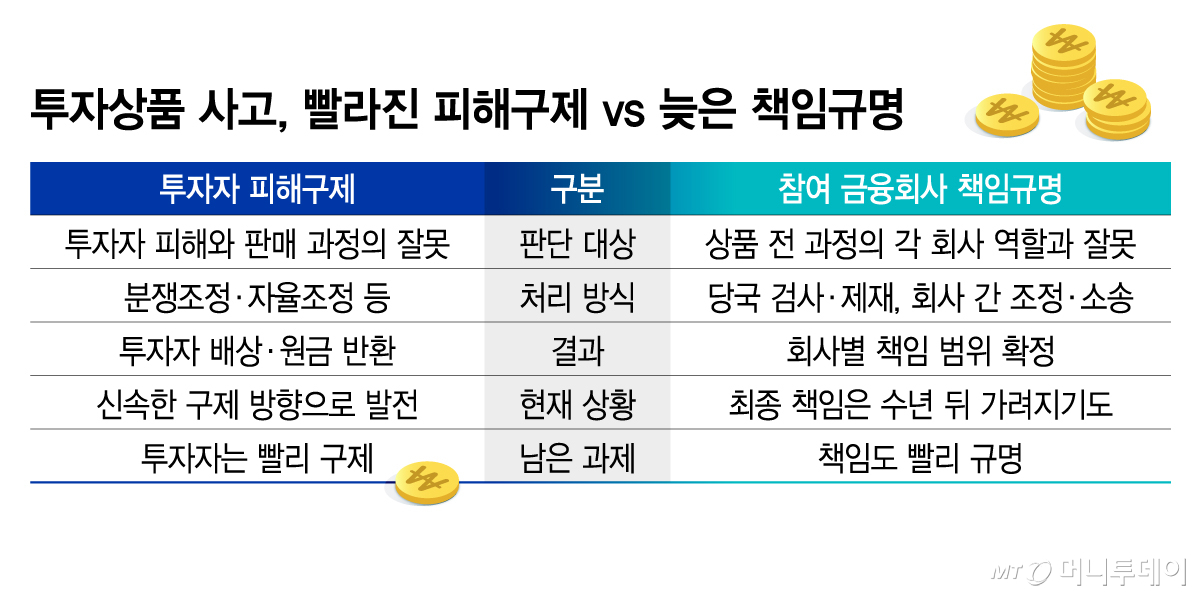
It has been confirmed that financial authorities are considering a 'priority compensation followed by final settlement' plan regarding Homeplus coupon bonds. Under this plan, the selling company would first compensate investors whose incomplete sales have been verified, and then conduct a final settlement once actual losses are confirmed. However, even after the selling company provides initial compensation, the accountability of other financial institutions such as asset management companies is often determined in court years later. Critics argue that not only victim relief but also the responsibilities of all financial institutions involved in the incident, regulatory authorities, and investors themselves must be properly clarified.
According to the financial investment industry on the 31st, the Financial Supervisory Service (FSS) is considering a plan to compensate investors whose incomplete sales of coupon bonds have been verified through inspection and sanction results, even though Homeplus is undergoing bankruptcy proceedings and the final loss amount has not yet been determined.
In the past, as the market experienced large-scale incomplete sales incidents, victim relief processes accelerated. In 2021, financial authorities improved the financial dispute adjustment procedure to establish a mechanism allowing financial institutions to voluntarily adjust multiple similar disputes first. However, rescuing investors promptly does not mean that the final accountability of all financial institutions involved in the incident is simultaneously clarified.
The Optimus incident illustrates the time lag between victim relief and accountability determination. NH Investment & Securities paid 278 billion won in principal to 831 general investors in 2021. Instead of accepting the 'cancellation of contract due to error' method recommended by the FSS Dispute Adjustment Committee, the company opted for a private agreement where it paid investors their principal and subsequently acquired related profit-sharing certificates and rights. It then initiated separate legal proceedings to seek accountability from Hana Bank and the Korea Depository & Clearing Corporation. In effect, the timelines for investor victim relief and final accountability determination between financial institutions moved independently.
Critics emphasize that there is a need to distinguish between the selling company's responsibility and the ultimate accountability of all financial institutions involved in the incident. For products involving multiple financial institutions such as asset management companies and trustees, each company's actual role and errors must be examined from product development and design through information creation, verification, operation, and sales.
The responsibility of financial authorities is also being raised. After an incident occurs, the Financial Supervisory Service inspects and sanctions relevant financial institutions and initiates victim relief for investors. However, facts confirmed during this process do not immediately lead to a procedure that comprehensively summarizes the responsibilities of participating companies at an early stage. Critics argue that even if civil final liability ratios are determined by courts, regulatory inspections must more clearly identify each company's actual role and errors at the inspection stage.
A financial industry official stated, "If a selling company violates suitability principles or fails to fulfill its duty of disclosure, it naturally bears corresponding responsibility," but added, "The structure requiring years of litigation with other participating companies over liability even after prioritizing investor relief needs improvement."
Investors cannot be exceptions in accountability discussions. Lee Sung-bok, a senior researcher at the Capital Market Research Institute, pointed out in his report titled 'Issues and Directions for Improving Investor Victim Relief Systems' that even if investor victim relief is expanded, investors' own responsibility must also be given significant consideration.
Voices are calling for institutional improvements to accelerate both investor victim relief and accountability determination between financial institutions simultaneously, rather than treating them as separate timelines. Critics argue that a structure is needed where investors receive prompt relief, participating financial institutions such as selling companies and asset management firms bear responsibility according to their actual roles and errors, and investors themselves accept responsibility for risks they voluntarily chose. As the clock for victim relief has sped up, the clock for accountability determination must also accelerate accordingly.
Meanwhile, the Financial Supervisory Service maintains that it is difficult for authorities to directly determine civil liability ratios between financial institutions. The FSS explains that while it assesses illegal or improper conduct of relevant financial institutions through inspections and sanctions and initiates investor victim relief via dispute adjustments, the right of recourse between selling companies and asset management firms must be resolved through litigation between the parties themselves. Although the FSS's inspection results can serve as reference in related civil lawsuits, they do not bind the court's judgment.

 in STOCK
