

The first floor of American department stores has long been the main stage for high-end cosmetics brands such as Estée Lauder, Lancôme, and Chanel. For 100 years, they generated substantial profits through premium marketing in this space. However, the situation has now completely reversed. While Estée Lauder is conducting layoffs and aggressive restructuring amid weak demand, its circumstances remain unfavorable.
Estée Lauder expects cumulative costs associated with restructuring to reach as much as $1.75 billion (approximately 2.6573 trillion won), an increase of $20 thousand won (approximately 303.7 billion won) from the previous forecast of about $1.55 billion (approximately 2.3536 trillion won). The company is terminating expensive lease agreements for offices in the Post area.
Estée Lauder had previously announced plans to cut up to 10,000 jobs.
However, the entire U.S. cosmetics industry is not in a recession. Many companies are thriving with consumers in their teens and 20s. The MZ generation, which values rational consumption, is particularly sensitive to dupes (dupe·luxury alternatives), and products that offer quality comparable to luxury brands at lower prices are gaining popularity among them. The trend of "the higher the price, the better it sells," characteristic of premium marketing, is being overtaken by its exact opposite.
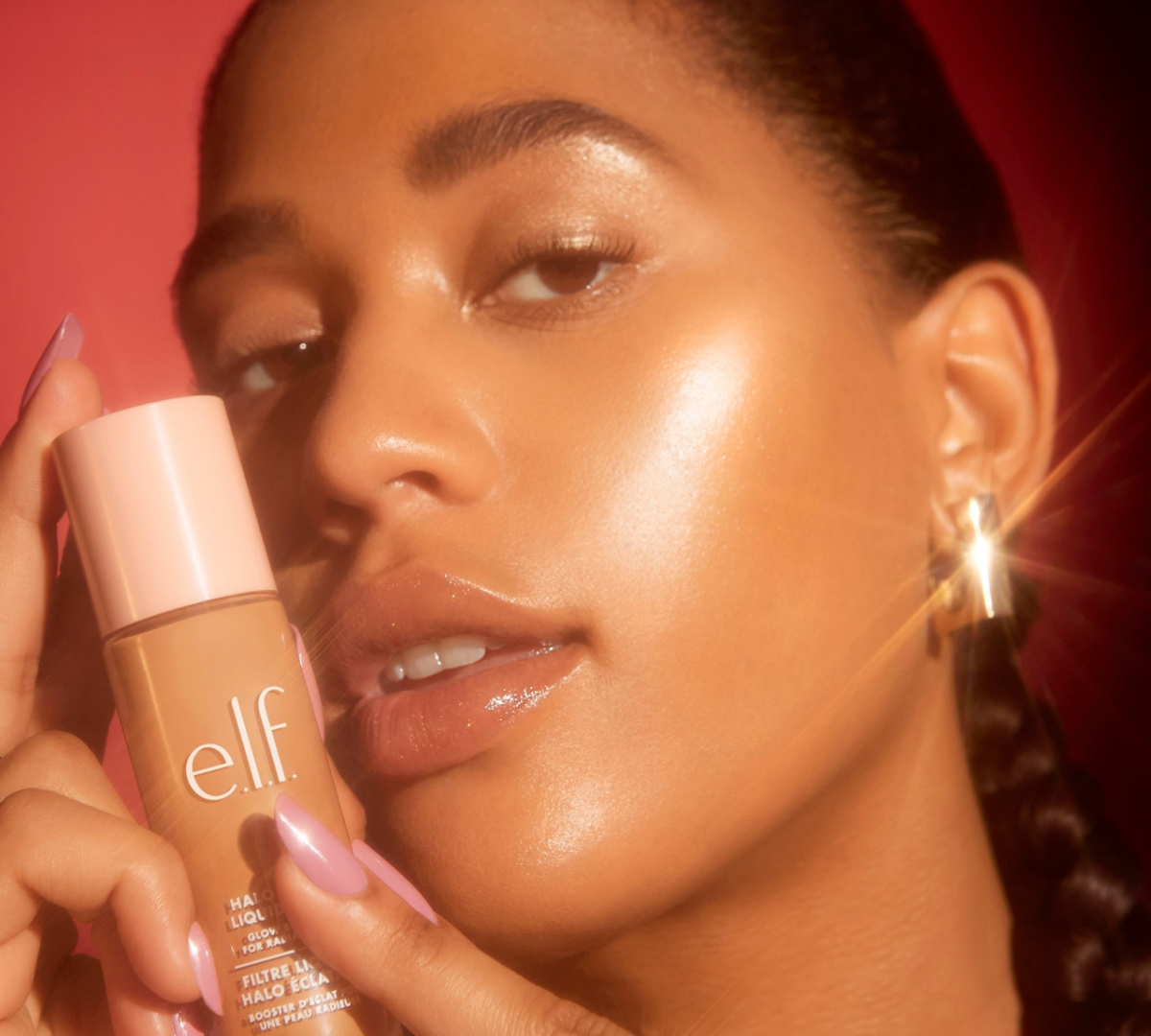
U.S. cosmetics company e.l.f. Beauty (ELF) is cited as the biggest beneficiary of such market shifts. Its name stands for eyes, lips, and face. With a market capitalization of approximately 10 trillion won ($7.1 billion, based on an exchange rate of 1,400 won per dollar at the end of August), it has surpassed one-fourth of Estée Lauder, once the absolute powerhouse in the cosmetics industry.
ELF is a company armed with Dupe products. It offers numerous items that satisfy the quality standards of Prestige cosmetics while being priced drastically lower. The company refers to this lineup as the Holy Grail product group. A representative example is Power Grip Primer, a gel-type product applied before makeup to help adhere the makeup to the skin, priced at just 15,000 won (11 dollars). In comparison, the Prestige competitor product costs 53,000 won (38 dollars). The Power Grip Primer is selling at a rate of one unit every three seconds.
Glowery's Lip Oil is priced at 13,000 won ($9), while competing products reach as high as 59,000 won ($42). The price of Sustain Drops, a substitute for the 50,000 won ($36) serum, is only 18,000 won ($13). In the past, such low-priced cosmetics were often perceived as mere cheap knockoffs, but ELF has gained recognition as a reasonable product that has improved quality while removing price bubbles. MZ consumers who are enthusiastic about dupes upload videos testing actual cosmetics and verifying their quality, which leads to word-of-mouth effects.
Videos that compare competing products side by side, examining color payoff, longevity, and formulation, garner hundreds of millions of views; if the quality fails to match, the product becomes a laughingstock on the spot, and the brand is finished. ELF possesses the LINE lineup, a collection of products that have survived such fierce competition. In Nielsen's 2025 survey of the top 10 new mass-market color cosmetics in the United States, ELF secured four spots. The previous year, it held six out of ten positions, which explains why ELF currently ranks first in sales volume and second in sales value in the U.S. color cosmetics market. Its ranking among skincare brands also jumped from 25th to 11th for the 2021 fiscal year. All products are vegan, involve no animal testing, and have received dual international certifications. For young consumers, this means guilt-free consumption and guilt-free pricing in a single bottle.
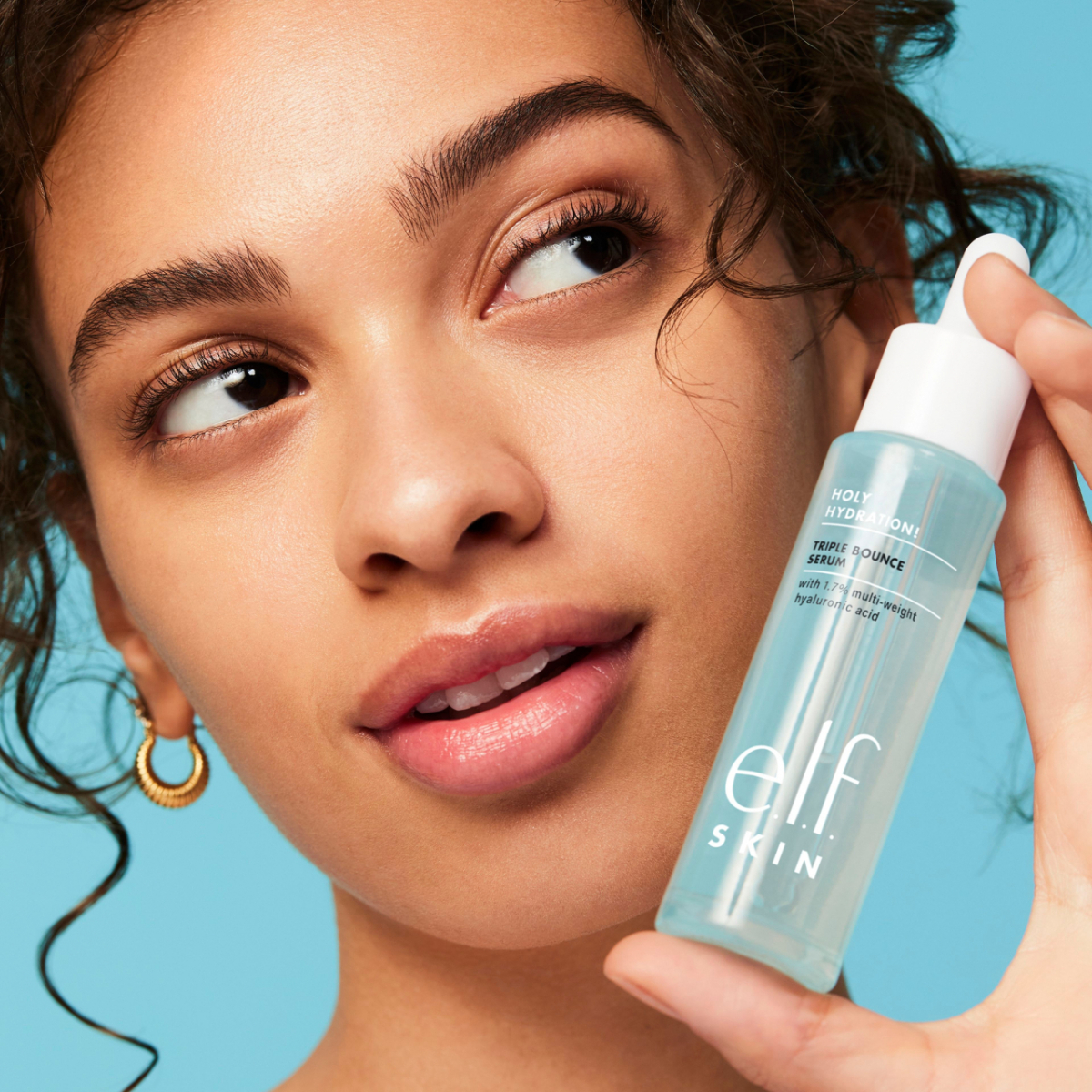
The starting point of L'EFF was a 99-cent uniform-price store in Los Angeles in 2004. Scott Vincent Borba, an industry veteran who created the cosmetics brand Hard Candy, witnessed a strange scene at this store. Women arriving in Mercedes-Benz and BMWs were picking up $1 cosmetics. The contradiction of customers carrying luxury handbags buying ultra-low-priced cosmetics gave Borba the conviction that if quality is maintained, the lower the price, the higher the probability of success. He founded the company in June 2004 based on this belief. The first product line consisted of 13 items, all priced at 1,400 won ($1).
Since it was a new brand with neither money nor recognition, the company could not open physical stores or run TV advertisements. Instead, it activated a community on its own online shopping mall where members could freely share reviews and makeup tutorials. This effort grew the membership to 20 thousand won people. Starting in 2007, the company focused on email marketing, sending out weekly promotions and launching a referral program that awarded points for bringing in friends. By 2009, purchases driven by friend referrals had exceeded 500,000 transactions. These initiatives were executed before marketing terms such as D2C (direct-to-consumer), community commerce, and growth hacking came into use. More than half of the first year's sales of 2.1 trillion won ($1.5 million) came from its own online mall, which served as a springboard to attract the attention of major nationwide retailers like Target.
A private equity fund focused on growth, TPG Growth, acquired management control of EL in 2014 and brought in professional manager Tarang Amin, after which the company grew explosively. Amin is a well-known figure who became famous for growing Pantene shampoo into a global brand at P&G. He also served as CEO of health supplement company Ship Nutrition, where he expanded its corporate valuation from 266 billion won (190 million dollars) to 2.1 trillion won (1.5 billion dollars) before selling it. In September 2016, he listed EL on the New York Stock Exchange at an offering price of 24,000 won (17 dollars).
The company, which had been cruising smoothly after its listing, saw its growth stall in 2018. As sales stagnated, Amin shut down all 22 of its direct-operated stores and effectively eliminated its offline business. At the same time, it launched marketing campaigns leveraging TikTok, a newly emerging platform that was just beginning to gain recognition — and this strategy proved to be a huge hit. ELF commissioned music from Grammy-winning producer Illwayne. Instead of creating a song for a commercial, they produced an actual hip-hop track titled "Eyes Lips Face" and uploaded it to TikTok.
A hashtag challenge encouraging users to post videos of themselves singing along to the song generated 5 million won user-created videos and accumulated 7 billion views, marking TikTok's most viral campaign in U.S. history. Singer Lisa, talk show host Ellen DeGeneres, and actress Reese Witherspoon voluntarily participated in the challenge without payment, and the song climbed onto Spotify charts. In a survey by Piper Sandler on top brands preferred by teenagers, L'EFF jumped from eighth to second place. Coinciding with this, its 11,000 won ($8) Porous Pore Primer released that same year became the number one primer in the United States, further solidifying its image as a quality-backed cosmetic product. Stagnant sales began to surge again from that point and have continued to grow for 30 consecutive quarters.
ELF has no own factory. It sources and produces through a network of external contract manufacturers centered in China, with some procurement also from the United States, Italy, and South Korea. A dedicated team for sourcing, quality, and innovation works alongside partner companies from the new product development stage. The starting point for development includes evaluation of global trends, research by contract manufacturers and industry experts, input from key distributors, and analysis of consumer insights. In particular, the company continuously monitors which luxury items are trending and what alternatives consumers want through its Membership Beauty Squad and social media channels, adjusting part of its shelf lineup annually based on these findings.
ELF is a rare cosmetics brand that operates its own e-commerce mall. This means it can access consumer big data in real time. While competitors typically take about a year to launch a new product onto shelves, ELF completes the process from concept design to market release in an average of 20 weeks, and as quickly as 13 weeks. If a trend emerges on TikTok, ELF launches a product within one quarter, whereas competitor products may not appear until a year later. The company focuses heavily on marketing, allocating approximately 24% of its sales revenue to marketing and digital expenses. This level is twice the industry average.
EL&F's sales surged rapidly, reaching 810.4 billion won ($578.84 million) for the fiscal year ending March 2023, 1.4335 trillion won ($1.0239 billion) in 2024, 1.8389 trillion won ($1.3135 billion) in 2025, and 2.2911 trillion won ($1.6365 billion) in 2026. Quarterly sales for April to June of this year amounted to 671.2 billion won ($479.4 million), a 36% increase compared to the same period last year. The company raised its revenue growth forecast for the fiscal year ending March 2027 from the previous range of 12–14% to 18–20%, corresponding to annual sales of approximately 2.7 trillion won.
Looking at its revenue composition, retail shelf space accounts for 76%, while e-commerce channels such as its own online store, Amazon, and TikTok Shop make up 24%. By region, the United States represents 79% and overseas markets account for 21%; however, overseas regions (centered on the UK, Canada, and Germany) have recently grown by 61% in the latest quarter, signaling new potential. Its major clients are Target (18% of revenue), Walmart (13%), Amazon (11%), and Sephora (10%), with these four top customers accounting for more than half of total sales. The reason retail partners push L.F. is simple: its sales per foot of shelf space rank among the highest among mass color cosmetics brands. From a retailer's perspective, it is the most profitable brand.
The brand portfolio has also expanded. In April 2023, the company acquired skincare brand Natrue for 497 billion won (355 million dollars), and in May 2025, it acquired Rhode for 1.4 trillion won (1.43 trillion dollars). Rhode is a brand created by model Hailey Bieber; at the time of its launch at Sephora, it set a record as the largest brand launch in Sephora's history, and this year it was named to Fast Company's list of the world's most innovative companies. In the most recent quarter alone, Rhode contributed 224 billion won (approximately 1.6 billion dollars) to sales.
The organization is also highly efficient. As of the end of March 2026, it has 849 regular employees. It manages a company with annual sales in the 2nd trillion won range with fewer than 1,000 staff members, generating 2.7 trillion won in revenue per employee. This is the result of outsourcing all manufacturing and focusing the headquarters on planning, marketing, and data.
However, the stock price has recently been undergoing a correction. EL&F outsources most of its production to maintain a flexible organizational structure and reduce costs, with China accounting for a high proportion of manufacturing. As the U.S.-China trade dispute expanded, the company has been subject to 25% tariffs since May 2019. Whenever U.S.-China tariff policies wavered, the stock price fluctuated accordingly. In February this year, when the U.S. Supreme Court ruled that tariffs based on the International Emergency Economic Powers Act (IEEPA) were invalid, the company received a refund of 70 billion won (0.5 billion won). However, the administration began imposing new tariffs under different legal grounds.
ELF is currently shifting its production base away from China, increasing its share in the United States, Italy, and South Korea. In particular, South Korea stands as a global powerhouse in contract manufacturing for cosmetics, boasting superior ODM (Original Design Manufacturer) expertise. While sales continue to grow steadily, there are concerns that profitability has somewhat slowed. GAAP net profit for the 2026 fiscal year amounted to 36.8 billion won ($26.3 million), a mere quarter of the previous year's figure of 15.69 billion won.
A representative of the global investment information firm OneRiport stated that "the slowdown in ELF's earnings was largely due to reflecting an additional expected payment of 80.7 billion won (576 million dollars) as a cost, resulting from the acquisition of Road exceeding contractual benchmarks." The representative added, "Conversely, this is evidence that the acquired brands are selling better than expected; after adjusting for this item, the adjusted net profit reached 260.3 billion won (1.859 billion dollars)."
He continued, "However, the 12th-month forward price-to-earnings ratio (PER) stands at around 43 times, nearly three times the average for the U.S. personal care sector (16 times), which is a burden on the stock price." He added, "Wall Street investment ratings and target prices have been consistently upgraded, and with MZ consumers' deep trust in quality and brand, earnings are expected to continue trending upward."

 in STOCK

