

"South Korea cannot attempt unmanned autonomous driving, while the U.S. and China have already been fully unmanned for several years. Even if we catch up to full unmanned operation in a few years, the gap will only widen by then."
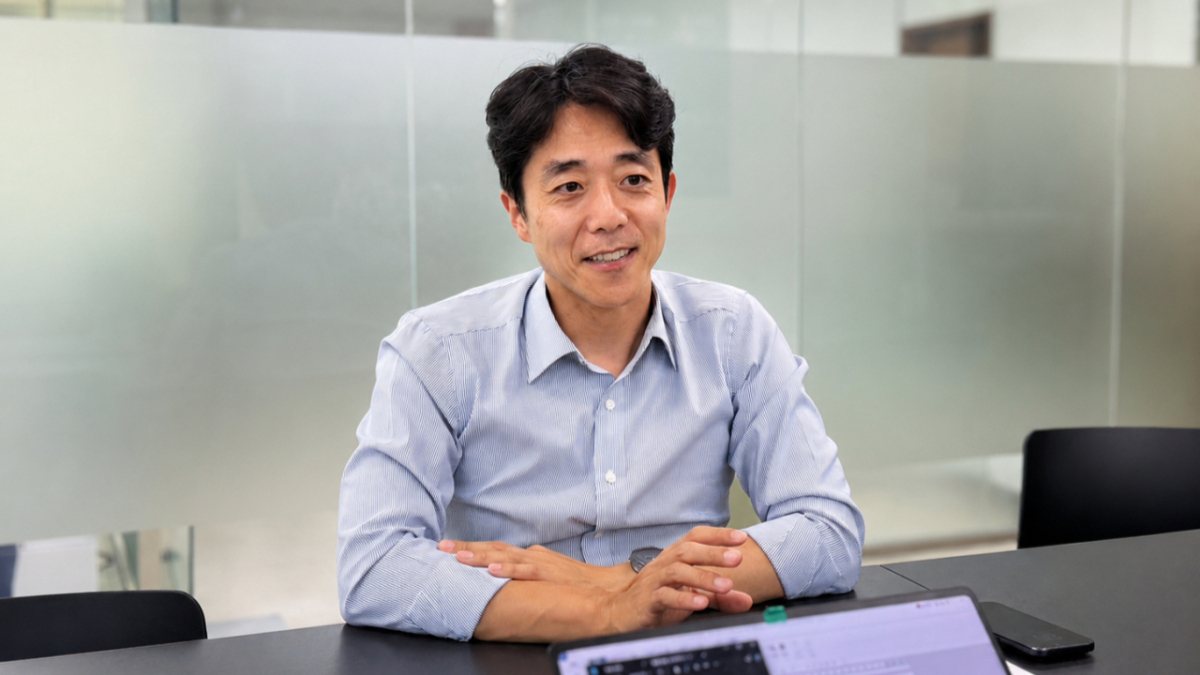
Kim Gi-dong (CEO), which operates the taxi and designated driver call platform Conatus, stated in a recent interview with MoneyToday that "the level of domestic autonomous driving is still at the manned demonstration stage. The gap with the U.S. and China has widened by at least 7 to 8 years." He further emphasized that "to close this gap, technological development and the establishment of institutional foundations must proceed simultaneously."
In fact, autonomous driving companies in the U.S. and China, such as Waymo and Baidu, are already providing robotaxi services with full unmanned operation for general passengers. In contrast, while a Gwangju autonomous driving demonstration project is underway domestically, commercialization has not yet occurred. Kim (CEO) stated that "our technological capabilities are lacking, and data accumulation is far from sufficient," adding that "startups are being driven forward with investments in the hundreds of billions of won, but compared to China or the U.S., the capital power itself is different."
What he worries about is not just the technological gap. He fears a scenario where foreign companies dominate the entire domestic passenger and cargo markets while autonomous driving commercialization is delayed. He warned, "If autonomous driving fails or platforms fall into foreign hands, it is not just a problem for passengers alone," noting that "the cargo market is worth 40 trillion won; if passenger transport, delivery, and all mobility data flow overseas, it will be difficult to reverse at that point."
In this sense of crisis, Conatus's proposed solution is to secure the autonomous driving robotaxi infrastructure first. This judgment stems from the view that technology and vehicles alone are insufficient for autonomous vehicles to operate on actual roads. Kim (CEO) stated, "Autonomous vehicles need a system in place where they can park, charge, get washed, and respond to emergencies in case of accidents," indicating plans to build such a system. Conatus signed a memorandum of understanding with Hyumax Mobilitylast year. The company aims to develop this further by combining Hyumax's parking, charging, and car care assets with Conatus's taxi platform capabilities to establish a robotaxi platform business model.
He also advised that the issue of jobs for existing taxi drivers must be actively discussed during the transition to autonomous driving. Kim (CEO) stated, "We have pursued innovation in ways where existing stakeholders are not unilaterally sacrificed," emphasizing that "we must definitely find a plan for a smooth landing even in the transition to robotaxis." He added, "While the government purchasing license rights could be a last resort, the industry and platforms must design exit strategies together beforehand." He also noted that the difference in acquisition costs between individual taxi licenses and corporate taxi licenses is a problem that needs to be resolved.
Regarding recently implemented regulations on taxi platform dispatch fees, he stated that better alternatives must be found. Kim (CEO) pointed out that "the law has been in effect for about a week, and it has been confirmed that the number of calls for drivers has decreased," warning that "if the taxi industry returns to being an industry full of complaints, it will be difficult to gain social support when trying to innovate during the autonomous driving transition later." He further emphasized that "from now on, both platforms and taxi drivers must find strategies for mutual prosperity."

 in TECH
