

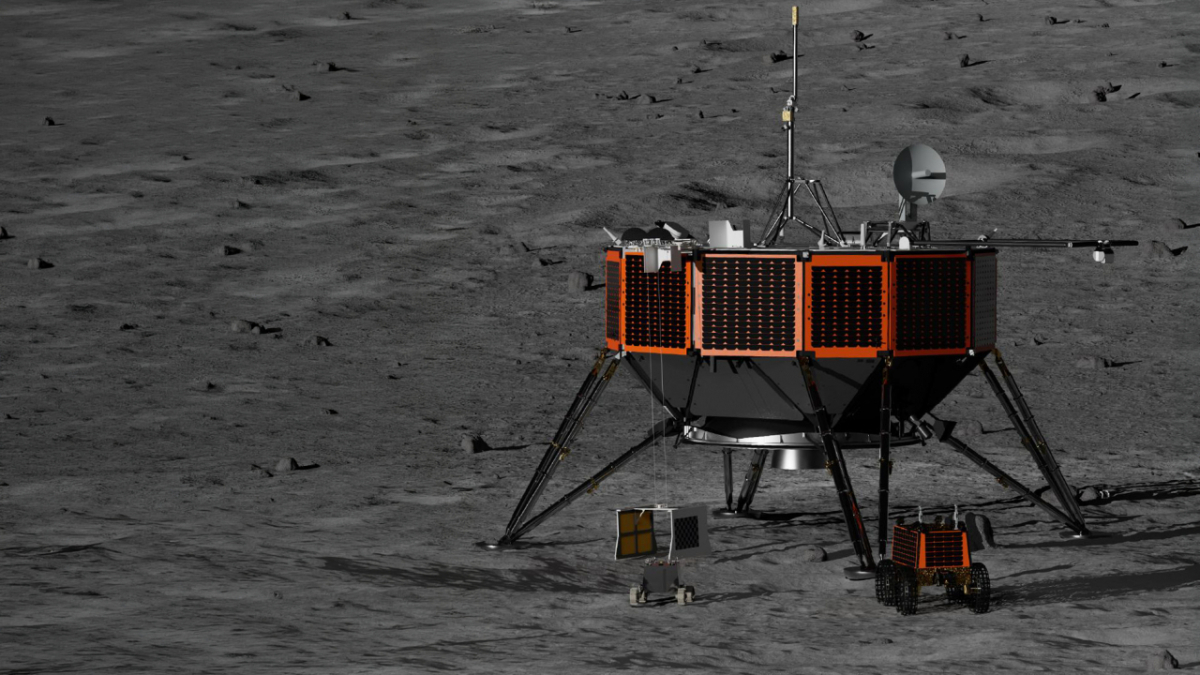
The Korea Aerospace Administration (KASA) is collaborating with the U.S. National Aeronautics and Space Administration (NASA). The goal is to mount a radiation detector developed in South Korea on an American private lunar lander.
On the 17th, KASA announced that it signed an implementation agreement with NASA on the 14th. The objective is to carry the 'Lunar Surface Lunar Radiation Detector (LVRAD)' developed by South Korea aboard a lunar lander under NASA's Commercial Lunar Payload Services (CLPS) program (hereinafter referred to as the private lunar lander).
The Lunar Surface Lunar Radiation Detector is an instrument designed to measure cosmic radiation on the surface of the Moon's south pole. KASA plans to complete development of the flight model in 2027 and transport it to the United States in accordance with NASA's lunar lander schedule.
NASA plans to launch the detector developed by South Korea mounted on a private lunar lander in 2030, although the schedule may be subject to change. NASA will support operations of the detector on the lunar surface and data transmission.
The Lunar Surface Lunar Radiation Detector consists of a cosmic radiation dosimeter and spectrometer for measuring radiation penetration levels and a neutron spectrometer for measuring the neutron environment. The observed data is expected to be utilized in research on the impact of radiation entering the lunar surface on manned and unmanned exploration missions involving landers and astronauts.
The private lunar lander carrying the Lunar Surface Lunar Radiation Detector will be developed by Intuitive Machines. In addition to South Korea's detector, a total of seven observation instruments are expected to be mounted.
Oh Tae-seok Woo Ju-hang-gong (Commissioner) stated, "This implementation agreement will further solidify future cooperation between KASA and NASA on lunar base development," and added, "We will continue to expand international collaboration to advance technologies related to lunar exploration and strengthen our contribution to the international community in the field of space science."

 in TECH
