

"I have experienced both the internet and mobile revolutions, but AI brings changes in speed, scope, and depth that are far greater."
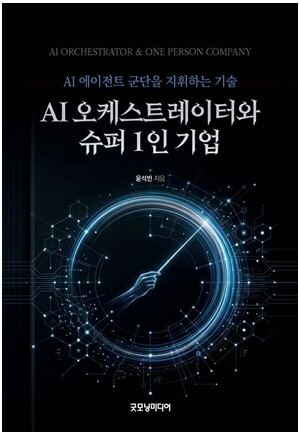
Following his 2023 publication "The Age of AI Native Is Coming," Yoon Seok-bin, Sogang University AI·SW Graduate School Special Professor, has released another book on AI just one year later. In his recently published book, "The Age of AI Native Is Coming," Professor Yoon diagnosed that AI is beginning to transform not merely as a tool to boost human productivity, but the very structure of corporations, education, and jobs.
Professor Yoon stated, "Changes are occurring much faster than I predicted a year ago." He added, "As we move from simple chatbots to agentic AI, we have entered a stage where AI does more than assist with individual tasks; it connects multiple tasks to produce actual results."
The person who tested these changes most closely was his youngest son. This year, after graduating from high school, the son chose not to enter university but instead spent six months learning AI development through the Ministry of Employment and Labor's K-Digital program.
His experience visiting Shanghai and Hangzhou in China last January with his son to tour companies like Alibaba and Unitree also had an impact. Professor Yoon said, "I suggested we try gaining real experience rather than aimlessly attending a prep school." He explained, "He learned front-end, back-end, and AI, created services directly, and even built a portfolio." The son recently completed the program and is scheduled to work as an intern at an AI startup.
This does not mean he argues against universities. He explained, "If you want to go to university later, you can do so after serving in the military." He added, "What matters now is not the diploma itself, but actually creating things and gaining experience."
The change Professor Yoon highlighted in his book is the 'super one-person company.' As AI agents take on tasks that were previously divided among multiple people—such as planning, development, design, and marketing—a single individual can now operate like an entire organization.
He witnessed firsthand this year the "one-person company" (OPC, One Person Company) craze in China. Professor Yoon said, "When a person with a good business idea and planning ability commands AI, individuals can replace organizations." He noted, "Overseas, such companies have already reached the stage of generating actual revenue."
He also predicted that not only education but also venture capital (VC) and the hiring market will be shaken. In the past, startups received early-stage investment to secure personnel such as developers, but if AI drastically lowers startup costs, the situation will change.
Professor Yoon stated, "For AI-native companies, questions arise about whether they must still accept investment by giving up equity." He added, "VCs in the future must do more than just provide money; they need to offer mentoring and connect startups with customers, technology, and networks."
He emphasized that corporations require more fundamental changes. Merely distributing chatbots to employees or automating certain tasks is insufficient for AI investments to translate into corporate profits.
Professor Yoon said, "Individual productivity may rise, but it often fails to convert into overall company profits." He explained, "Rather than simply attaching AI to existing organizations unchanged, core business processes must be redesigned from start to finish in an AI-native manner."
He particularly stressed that CEOs must experience AI directly. He said, "CEOs need to try using it themselves and even engage in vibe coding to understand what is possible and what is difficult." He added, "If the representative does not gain this experience, it will be difficult to judge how to transform the organization."
He believes that as AI drastically lowers the cost and time of execution, human 'intent' and planning ability will become increasingly important. Professor Yoon described this shift as "the end of the 10,000-hour rule and the era of 100 hours."
He stated, "'100 hours' is a symbolic expression." He explained, "It means that rather than repeating tasks for long periods as in the past, the power of individuals who focus intensely with clear intent over a short period has grown." He concluded, "The baton of AI has already come into our hands. What matters now is what we are commanding and how we will command it."

 in TECH

