

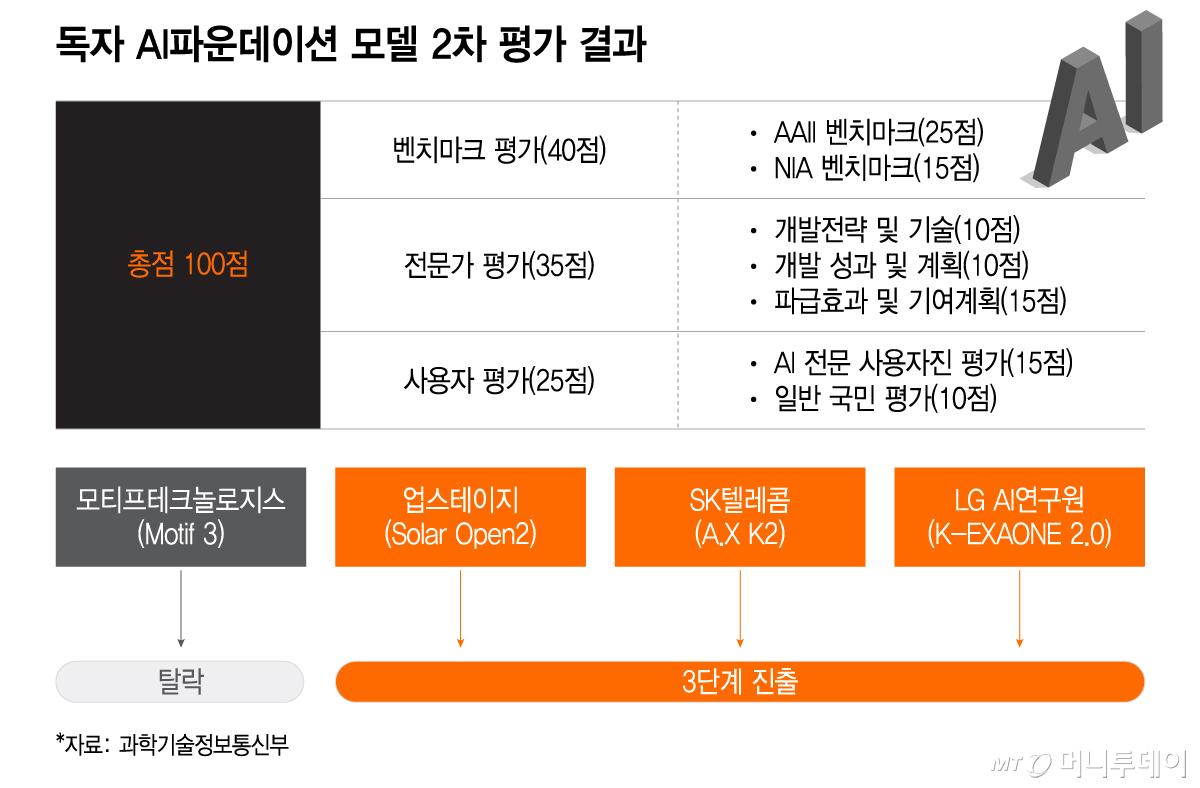
The second-stage evaluation of the 'Independent AI Foundation Model' (Dokpa-mo) project, which selects national representative AI models, has become an extension of the first-stage evaluation. Among the five elite teams selected as national representatives, Naver and the NC AI consortium were eliminated in the first round, leaving Upstage, SK Telecom, and LG AI Research to proceed directly to the third round.
The Ministry of Science and ICT and the Korea Information Society Development Institute (NIPA) held a briefing on the second-stage evaluation of the Dokpa-mo project at the Seoul Government Complex on the 18th, announcing that Upstage, SK Telecom, and LG AI Research were selected as the three teams. Motif Technology, which joined the elite team through a 'relegation playoff' after the first round, was eliminated in its first appearance.
The second-stage evaluation of Dokpa-mo consisted of the same components as the first stage: benchmark evaluation (40 points), expert evaluation (35 points), and user evaluation (25 points). Unlike the first round when LG AI Research took first place in all categories, this time the gap between companies was narrow.
Among these, the deciding factor for selection or elimination was the user evaluation. This comprehensively assessed usability and perceived effectiveness as AI professional users (49 people) and the general public used the AI models. A national evaluation panel (200 selected, 185 responded), which did not exist in the first round, was added.
By category, the average score for the four teams in the user evaluation was 17.6 points, with the largest gap between first and fourth place at 5.0 points. In the benchmark evaluation, the average for the four teams was 22.5 points, with a gap of 4.0 points between first and fourth. In the expert evaluation, the average for the four companies was 28.8 points, with a gap of 2.4 points between first and fourth.
In the comprehensive results of the second-stage evaluation, Upstage received high scores by implementing a sovereign AI full stack through integration with the portal Daum and the Timely platform, and by using the domestic Furioua AI NPU (neural processing unit).
SKT demonstrated outstanding performance in mathematical reasoning and Korean language areas, proving the potential for manufacturing-industry-specific models by applying AI models to the defense sector. LG AI Research received relatively high evaluations for its ongoing collaboration with global international organizations, its differentiation in agentic AI, and its evident consideration of trustworthy AI.
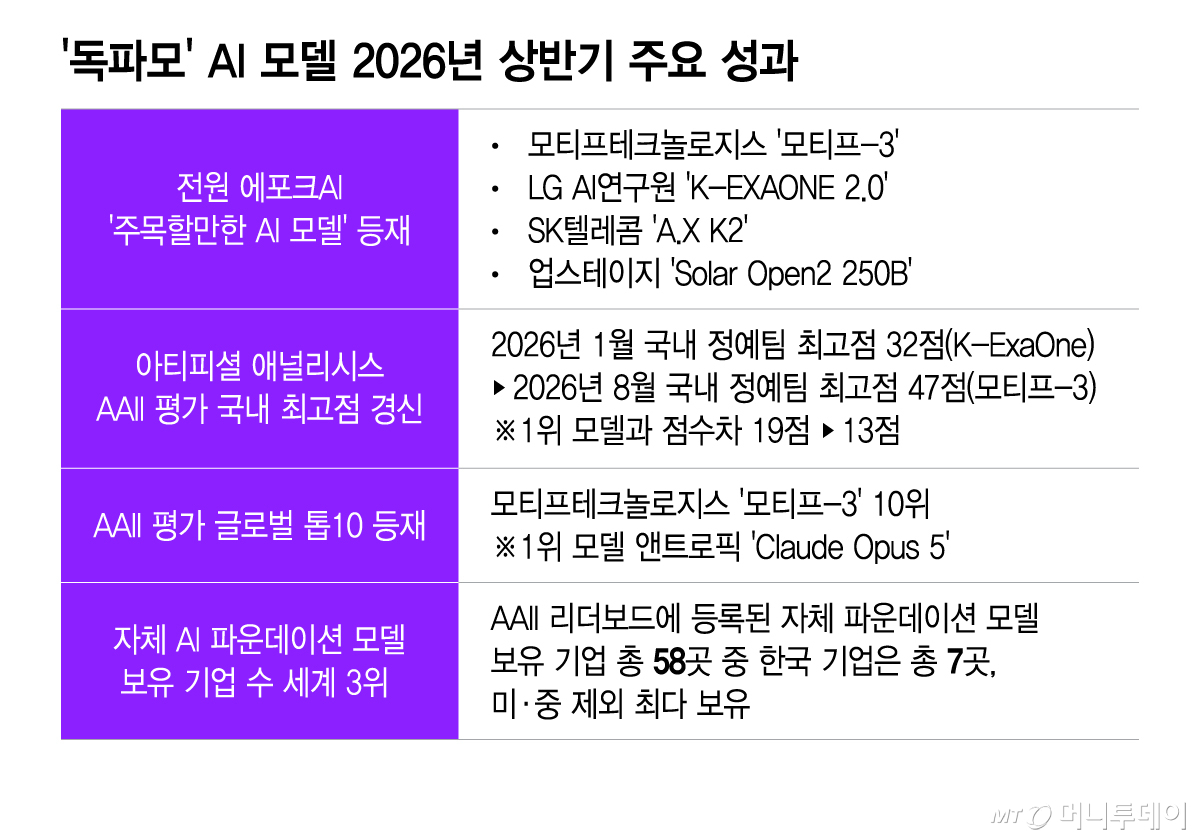
Motif received the highest score among the four companies, 47 points, in the Artificial Analysis AI evaluation (AAII), a major benchmark. It also received high marks for technical independence by developing its own architecture and tokenizers from scratch, but received a disappointing report card on usability.
Regarding the results of the second round, Ryu Je-myeong, the Second Minister of the Ministry of Science and ICT, stated, "No single company took first place in all categories; three companies were selected by a narrow margin."
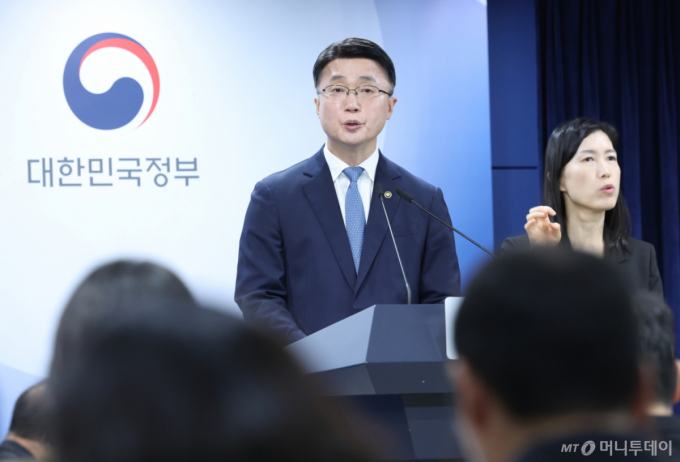
The Ministry of Science and ICT also hinted at the possibility of restructuring the current Dokpa-mo project approach. With rapidly advancing performance of global frontier models and a limited budget, the direction is to concentrate support in one area rather than distributing GPUs (graphics processing units) and other resources across multiple entities, aiming to nurture a single large model.
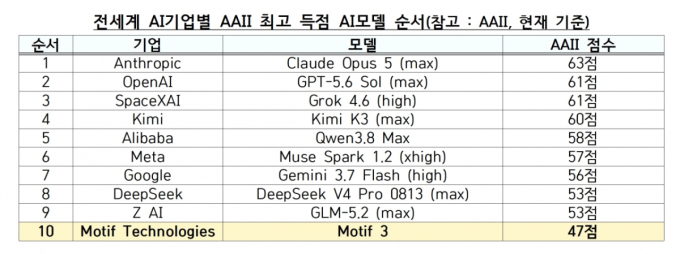
In fact, even Motif, which took first place in the AAII evaluation on the 13th, showed a gap with leading models such as Claude Opus (63 points), Fable 5 (62 points), and GPT 5.6 (61 points) with its score of 47. According to the government's explanation, if the Dokpa-mo goal of achieving 95% performance of global frontier models is to be met, a score above 57 should have been achieved.
Ryu (Vice Minister) said, "There is a consensus on shifting away from the current approach and restructuring support methods to develop models comparable to frontier models." However, the Ministry of Science and ICT plans to proceed as scheduled with the third-stage evaluation, which will compress the three selected companies down to two.
Meanwhile, the second-round selected companies will receive support for 1,000 units of B200 per team. The rental budget is approximately 40 billion won per team, totaling around 120 billion won.

 in TECH


