

Starting this month, national health insurance will cover the combination therapy of 'Padcev injection' and 'Keytruda injection' used in the treatment of urothelial carcinoma, as well as the treatment of advanced or metastatic gastric cancer with 'Vyloy injection.' As a result, patient out-of-pocket costs are expected to decrease significantly, and it is being evaluated that the cancer treatment environment has taken a step forward to a world-class level.
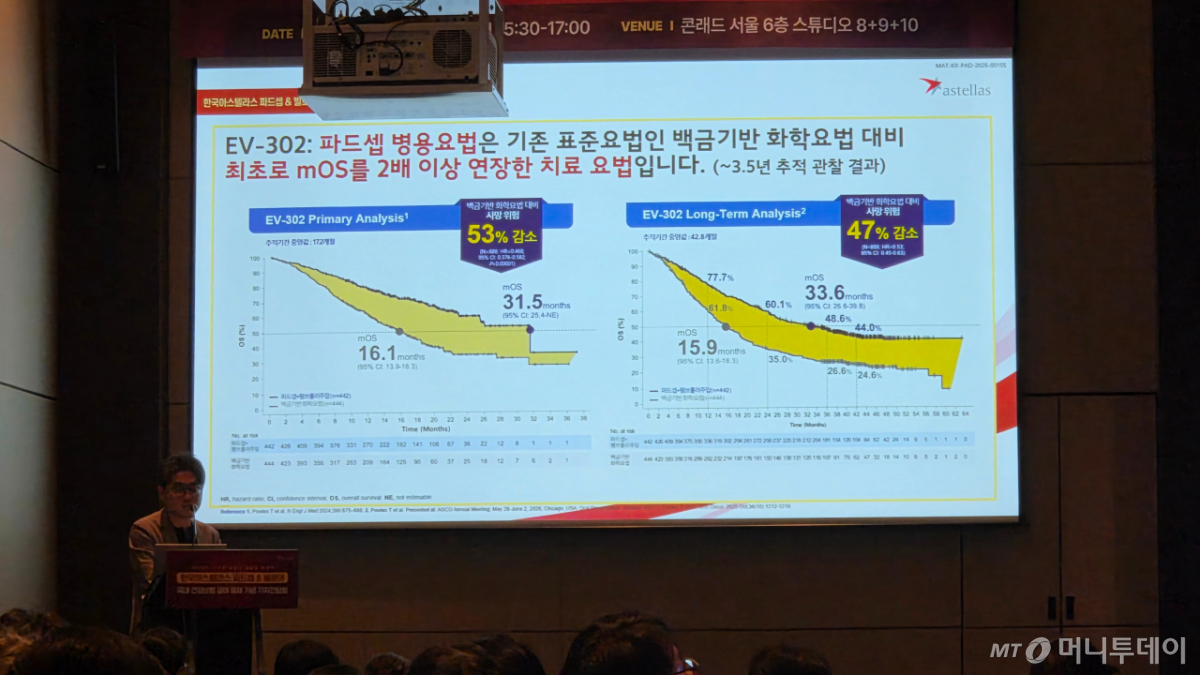
Astellas Korea held a press conference on the 8th at Conrad Seoul to commemorate the national health insurance coverage of its antibody-drug conjugate (ADC) therapy 'Padcev' (generic name: enfortumab vedotin) and Claudin 18.2 targeted therapy 'Vyloy' (generic name: zolbetuximab).
Padcev/Keytruda combination therapy, Vyloy to be covered by insurance starting this month
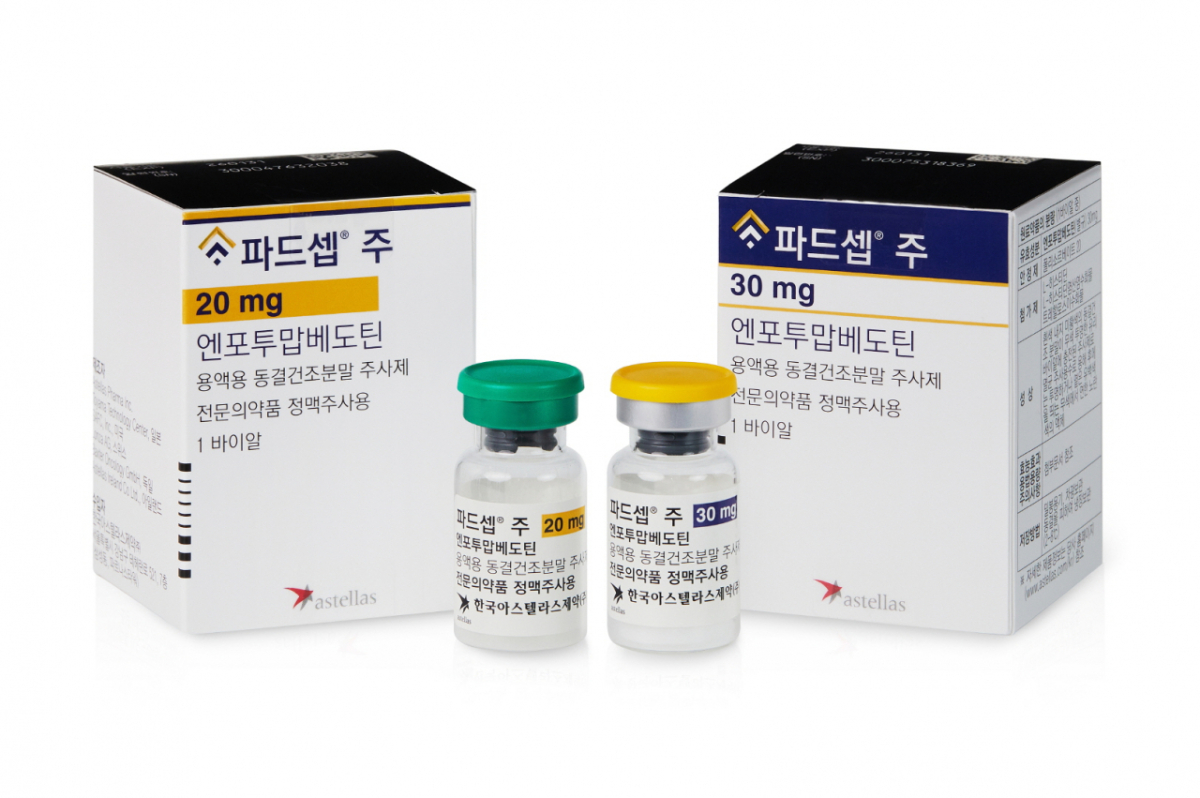
In accordance with a notice from the Ministry of Health and Welfare, Padcev has been covered by national health insurance as first-line treatment for adult patients with locally advanced or metastatic urothelial carcinoma in combination with Keytruda (generic name: pembrolizumab) since the 1st of last month. This achievement was reached two years and three months after domestic approval for the indication.
The first-line combination therapy of Padcev is not only the first case of insurance coverage for a combination therapy between new drugs patented by different pharmaceutical companies, but also remains the first case in Korea where an ADC and immunotherapy combination has been covered by insurance.
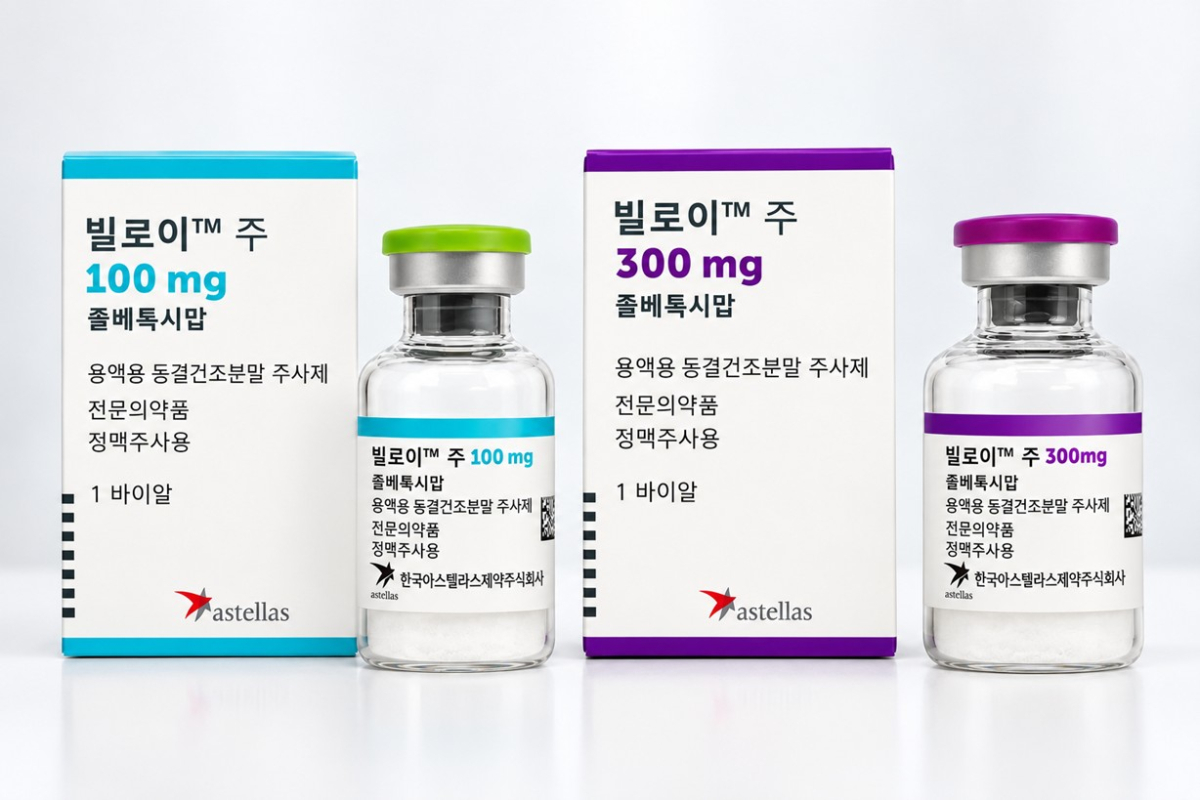
Vyloy was covered by national health insurance on the 1st of last month, approximately two years after its domestic approval. Vyloy was recognized for insurance coverage as a first-line treatment in combination with fluoropyrimidine- and platinum-based chemotherapy for patients with unresectable locally advanced or metastatic gastric adenocarcinoma and esophagogastric junction adenocarcinoma who are Claudin 18.2 positive and HER2 negative.
Cancer patient treatment cost burden significantly reduced… "Padcev combination therapy extends median overall survival by more than two-fold"
As a result, the treatment cost burden for domestic cancer patients has been reduced, and their chances of survival have also increased.
Professor Kim In-ho of the Department of Medical Oncology at St. Mary's Hospital, Catholic University of Korea Seoul, who served as a speaker at the press conference, explained, "The Padcev combination therapy is a treatment regimen that, according to 3.5 years of follow-up results, extended the median overall survival (mOS) by more than two-fold compared to the existing standard platinum-based chemotherapy for the first time."
He added, "While the first-line combination therapy of Padcev has firmly established itself as the de facto first-line standard treatment for metastatic urothelial carcinoma, its widespread use in clinical practice in Korea had been limited due to cost burdens until now," and stated, "This insurance coverage is particularly significant in that it has narrowed the gap between global standard treatments and the actual domestic treatment environment."
Vyloy expected to extend survival period for metastatic gastric cancer patients with a 5-year relative survival rate of only 7.5%
Vyloy is expected to significantly improve the treatment environment for metastatic gastric cancer patients, who have a low survival rate. The 5-year relative survival rate for metastatic gastric cancer patients is 7.5% (2019–2023), which is significantly lower than that of early-stage localized gastric cancer patients (97.6%).
Professor Lee Geun-wook of the Department of Hematology and Medical Oncology at Bundang Seoul National University Hospital, College of Medicine, Seoul National University (Chairman of the Gastric Cancer Subcommittee of the Korean Society for Anticancer Therapy), stated, "In the case of metastatic gastric cancer, biomarker-based targeted therapy has been very limited compared to other cancer types," and added, "Until the emergence of Claudin 18.2, approximately 90% of metastatic gastric cancer patients who are HER2 negative were essentially Seon Taek-ji-ga (EVP) targeted therapy."
He further elaborated, "Vyloy, which emerged in this situation, is the world's first approved targeted therapy option for Claudin 18.2 positive metastatic gastric cancer patients," and noted, "It also holds great significance as a treatment option that has shown consistent and clear clinical benefit even in Korean patients."
Among Korean patients, the median progression-free survival (PFS) was confirmed to be 12.3 months (HR=0.588) in the Vyloy treatment group and 8.1 months in the placebo group, showing a significant extension. It also showed high clinical efficacy compared to the median progression-free survival of 9.2 months (HR=0.71) recorded in the Vyloy treatment group among the overall integrated population. In addition, the median overall survival (OS) was 30.5 months (HR=0.480) in the Vyloy treatment group among Korean patients, showing a result nearly twice as long as the 15.8 months in the placebo group.
In response, the Korean Gastric Cancer Association recommended Vyloy as a 'top-level' first-line treatment option for unresectable locally advanced or metastatic gastric cancer patients who are Claudin 18.2 positive and HER2 negative when it released newly revised gastric cancer treatment guidelines in January of last year.
Professor Lee stated, "The insurance coverage of Vyloy is a turning point that will bring comprehensive effects, capable of advancing not only the gastric cancer treatment environment but also the diagnostic environment in Korea by one step," and added, "With the insurance coverage of Vyloy, Claudin 18.2 diagnostic testing will also be activated, allowing for a significant contribution to improving gastric cancer treatment outcomes in our country." He further added, "I am grateful that the gastric cancer treatment environment can be improved to a world-class level through insurance coverage."
Meanwhile, Astellas Korea, which has simultaneously achieved insurance coverage for both Padcev and Vyloy, is strategizing to accelerate its business promotion based on its current anticancer drug portfolio in Korea.
Kim Jun-il, President of Astellas Korea, emphasized, "Padcev and Vyloy are treatment options that present new medical value capable of addressing the unmet needs of patients who have existed for a long time in the fields of metastatic urothelial carcinoma and metastatic gastric cancer, respectively," and stated, "We will do our utmost to continue delivering innovative science with value and fulfill our mission of illuminating the future of our patients."

 in THEBIO


