

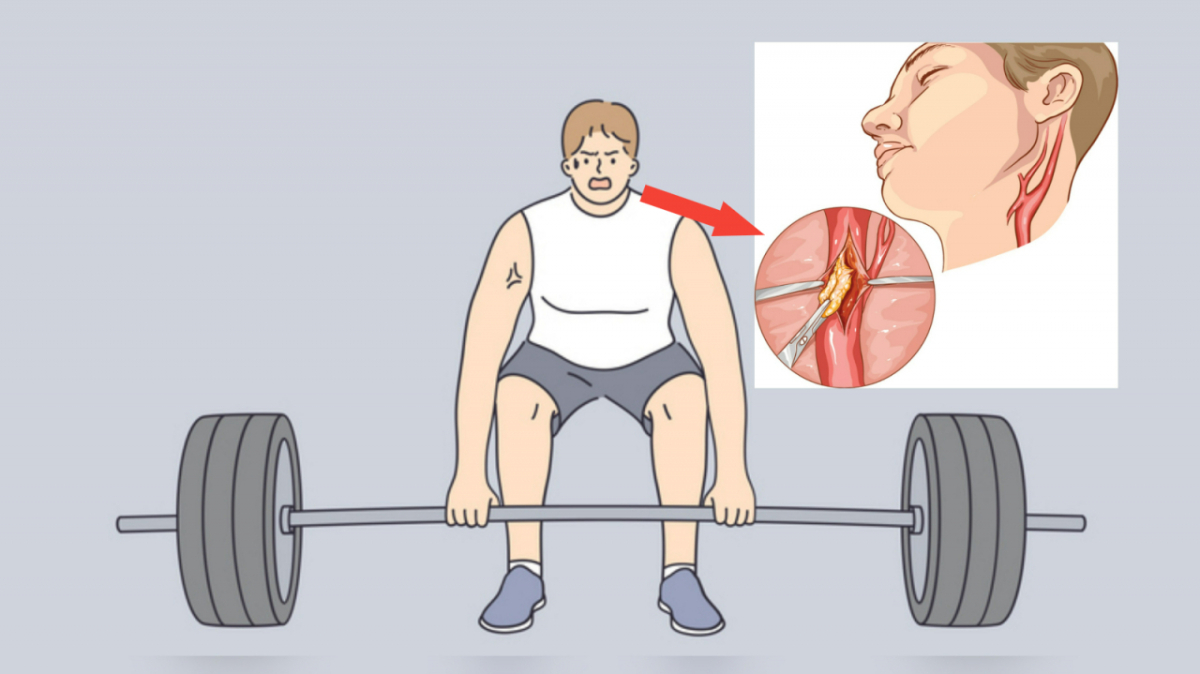
'Regular exercise' is known as an essential condition for health. However, 'this type of person' should be cautious, as exercising too vigorously can lead to 'carotid artery stenosis.' These are individuals with risk factors such as △hypertension, △diabetes, △hyperlipidemia (dyslipidemia), △smoking, △obesity, and △advanced age.
In fact, Kim, a man in his 50s with hyperlipidemia, recently visited a gym and experienced symptoms of sudden weakness in one arm and slurred speech while unreasonably increasing the weight he was lifting. Fortunately, the symptoms disappeared within a few minutes, but Mr. Kim did not dismiss them as simple fatigue and sought medical attention. He was diagnosed with 'transient ischemic attacks caused by carotid artery stenosis.'
If one suddenly increases exercise intensity, performs inadequate warm-ups, lifts heavy weights, or exerts force while holding one's breath, sustained repetitive movements can cause blood pressure spikes and hemodynamic changes. In such situations, asymptomatic carotid artery stenosis, like Mr. Kim's, may manifest with symptoms, leading to temporary neurological abnormalities.
The carotid arteries are major blood vessels that supply 70% to 80% of the blood flow to the brain. As atherosclerosis progresses due to risk factors such as hypertension, diabetes, hyperlipidemia, and smoking, the blood vessels may narrow and lose elasticity; this condition is called 'carotid artery stenosis.'
Even in cases of moderate or severe stenosis, patients are often asymptomatic. When symptoms do appear, they may manifest as localized neurological signs such as temporary vision loss, weakness on one side, paralysis on one side, sensory abnormalities, or language disorders. They may also present as transient ischemic attacks where symptoms improve within a few minutes to a few hours.
If neurological symptoms suggestive of carotid artery stenosis occur during exercise, one should immediately stop exercising and visit a medical institution for treatment. Transient ischemic attacks are not merely temporary symptoms but carry a high risk of progressing to cerebral infarction in the short term; therefore, even if the symptoms have disappeared, precise evaluation through imaging tests such as carotid ultrasound, CT (computed tomography), MRI (magnetic resonance imaging), and angiography is necessary.
By Reporter Jung Sim-gyo [email protected], Consultation by Chief correspondent Choi Jae-hyuk, Neurosurgeon at the Cerebrovascular Center of Daedong Hospital.

 in THEBIO
