

Starting this December, the three major mobile carriers will simultaneously introduce 5G SA (Standalone) service, known as "real 5G." Attention is turning to whether users will benefit from improved communication speeds and quality, and whether carriers can enhance profitability through premium plans leveraging network slicing.
According to industry sources on the 11th, SK Telecom and LG Uplus have entered final preparations ahead of the commercialization of 5G SA in December.
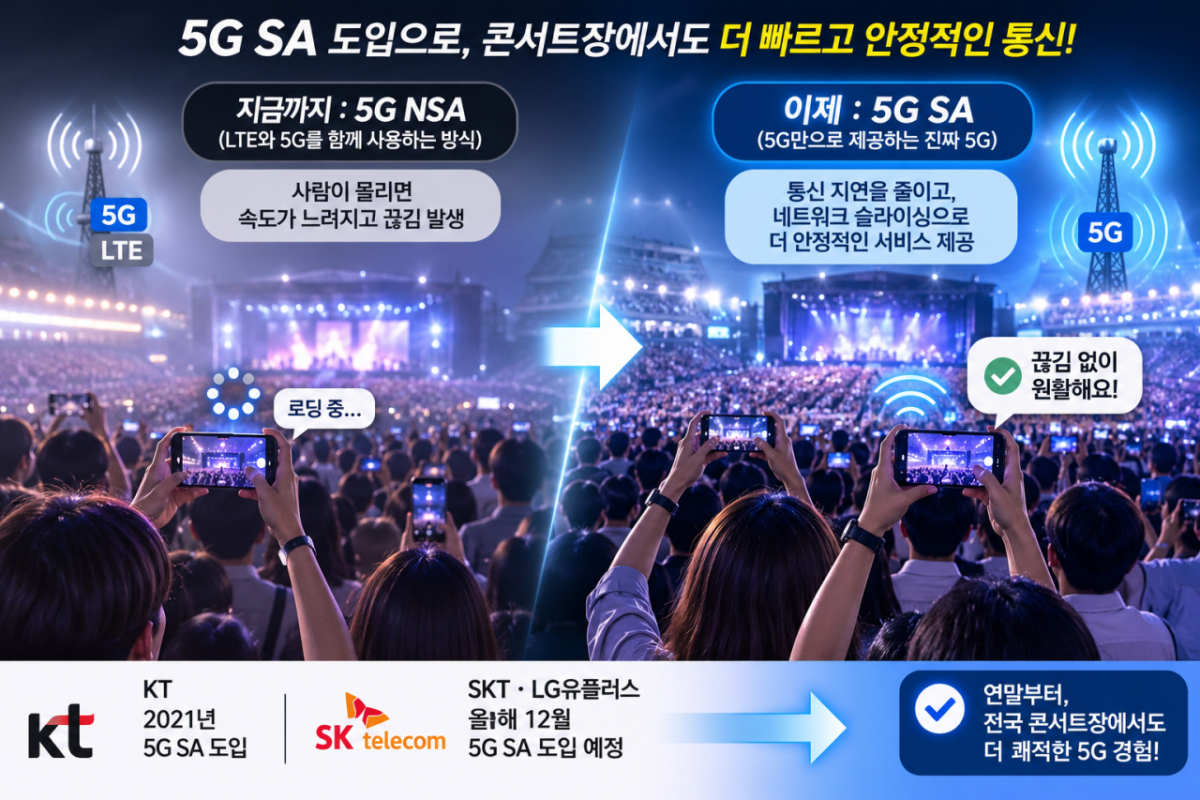
They are currently building the 5G core network and conducting communication quality tests. Following KT, which first commercialized SA domestically in 2021, all three carriers will offer SA service within the year.
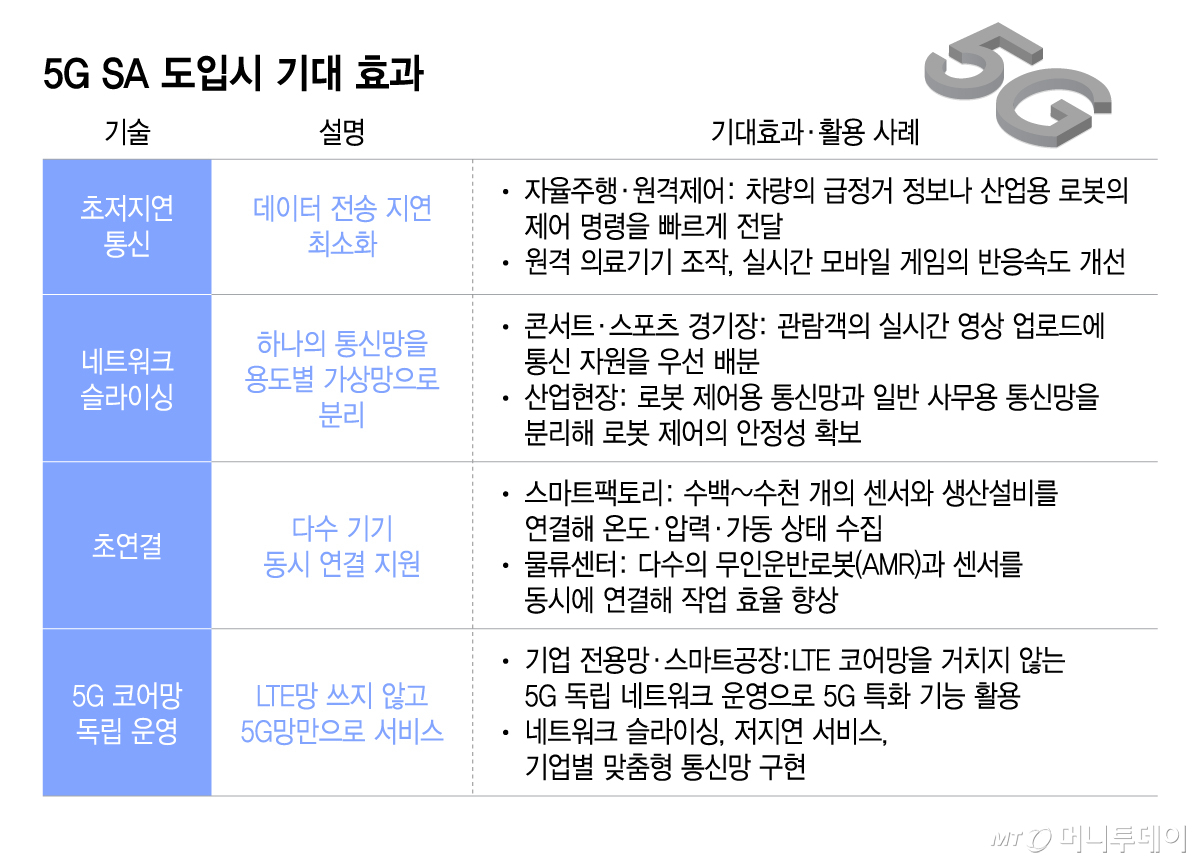
5G SA is a technology that provides communication services using only the 5G network, without relying on the LTE (Long-Term Evolution) network.
It is an evolved method compared to Non-Standalone (NSA), which uses both existing LTE and 5G networks, allowing for reduced communication latency and the implementation of network slicing.
Network slicing is a technology that divides a single communication network into multiple virtual networks according to purpose, providing customized quality for specific services. The adoption by carriers has accelerated after the government mandated the transition to SA as a condition for reallocating 3G and LTE frequencies at the end of last year.
However, not all 5G subscribers will be able to use SA starting from the end of the year, as coordination work between smartphone manufacturers and carriers is required.
Samsung Electronics' Galaxy devices are capable of 5G SA connectivity from the S20 series through the latest Z Fold8 series, with support varying depending on carrier-specific circumstances.
Apple prioritizes 5G SA support on its latest devices, such as the iPhone 17 and 18 series, before expanding coverage through software updates. The industry expects that one-third of all 5G subscribers will be supported by the end of this year, with SA support expanding to all 5G subscribers by the end of next year.
The introduction of SA is also expected to bring changes to carriers' pricing strategies. It is possible to launch additional services leveraging network slicing or establish separate premium plans.
For instance, value-added services guaranteeing stable communication quality in crowded places like concert venues could be introduced. In industrial settings, the scope of application may expand to areas requiring high-quality communication, such as autonomous driving robots and smart factories.
However, it is predicted that adding value-added services to existing plans is more likely than establishing new premium plans.
An industry official said, "Since existing rates range from 20,000 to 130,000 won, there is a high possibility of adopting a value-added service format rather than creating additional plans," and added, "Use in industrial settings requires additional investment, such as RedCap chips, so services for general users are expected to be introduced first."
In this regard, the government is reviewing whether the introduction of network slicing fees would violate the principle of net neutrality.
This is because prioritizing communication network resources for specific services could conflict with the net neutrality principle, which mandates that internet data be treated without discrimination.
Meanwhile, the transition to SA continues in the global market as well. According to the GSMA (Global System for Mobile Communications Association), as of last August, operators providing 5G SA service accounted for 29% of all 5G operators, up by 3 percentage points from 26% in March of last year.

 in TECH

