

As the Federal Reserve (Fed·Federal Reserve) has held its base rate steady for five consecutive times, market interpretations diverge between a "hawkish hold" and a "dovish hold." It is expected that how the Bank of Korea interprets the Fed's tightening stance will also influence whether there will be a "back-to-back" (consecutive base rate hikes) in August.
According to the Bank of Korea and financial markets on the 30th, the Federal Reserve maintained its base rate at an annualized 3.50% to 3.75% during the Federal Open Market Committee (FOMC) meeting held on the 28th and 29th (local time). However, three out of 12 members expressed a minority opinion in favor of a 0.25 percentage point rate hike.
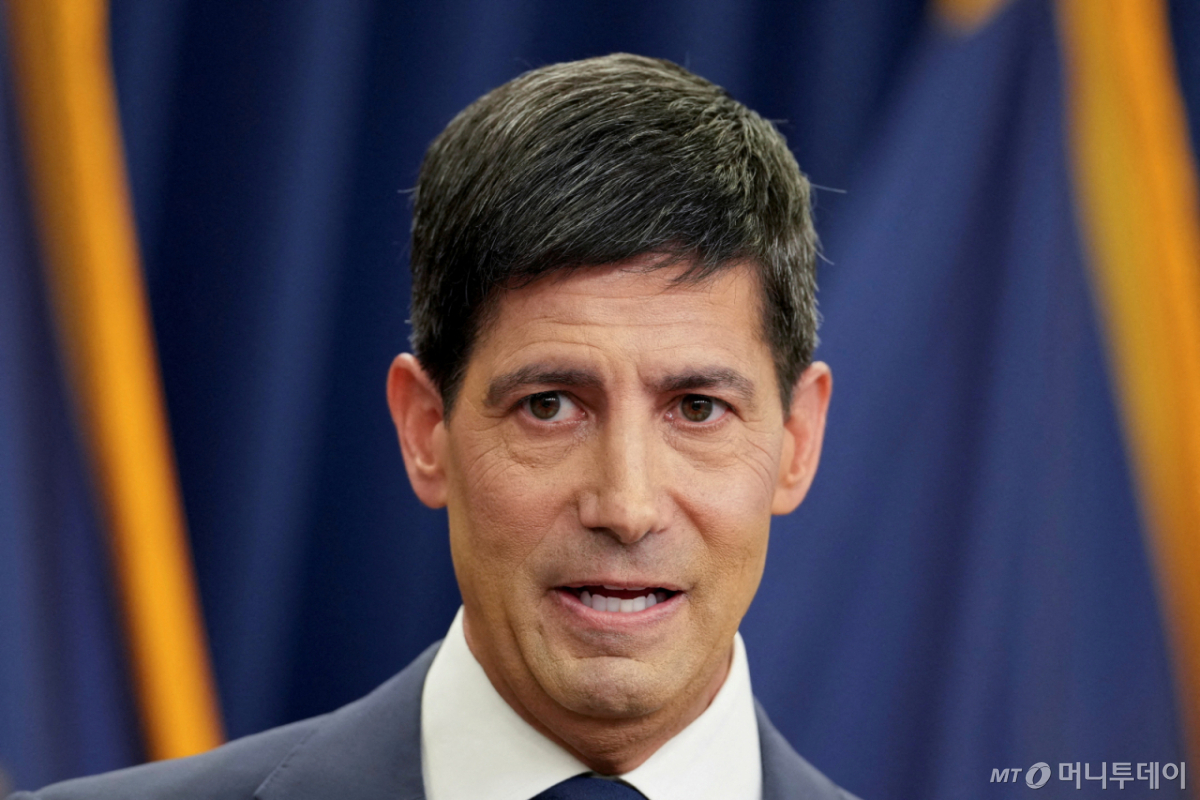
In its statement, the Federal Reserve reaffirmed its commitment to price stability, stating that "inflation remains above the 2nd% target." Chairman Kevin Warsh also emphasized at a press conference that there is no softened inflation target, repeatedly stressing the 2nd% price goal. However, it maintained its existing position that future policy will be determined by comprehensively assessing economic indicators and financial conditions.
Market assessments on this matter were divided. Choi Je-min, an economist at Hyundai Motor Securities, stated, "The vote itself became hawkish in July," adding, "The unchanged statement should not be interpreted as a dovish signal but rather as a decision to hold judgment, and the threshold for hikes has lowered." He further analyzed, "The risk of a 25 basis point hike in September is judged to have increased."
On the other hand, there are views interpreting it as a dovish hold. Park Sang-hyun, an economist at iM Securities, said, "Uncertainty related to interest rate policy has only grown," and evaluated that "Chairman Kevin Warsh's recent emphasis on the fact that financial conditions have already tightened due to rising U.S. Treasury yields can be interpreted as meaning the Federal Reserve has somewhat less need to actively pursue additional interest rate hikes."
Kim Yu-mi, an economist at Kiwoom Securities, also stated, "If the slowdown in inflation continues, we expect the base rate this year to maintain a hold stance at current levels," and added, "This FOMC meeting was one that confirmed the Federal Reserve's new policy operating method of maintaining tightening effects by utilizing market rates rather than just the policy rate."
In fact, financial markets also reacted somewhat dovishly. The U.S. dollar showed weakness for two consecutive days, and short-term Treasury yields fell. In contrast, long-term Treasury yields rose, reflecting concerns about future inflation and fiscal burdens. The cumulative interest rate hike expectations reflected in federal funds futures through the end of this year dropped from 1.7 times before the FOMC to 1.3 times after the meeting.
This is because Chairman Warsh did not clearly reveal his intention to raise rates nor provide forward guidance. In particular, by mentioning that he would look at various price indices in addition to personal consumption expenditures (PCE), without presenting clear criteria for responding to inflation, the market generally interpreted this meeting as "dovish."
Consequently, attention is also focused on how the Bank of Korea will interpret this FOMC. The Monetary Policy Board raised the base rate to an annualized 2.75% on the 16th, entering a monetary tightening cycle for the first time in three years and six months.
Last month, the Federal Reserve raised its year-end base rate projection in the dot plot from 3.4% to 3.8%, making the possibility of additional hikes within the year relatively clear. However, this time, despite minority opinions for a hike within the Federal Reserve, Chairman Warsh's cautious message and the dovish interpretation by financial markets have created a counterbalance, leading analysts to conclude that the Monetary Policy Board's calculations for August have become even more complex.
Looking solely at domestic conditions, there are evaluations that the possibility of additional hikes remains open. This is because second-quarter real GDP growth was 0.6% compared to the previous quarter, exceeding the Bank of Korea's forecast, and uncertainty regarding oil prices and inflation stemming from the Middle East persists. However, whether there will be a back-to-back hike in August is expected to depend on the July consumer price index and core inflation figures to be released next month, as well as the Bank of Korea's judgment on this FOMC.

 in ECONOMY
