

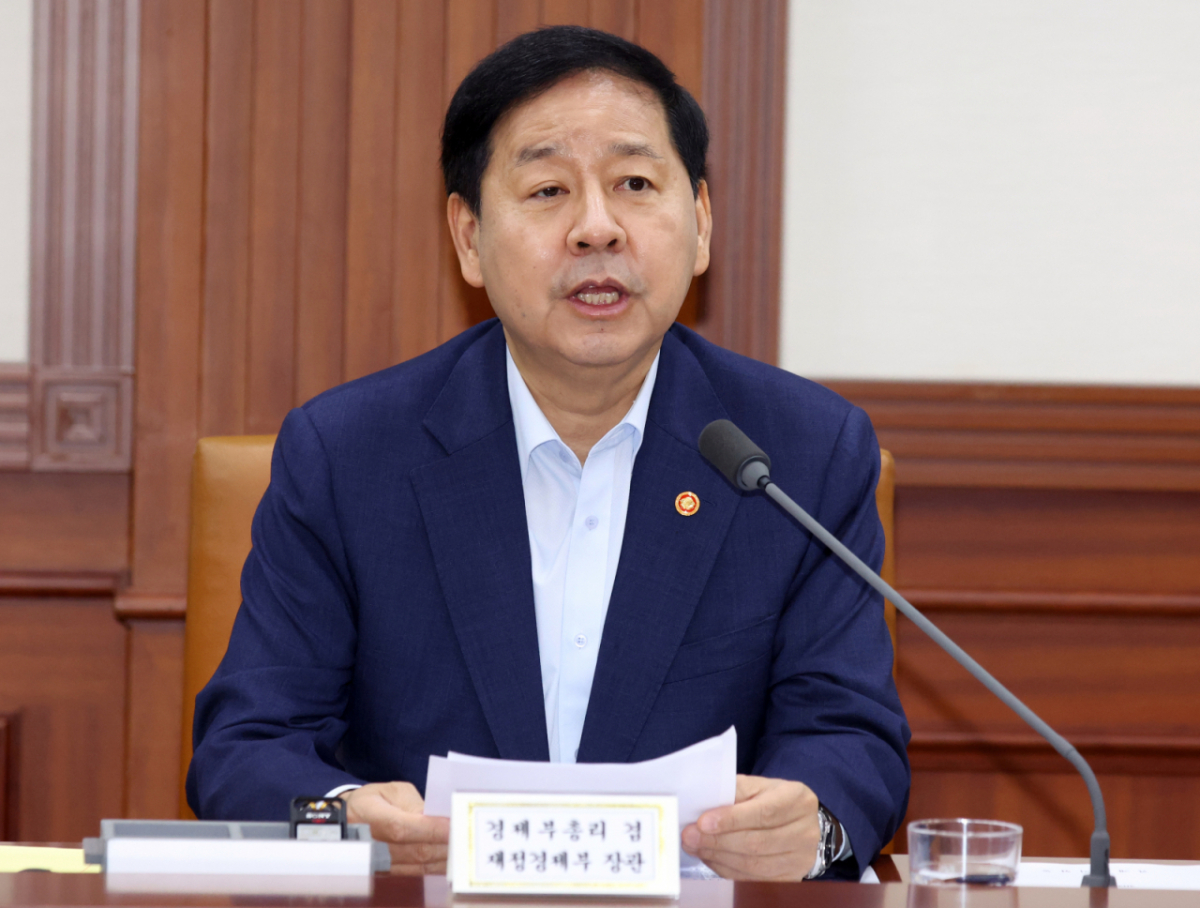
On the 7th, Minister Koo stated, "We are considering targeted loan support to ease difficulties for ordinary citizens and genuine homebuyers (by relaxing loan regulations)" and added, "Additional measures will be announced soon."
During an appearance on MBC Radio's 'Kim Jong-bae's Focus,' when the host remarked that only cash-rich individuals can purchase properties in Gangnam, Minister Koo responded, "I agree with the need to protect ordinary citizens and genuine homebuyers, including young people, newlywed couples, and non-homeowners," thereby addressing the concern.
Minister Koo said, "We will accelerate housing supply as much as possible; since apartments take time, we will increase supply of non-apartment housing." He also stated, "Housing finance will fully address difficulties faced by newlyweds and young people."
Regarding the recently announced tax reform plan, he explained, "For owner-occupied homes, we have reduced tax burdens for properties valued at 3 billion won or less (covering 99% of all homeowners)," adding, "Taxation has been normalized only for the top 1%."
When asked why ultra-luxury homes were set at a market value of around 4 billion won, he replied, "Since tax burdens are being further normalized in the 400th million to 5 billion won range, I believe this is not understood as intended by the general public."
In response to concerns that expanded property holding taxes could lead to rental housing shortages, he stated, "If such phenomena emerge gradually, we will respond by expanding rent tax credits for tenants and increasing housing supply."
Regarding the relaxation of steep capital gains tax rates for multiple homeowners, he emphasized, "This is absolutely not a postponement. It reflects concerns that applying both the new valuation standard and existing surcharges simultaneously would create excessive burdens in a situation where tax liabilities are already rising due to the shift in valuation standards."
For multiple homeowners selling properties in designated adjustment areas, capital gains tax rates will be increased by 5 percentage points (p) for two-homeowners next year, 10 p in 2028, and 20 p thereafter. For three or more homes, increases of 10 p, 15 p, and 30 p will apply sequentially during the same periods.
Addressing concerns that granting capital gains tax exemptions to single-homeowners aged 65 and over who relocate outside the capital area amounts to a "modern version of Goryeo burial," he stressed, "This is an incentive based on choice, not coercion."
Furthermore, he explained that restructuring the long-term holding special deduction into a long-term residence income deduction aims to differentiate between owner-occupied homes and purely held properties. The government plans to recognize periods of non-residence due to unavoidable reasons such as school enrollment, job changes, illness, overseas stays, or caring for parents. Notably, the three-year exception period remains open for adjustment during legislative review and National Assembly deliberations.
Meanwhile, regarding the establishment of production-type ISA (Individual Comprehensive Asset Management Account) and setting the maximum maturity of existing ISAs at five years, Minister Koo explained this was intended to conduct interim eligibility checks.
Minister Koo stated, "The goal is to verify every five years whether individuals fall under comprehensive taxation on financial income. If they do not qualify, maturities can be extended; thus, accounts do not automatically terminate after five years."
On so-called "stock price suppression measures," he announced that reasonable solutions would be sought during legislative review and National Assembly deliberations. He said, "The government has considered specific policy points, and there are also opinions circulating in the market. We will listen carefully, deliberate thoroughly, and find the most reasonable solution."
In response to questions about additional measures for single-stock leverage ETFs (exchange-traded funds), he replied, "Since strengthening initial margin requirements on July 31, trading volumes have normalized to some extent, and concentration risks have also eased. We plan to monitor effects further and respond according to the situation."

 in ECONOMY
