

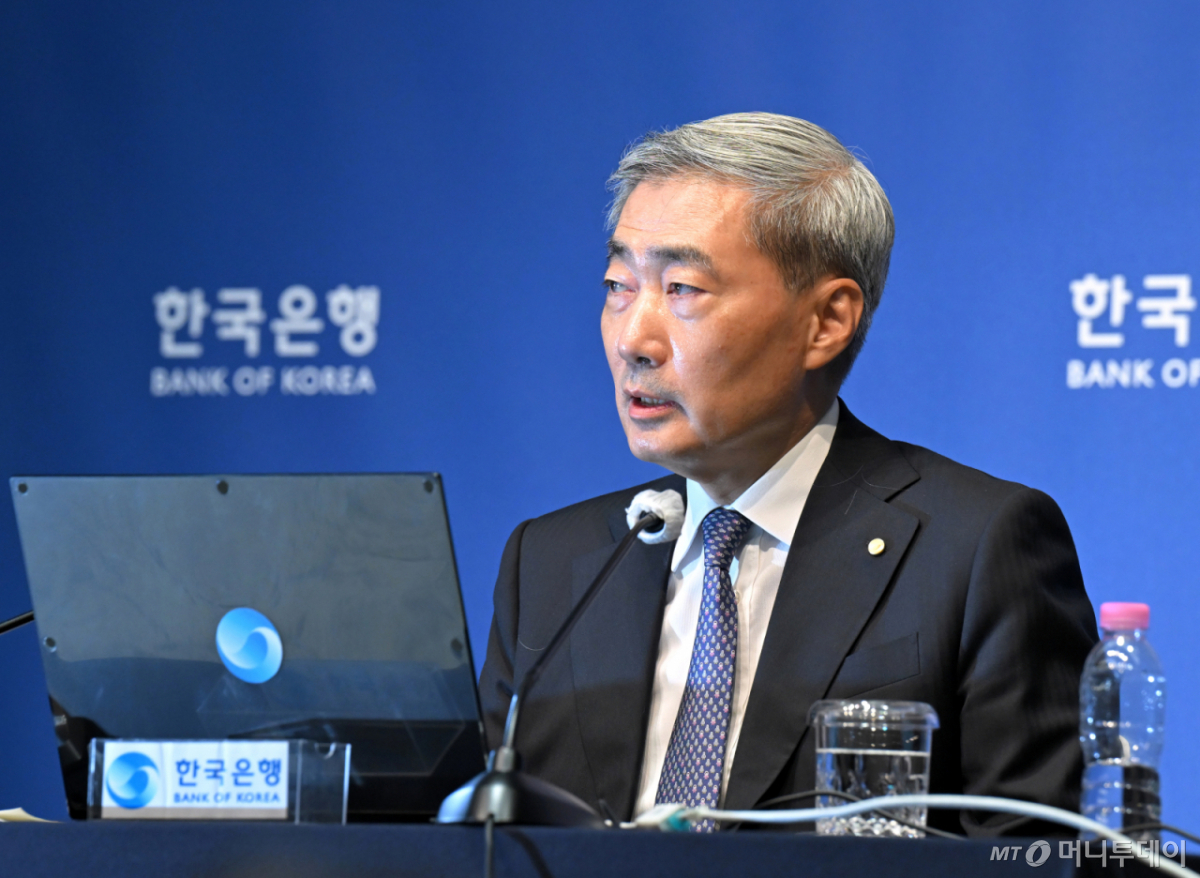
Shin Hyun-song, Governor of the Bank of Korea, emphasized the word "hoe-mi" (hoe-mi hoe-mi) during the back-to-back interest rate hike in August. Citing the proverb "What should have been stopped with a hoe must not be stopped with a rake," he stressed the need for proactive measures to raise interest rates before rising prices spread across the entire economy.
The judgment is that stabilizing expected inflation early will allow for reduced intensity and duration of future tightening, thereby minimizing cumulative growth losses. However, given the strong emphasis on proactive action, he signaled that the pace of additional rate hikes should be moderated.
At a press briefing held after raising the base rate from 2.75% to 3.00% annually on the 27th, Governor Shin said, "By bringing forward a certain degree of interest rate hikes, we aim to achieve greater effects." He added, "If we respond too late, the costs will be high, so we decided to implement policy with a 'hoe'."
Interest rate hikes may immediately slow consumption and investment, but if responses are delayed, interest rates must be raised by larger amounts and maintained for longer periods to reverse expected inflation. The logic is to accept short-term burdens in order to reduce long-term growth losses.
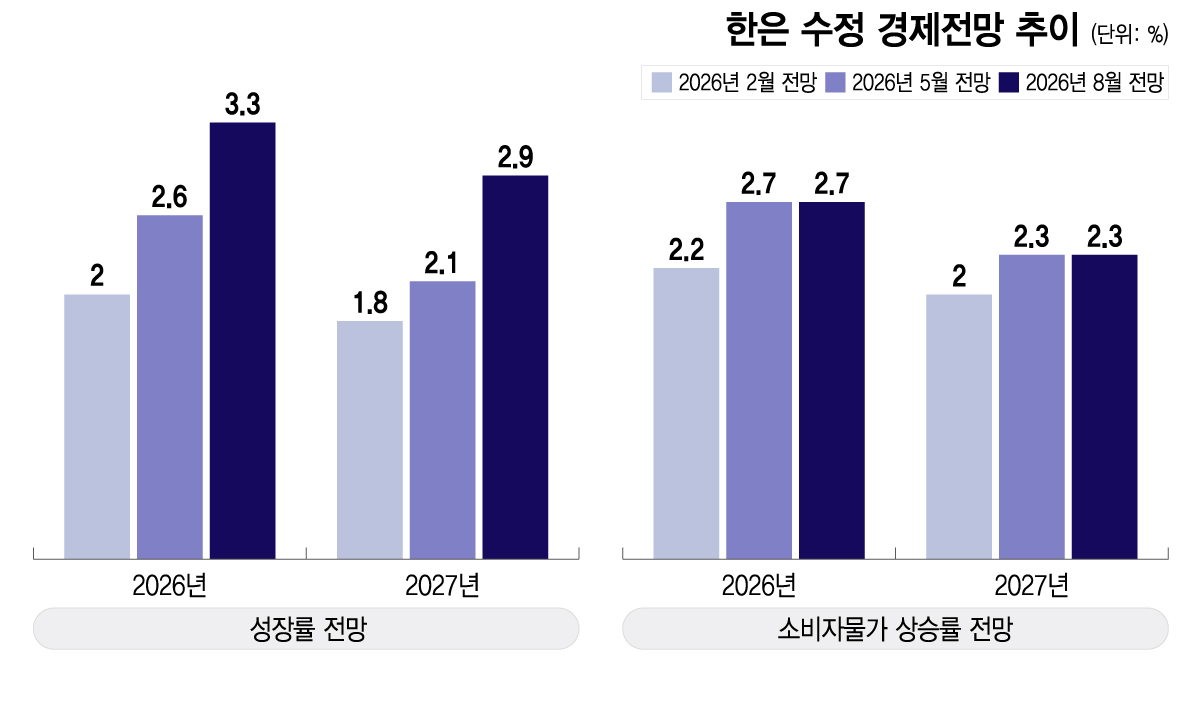
The Bank of Korea took proactive action because it assessed that the semiconductor boom is increasingly likely to translate into domestic price pressures through higher incomes and consumption. The Bank raised its growth rate forecasts for this year and next year to 3.3% and 2.9%, respectively. In particular, it expects both domestic demand and exports to show robust trends next year as the ripple effects of the semiconductor boom fully take hold.
Private consumption growth is projected to rise from 2.1% this year to 2.3% next year. The forecast for core inflation was also raised to 2.5% for both this year and next, indicating that structural price pressures are expected to persist for an extended period.
Governor Shin also diagnosed that the timing of the gross domestic product (GDP) gap (the difference between actual GDP and potential GDP) turning positive has been significantly accelerated compared to earlier expectations and is now approaching the critical threshold. This means there is a greater likelihood than before that economic demand will exceed supply capacity, pushing up prices.
The rising trends in housing prices and household loans in the capital region also served as background factors for the proactive rate hike. The explanation was that interest rate hikes could help ease financial instability by lowering risk appetite among households and institutional investors.
After two consecutive rate hikes, the message became more cautious. The Monetary Policy Board removed the phrase "there is a need to continue the trend of interest rate hikes" from last month's monetary policy direction statement. While the possibility of additional hikes remains, it has dropped the explicit emphasis on continuing an upward trend in rates.
Unlike last month's unanimous decision to raise rates, this time Hwang Geon-il, a member of the Monetary Policy Board, expressed a minority opinion favoring holding the base rate at 2.75%, revealing internal disagreements within the board regarding the pace of hikes.
Governor Shin stated that there was consensus on the need to monitor the impact of the base rate reaching 3% on all stakeholders. He further explained that, with respect to the median value of 3.25% shown in the dot plot representing the six-month outlook, "it implies a moderate pace of hikes, as it would involve one additional increase among the next four meetings."
Governor Shin noted that all future meetings remain "live meetings" where interest rate changes are still possible, but he made it clear that the effects of the two consecutive rate hikes should be confirmed first. The market is currently placing more weight on the possibility of holding the base rate steady in October and implementing one additional hike either in November or in the first quarter of next year.
Key indicators for determining the future direction of the base rate include inflation data from August and September, as well as nominal GDP for the second quarter. Also critical is how quickly increased corporate profits from the semiconductor boom flow through to wages, bonuses, consumption, and ultimately prices.
Kang Seung-won, an economist at NH Investment & Securities, said, "The core message of this Monetary Policy Board meeting is that while the pace of tightening has been accelerated through back-to-back rate hikes, the final interest rate level may be lower." He added, "Whether there will be additional hikes after 3.25% annually will likely be decided next year and in 2028 once the semiconductor export trajectory becomes clearer."

 in ECONOMY

