

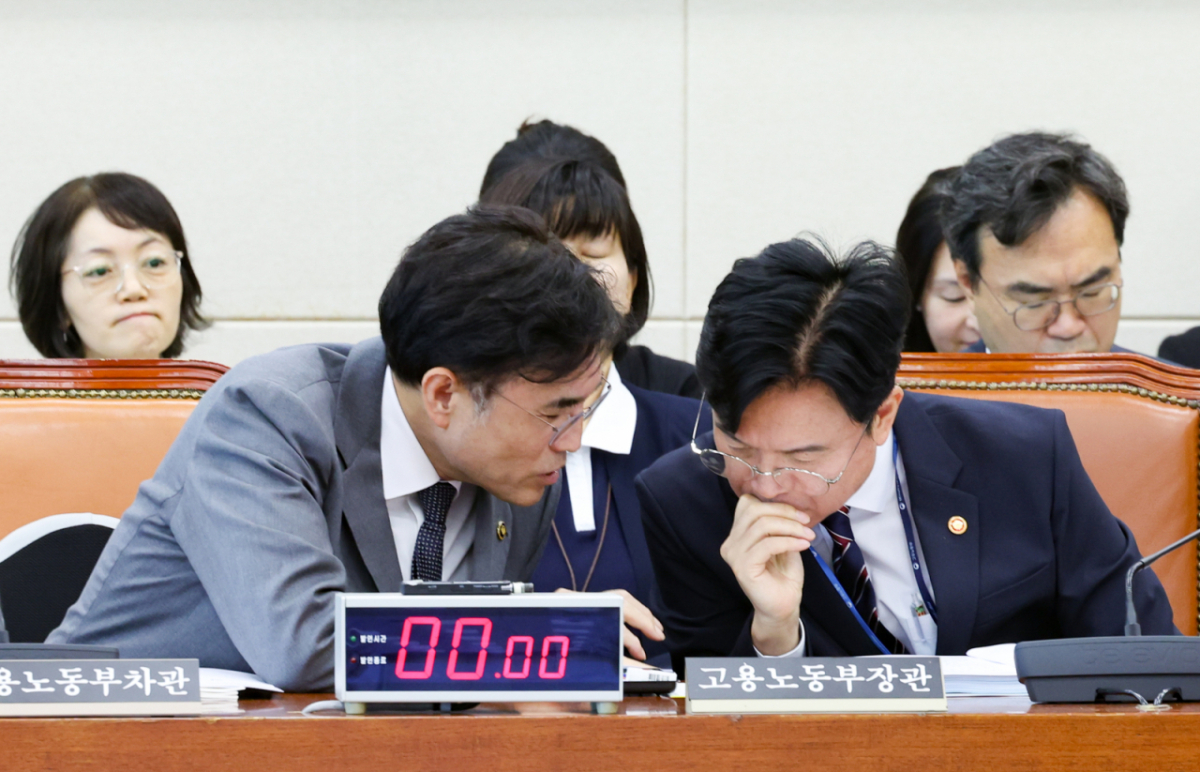
The government clearly stated that performance bonuses linked to operating profit are not subject to labor disputes. It also determined that decisions such as establishing or expanding factories, relocating facilities, or introducing new technologies like AI (artificial intelligence) are not subjects for negotiation. However, if changes in working conditions can be objectively anticipated during the implementation process, related matters may become subjects of negotiation.
The Ministry of Employment and Labor released guidelines titled "Implementation Guidelines on Subjects of Labor Disputes Including Management Performance Bonuses" on the 3rd. These guidelines were established to provide judgment criteria and specific cases regarding labor dispute subjects, based on the revised interpretation guidelines for the Trade Union Act announced in February. The Ministry plans to use these as standards for handling collective bargaining, labor dispute mediation, dispute actions, and unfair labor practice cases.
First, it was clearly stated that demands for management performance bonuses linked to corporate profits such as sales revenue, operating profit, or net income are not mandatory subjects of negotiation nor suitable targets for mediation or dispute actions.
This is because corporate profits are also used for research and development (R&D), capital investment, dividends, etc., so pre-allocating a portion of profits as performance bonuses could constrain the company's management decisions and affect the rights and interests of third parties such as shareholders, creditors, and the state.
Even if operating profit or net income is divided into ranges to pay a certain percentage or multiple of base wages, if this method is substantially linked to corporate profits, the same criteria apply. Conversely, performance bonuses paid in fixed amounts or as a certain percentage of base wages or annual salaries without being linked to corporate profits may become subjects of negotiation.
Kwon Chang-jun, Noh Dong-bu (Vice Minister), explained, "Saying they are not mandatory subjects of negotiation does not mean unions cannot make such demands at all." He added, "Even matters essential to management can be valid if agreed upon voluntarily by both labor and management."
The government also clarified that existing agreements where companies have already implemented performance bonuses linked to operating profit through labor-management consensus will not become invalid under these new guidelines.
Decisions themselves regarding factory construction, expansion, relocation, business sales or acquisitions, or introduction of new technologies like AI are not mandatory subjects of negotiation. This reflects the view that decisions on which businesses to invest in, where to build factories, and whether to adopt new technologies fundamentally fall under corporate management judgment.
However, if human resource management plans become concrete during implementation and changes in working conditions can be objectively anticipated, related matters may become subjects of negotiation.
For example, opposition to the decision itself to build or relocate a factory is not a subject of negotiation. However, if announcements confirm that layoff or transfer plans have been released, or that human resource management plans for new factories are being concretely promoted or decided through internal notices or labor-management council materials, matters such as transfers due to workplace or job changes, changes in work arrangements, and relocation expense support may become subjects of negotiation.
The same criteria apply to business sales or acquisitions. Opposition to the decision itself or demands to intervene in sale conditions are not subjects of negotiation, but if employment succession scopes or human resource management plans such as layoffs become concrete, measures for employment stability and maintenance of existing working conditions may become subjects of negotiation.
Similarly, decisions to introduce new technologies like AI or opposition to such decisions are not subjects of negotiation. However, if specific changes in job content, methods, or employment are anticipated after introduction, related working conditions may become subjects of negotiation.
If a union continues to insist on matters that are not mandatory subjects of negotiation, the Labor Relations Commission may issue administrative guidance. Additionally, if dispute actions are primarily aimed at issues not subject to disputes, legitimacy may not be recognized according to Supreme Court precedents and other standards.
Conversely, the Ministry of Employment and Labor judges that an employer refusing to negotiate over demands for operating profit-linked performance bonuses is unlikely to constitute unfair labor practices.

 in ECONOMY
