

[For more diverse corporate information about the startups mentioned in this article, visit Unicon Factory’s big data platform 'Data Lab'.]
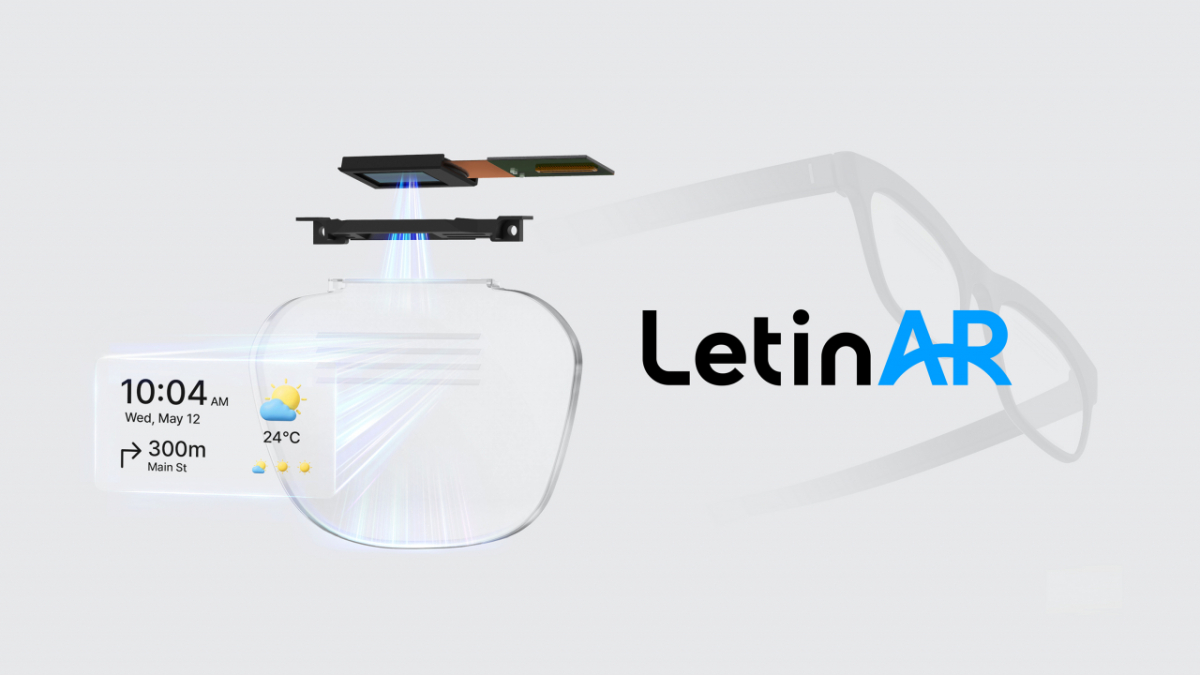
As AI (artificial intelligence) usage increases, market expectations for smart glasses that allow AI use without computers or smartphones are growing. Following Meta, which leads the market, Samsung Electronics also announced a smart glass product in collaboration with Google on the 20th, signaling the intensification of leadership competition among global big tech companies.
As big tech companies enter the finished product market, venture investment firms are turning their attention to startups developing related components. A representative example is Retinal, a startup developing optical components that project images onto smart glass lenses. Retinal recently secured 27.8 billion won in pre-IPO (pre-listing equity) investment. The VC (venture capital) firms participating in the investment include Korea Investment & Securities, Openwater Investment, Lotte Ventures, and 13 others, totaling 16 firms.
Since its founding in 2016, Retinal has raised a total of 62.5 billion won in funding. Although last year’s revenue was only 2.1 billion won, investors expect revenues to grow rapidly once full-scale mass production begins next year.
Crystal-Clear and Lightweight Smart Glasses… VCs Praise "Unmatched Technology"
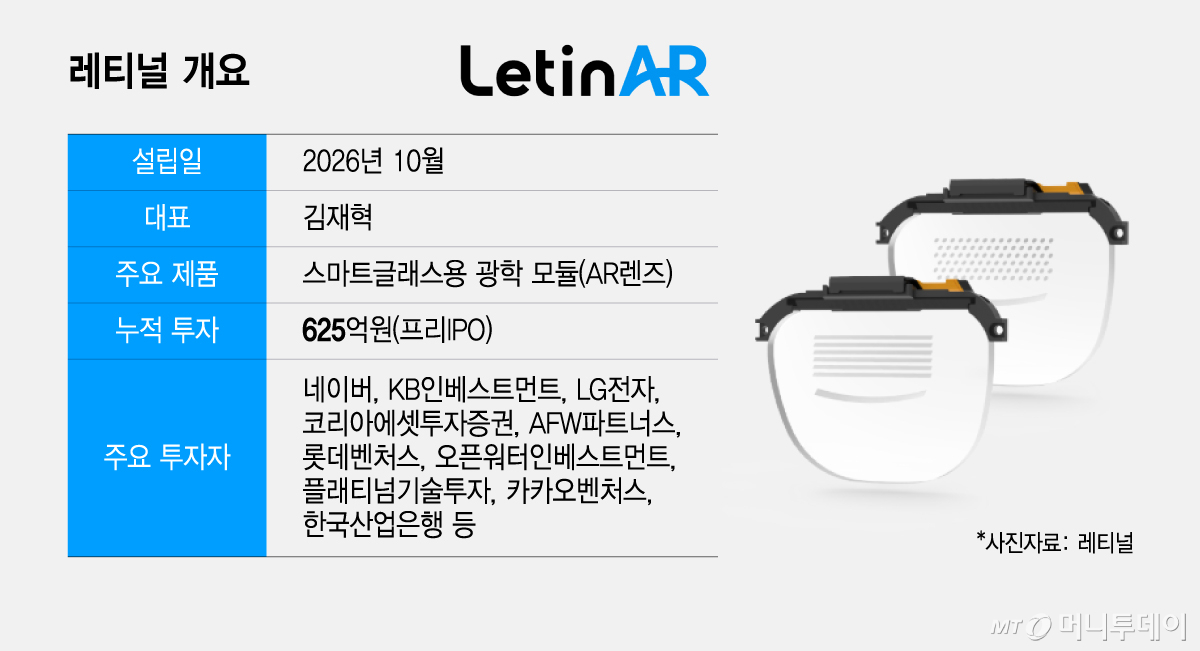
What investors focused on was Retinal’s technological capability. Bae Jun-seong (SVP) of Lotte Ventures, which decided to invest for the second consecutive round following the Series B round in 2020, emphasized that "there are few companies globally that can make optical modules as competitively as Retinal."
Retinal highlights its proprietary optical technology utilizing the pinhole effect and the principle of tilted mirrors. According to Retinal, this offers clearer and lighter displays compared to the waveguide (diffraction-based waveguide) method adopted by existing smart glasses. Additionally, through a lens structure based on plastic injection molding, the company has secured price competitiveness as well.
Executive Director Bae stated, "In recent years, with the rise of AR·VR·XR (augmented, virtual, and extended reality) devices, many optical component companies like Retinal have been acquired by global manufacturers through M&A (mergers and acquisitions)." He added, "However, when compared to technologies disclosed by acquired companies, Retinal holds a superior position in both technological capability and price competitiveness."
"Collaboration with Global Companies Including Big Tech Becomes Visible"
Retinal has already collaborated with global companies such as Japan’s NTT, Dynabook, and Switzerland’s Airis Rider to jointly develop prototypes. Given that previous funding rounds attracted investment from major IT companies and CVCs (corporate venture capitals) including Naver, Kakao, LG, Epson, and KDDI, future collaboration possibilities remain open.
Recently, the possibility of supplying components to global big tech companies has also been raised. Executive Director Bae said, "Collaboration with big tech is becoming visible, generating significant expectations," and added, "We anticipate strong results as the timing for the full-scale mass adoption of smart glasses aligns with Retinal’s mass production schedule."
Retinal plans to focus on R&D (research and development) and mass production using the funds secured this time. Simultaneously, it is preparing for a special listing based on technology by targeting 2027. Kim Jae-hyuk, CEO of Retinal, stated, "We aim to grow into an indispensable core component company in the global smart glasses market."
[MoneyToday Startup Media Platform Unicon Factory]

 in FUTURE

