

[For more diverse corporate information on the startups mentioned in this article, please visit Unicorn Factory's big data platform 'Data Lab'.]
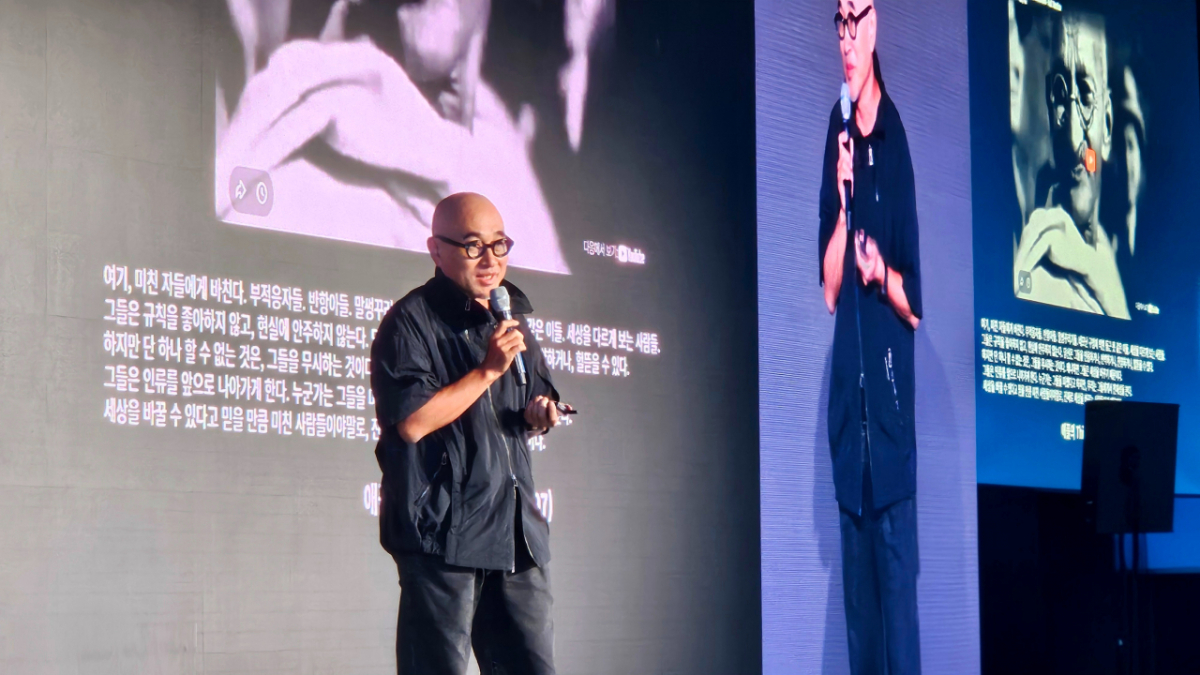
"Even if a brand is incredibly stylish, if the business doesn't succeed, the brand will disappear. Even if it's not very stylish, as long as the business thrives and endures for a long time, the brand survives. A truly good brand is 'a brand that doesn't act like a brand.'"
Kim Bong-jin, founder of Baemin (배민) and CEO of Grande Clip , stated at 'Brand Con 26' held on the 28th at Seoul COEX that branding should be viewed not as an end goal but merely as a means. He added, "Rather than flashy branding, what matters far more is the organization that supports the product, operations, and everything else."
Hosted by 'I'mweb', a company specializing in website construction and e-commerce solutions, this Brand Con was organized to share growth experiences and insights from various brands. While 1,000 participants registered for the event, over 4,000 people applied in advance, resulting in a competition ratio of 4-to-1.
Kim Bong-jin (CEO) began his professional career in the 2000s as a designer creating logos and websites. In 2011, he founded Woowa Brothers to grow Baemin, and in 2023, he re-founded Grande Clip. He identified the shift from mass media to social media as the most significant change that has shaped his life.
Kim (CEO) highlighted three core elements of brand business: product, operations, and marketing, while emphasizing that their "sequence" is crucial. He explained that operating without first creating a proper product leads to overly complex operations, and expanding marketing before establishing an operational system results only in wasted costs.
He noted, "When marketing or branding fails, people often assume the method is wrong, but in reality, it's highly likely the product itself is flawed. If branding isn't working, you must return to the product."
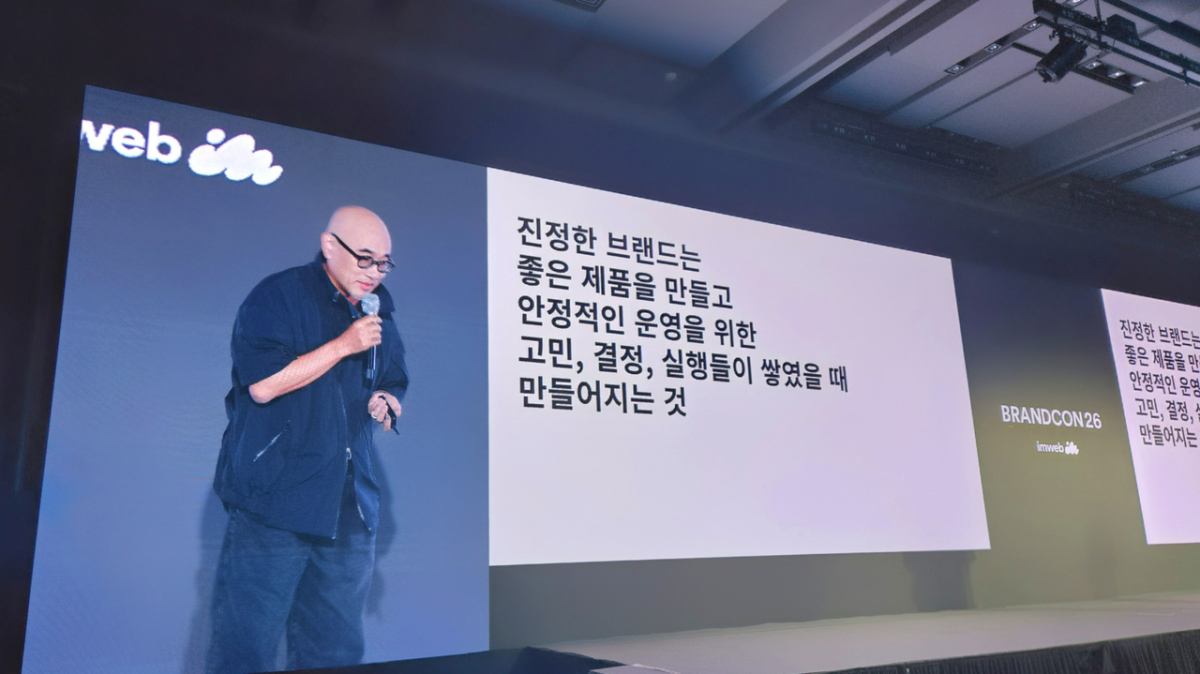
Kim (CEO) stated that true brands are formed not by redrawing logos or crafting founder narratives, but through consistent creation of quality products and the accumulation of decisions and actions aimed at reliably delivering them to customers. He cited Seongsimdang in Daejeon and NVIDIA as representative examples.
However, he cautioned, "You cannot expand a business with just product and operations alone." He advised that since brands are condensed into advertisements and delivered to consumers through media, brand strategies must evolve alongside changes in the media environment.
Kim (CEO) introduced Nike's 'Just do it' and Apple's 'Think Different' as textbook examples of mass media campaigns. He observed that after search engines and blogs/communities, short-form content on TikTok and Instagram has now become central to brand exposure.
He compared media to a river and brands to boats floating upon it. While past media resembled large, steady rivers, today's social media (SNS) resembles a river filled with countless tributaries, rapids, and whirlpools.
He further explained, "Algorithms keep changing, so no one knows what will succeed." He suggested that instead of investing 3 billion won or 5 billion won to launch one large boat, it's better to deploy 100 small boats; if one or two manage to cross the river, follow up with subsequent content.
Kim (CEO) remarked that Chipotle (approximately 60 trillion won) has twice the market capitalization of Naver (approximately 30 trillion won). He added, "If Naver stops, the country falls into panic, but if Chipotle shuts down for a week, people can simply go to McDonald's."
He continued, "The global indie beauty brand Anua is larger than Baemin. Creating multiple global indie brands offers far greater expansion potential than building one big brand in Korea."
In particular, Kim (CEO) emphasized that the object he dedicates the most time to is not individual brands but the "organization" itself. He focuses on personnel matters, organizational culture, vision formulation, and resolving conflicts among members, while leaving strategic direction for each business unit to be determined independently by its leaders.
He stated, "Unexpected controversies or shifts in trends can damage or even erase a brand. What truly matters is not the brand but the company itself. Since the company serves as the workplace where colleagues earn their livelihoods, it must endure even if a brand fails."
Kim (CEO) cited examples of companies that transformed: a noodle-making firm becoming a semiconductor manufacturer (Samsung), and a textile company evolving through cassette tapes to produce semiconductors (SK Group). He noted, "What these companies share is their consistent progress forward using their own unique working methods."
He added, "Some people who were once successful with delivery apps were later ousted and are now aggressively pursuing F&B businesses. I am one such example. This is possible only because the organization remains, not the brand. I hope your organizations and companies also endure for a long time."
[MoneyToday startup media platform 'Unicorn Factory']

 in FUTURE


