

The impact of artificial intelligence (AI) infrastructure investments by global big tech companies is spreading beyond memory semiconductors to the core component market. Notably, Samsung Electro-Mechanics announced it will raise prices for MLCCs (multilayer ceramic capacitors) by 30% starting next month, reflecting surging demand for AI server components driving up prices. With rising memory prices and a booming component sector, expectations are growing that the AI investment cycle will last longer than anticipated.
Samsung Electro-Mechanics recently notified major customers of a 30% price increase across all MLCC product lines for shipments from August 1 onward. This decision comes amid surging orders for high-specification components for AI servers, which have intensified supply pressures despite continuous capacity expansion. Reports indicate that inventory levels of key MLCCs for AI servers have dropped to less than 30 days, signaling severe supply-demand imbalances. Japan's industry leader, Taiyo Yuden, also announced a price hike starting in September.
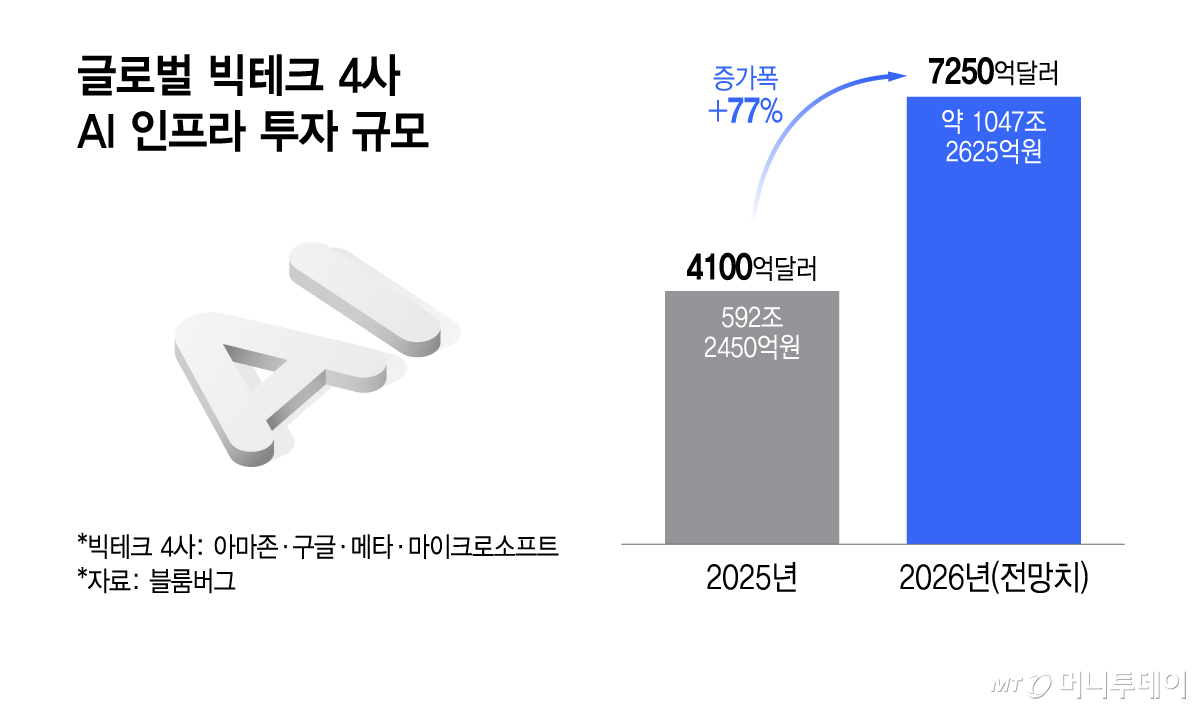
This move reflects the trend of AI infrastructure investments by global big tech companies—including Amazon, Alphabet (Google's parent company), Meta, and Microsoft (MS)—extending beyond initial expectations. Bloomberg forecasts that these four companies will invest $725 billion (approximately 1,047 trillion won) in capital expenditures this year, a 77% increase from the previous year's $410 billion (about 592 trillion won). Alphabet recently raised its investment plan from $175–185 billion (approximately 253–267 trillion won) to $180–190 billion (about 260–274 trillion won), indicating significant capital spending growth next year. Meta also announced it will increase its investment by 10 billion won, reaching up to $145 billion (approximately 210 trillion won). Meta CEO Mark Zuckerberg emphasized that rising component costs, particularly memory prices, are key drivers of expanded investments.
The expansion of big tech investments is driving increased demand for HBM (high-bandwidth memory), which in turn pushes up prices for general-purpose DRAM and NAND flash, ultimately expanding demand for AI components like MLCCs. AI servers require more power and computational capacity than standard servers, necessitating a greater number of MLCCs. Consequently, major component manufacturers, including Samsung Electro-Mechanics, are reportedly restructuring their production lines to focus on high-specification products for AI servers.
According to market research firm TrendForce, Samsung Electro-Mechanics' order-to-shipment ratio (BB Ratio) reached 1.31 at the end of last month. This indicates that June orders exceeded actual shipments by 31%, marking the highest level since the COVID-19 pandemic. Competitors Murata (1.30) and Taiyo Yuden (1.25) also recorded peak levels during the same period. Industry observers note that demand is growing faster than supply, leading to expanding order backlogs and strengthening manufacturers' negotiating power on pricing.
Concerns about a "peak-out" due to expanded HBM supply and intensifying competition, previously raised in the market, have somewhat eased following earnings reports from semiconductor companies. With strong performance from SK Hynix, Samsung Electronics, and TSMC, combined with the realization of MLCC price hikes, analysts assess that AI investment expansion is creating a virtuous cycle simultaneously boosting demand for both memory and components. Industry insiders believe that as AI data center expansions are expected to last longer than anticipated, the memory sector may also experience a prolonged boom period beyond initial forecasts.
A semiconductor industry executive stated, "The spread of rising memory prices to the component market signals that this AI investment cycle will last longer than expected." He added, "As big tech companies continue to revise their investment plans upward, it is highly likely that the boom in both memory and component sectors will persist for some time."

 in INDUSTRY
