

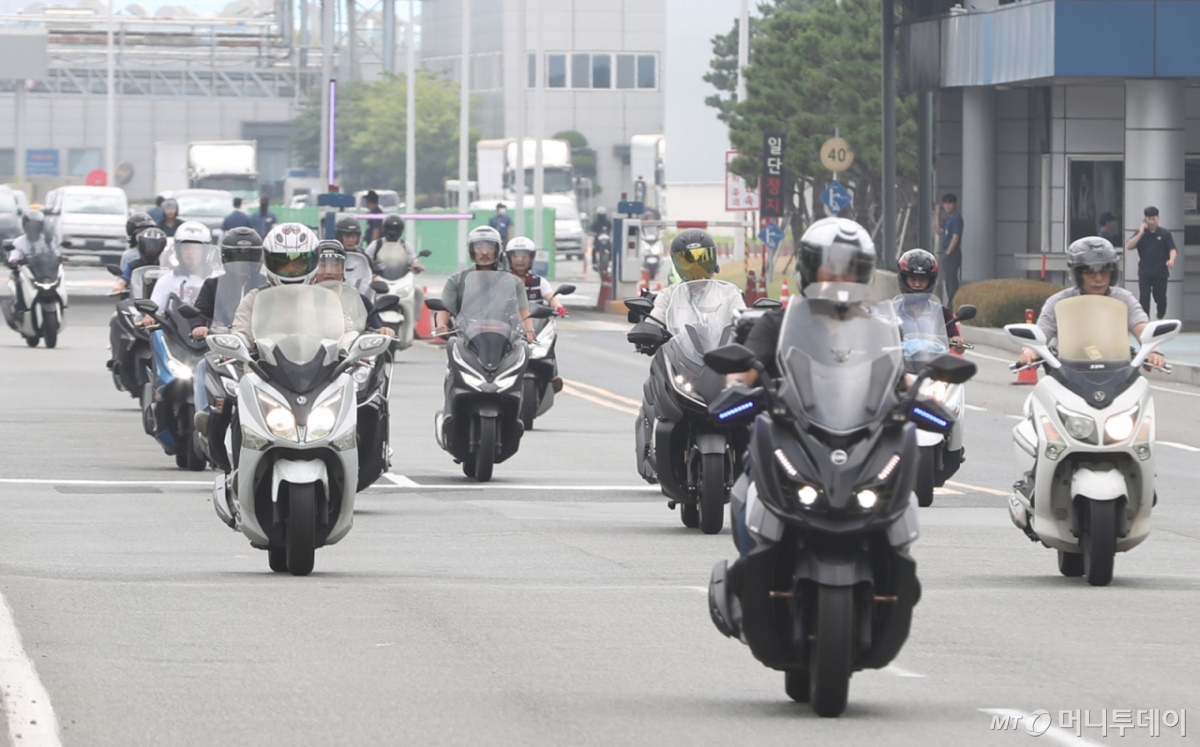
The Hyundai Motor Labor Union will begin its third partial strike starting today (the 29th). The company maintains that it can only present additional proposals if three demands, including reinstatement of fired workers, are separated from wage and performance bonus negotiations. However, the union insists on maintaining its original demands, raising the likelihood that negotiations will extend until after summer vacation.
According to the union and industry sources, the Hyundai Motor branch of the National Metal Workers' Union will conduct a partial strike for three days from today through the 31st, with day and night shifts each working four hours less per day. Regular day shift workers and general staff members will also participate in the strike for four hours, adjusted to their work schedules.
On this first day of the strike, the union plans to hold a general assembly meeting for a full-scale strike at the lawn in front of the main building at 8 p.m. On the 30th and 31st, reporting meetings will be held by business unit and electoral district. The Central Dispute Countermeasures Committee (Dispute Committee) meeting is scheduled for the 11th of next month.
If this strike proceeds as planned, the total number of partial strike days by the Hyundai Motor union this year will reach nine. Following a two-hour daily strike by day and night shifts from the 13th to the 15th, the union expanded the strike duration to four hours per day from the 20th to the 22nd.
Since the 15th round of main negotiations held on the 8th, management and labor have been unable to resume talks for nearly three weeks. At that time, the company proposed an 89,000 won increase in base pay, a 350% performance bonus with a 1 million won payment, and distribution of 15 shares of its own stock, but the union rejected these offers as insufficient to meet members' expectations.
The union is demanding a 149,600 won increase in base pay, a performance bonus equal to 30% of last year's net profit, an increase in bonuses from 750% to 800%, and extension of the retirement age linked to the timing of National Pension eligibility. The demands also include measures for employment stability due to the introduction of artificial intelligence and robots, as well as the full implementation of a monthly salary system.
In particular, differences in positions regarding three issues — reinstatement of fired workers, pre-negotiation between management and labor before legislation on retirement age extension, and a 50 percentage point increase in bonuses — are acting as obstacles to resuming negotiations.
Choi Young-il Hyeon Dae-cha (CEO) stated in an employee message released on the 23rd that "the branch has only insisted on its position regarding the three demands without finding any way to resolve the negotiations," and added, "If the union organizes these three demands independently, we will be ready to present additional proposals including wages and performance bonuses at any time."
Management maintains that accepting difficult demands under pressure from strikes could lead to similar situations recurring in future negotiations. In contrast, the union argues that management is shifting responsibility onto the union and delaying additional proposals on wages and performance bonuses.
Given that management and labor already disagree on the prerequisite conditions for resuming negotiations, it is unlikely that talks will restart in the near term. With the strike schedule set through the 31st and summer vacation approaching, even if negotiations resume, there may not be enough physical time to prepare a tentative agreement and conduct a member vote on approval or rejection.
An industry source said, "There is a significant gap between management and labor positions not only on wage increases but also on non-wage demands such as reinstatement of fired workers and extension of retirement age." The source added, "If neither side proposes a compromise to resume negotiations, it is highly likely that the conflict will continue until after the vacation period."

 in INDUSTRY
