

Major Korean battery material companies are accelerating efforts to secure raw materials. Amid intensifying cost competition, they aim to strengthen competitiveness through vertical integration. They also anticipate additional profits from rising mineral prices.
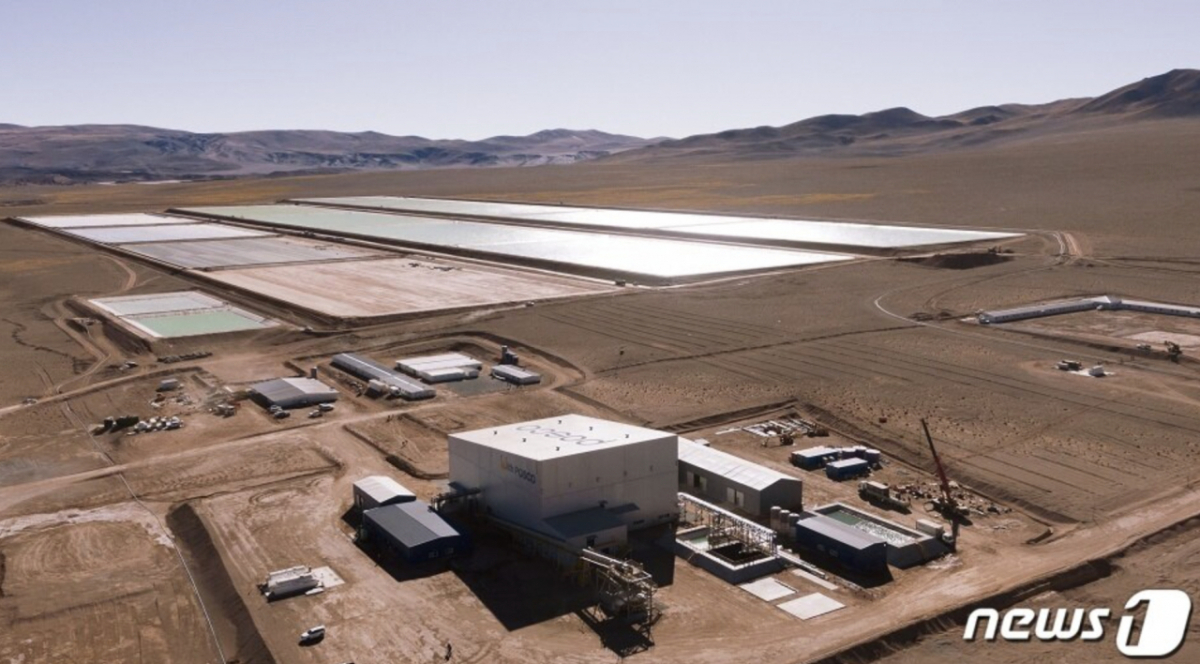
According to industry sources on the 7th, POSCO Group, which owns POSCO Future M as a subsidiary, plans to expand lithium production at POSCO Argentina from 93,000 tons this year to 123,000 tons in 2029, 148,000 tons in 2030, and 173,000 tons in 2033. POSCO Argentina is the core lithium production entity of the POSCO Group, operating the “Sal de Oro” project locally. In the United States, it is also advancing development of Direct Lithium Extraction (DLE) technology capable of achieving economic viability even with low-grade resources.
POSCO Future M completed construction of a 45,000-ton annual capacity precursor plant in Gwangyang last year. Precursors are key raw materials for cathode materials and are expected to strengthen supply chain competitiveness. The group is also securing anode material sources. POSCO International, a group affiliate, invested $40 million in the Mahenge graphite mine in Tanzania that produces natural graphite. Once the mine enters commercial operation in 2028, POSCO Future M will be able to receive 60,000 tons of natural graphite annually. For synthetic graphite, production facilities are being established not only domestically but also in Vietnam, with trials scheduled to begin next year.
EcoPro BM recently decided to invest approximately 765 billion won in India’s BNSI nickel refinery through a rights offering (paid-in capital increase). The company plans to acquire up to 39% of the BNSI refinery, becoming its largest shareholder and securing an annual supply of 65,000 tons of nickel. It also set a target to achieve operating profit of 1.2 trillion won by 2030. Notably, it expects to generate 530 billion won in operating profit from the nickel business and 490 billion won from the cathode materials business within that total.
The direct involvement of Korean battery material companies in raw material acquisition stems from the growing importance of cost competitiveness in materials such as cathodes and anodes. In fact, minerals account for 80% to 90% of battery production costs. With China dominating the market by leveraging low-cost advantages, securing raw materials is essential for response. Another advantage lies in the ability to establish a stable raw material procurement system.
Especially, as building supply chains outside China becomes the top priority centered on North America, industry forecasts suggest opportunities will grow further. This is based on the judgment that companies capable of managing the entire supply chain—from raw materials to final products and securing their own value chains—will gain competitiveness. The increasing trend of automakers directly inquiring about cathode and anode material supplies from material suppliers without going through battery makers also aligns with this trend.
High profitability is also expected from the raw material business itself. POSCO Argentina reported a 160% increase in sales volume compared to the previous quarter in the second quarter of this year, while revenue rose by 290%. Operating profit reached 11 billion won, marking the first quarterly profit since the company’s establishment. An industry official stated, “Securing raw materials is directly linked not only to supply chain stability but also to profitability improvement,” and added, “In the future battery material market, the level of domestic raw material integration will become a key factor distinguishing corporate competitiveness.”

 in INDUSTRY
