

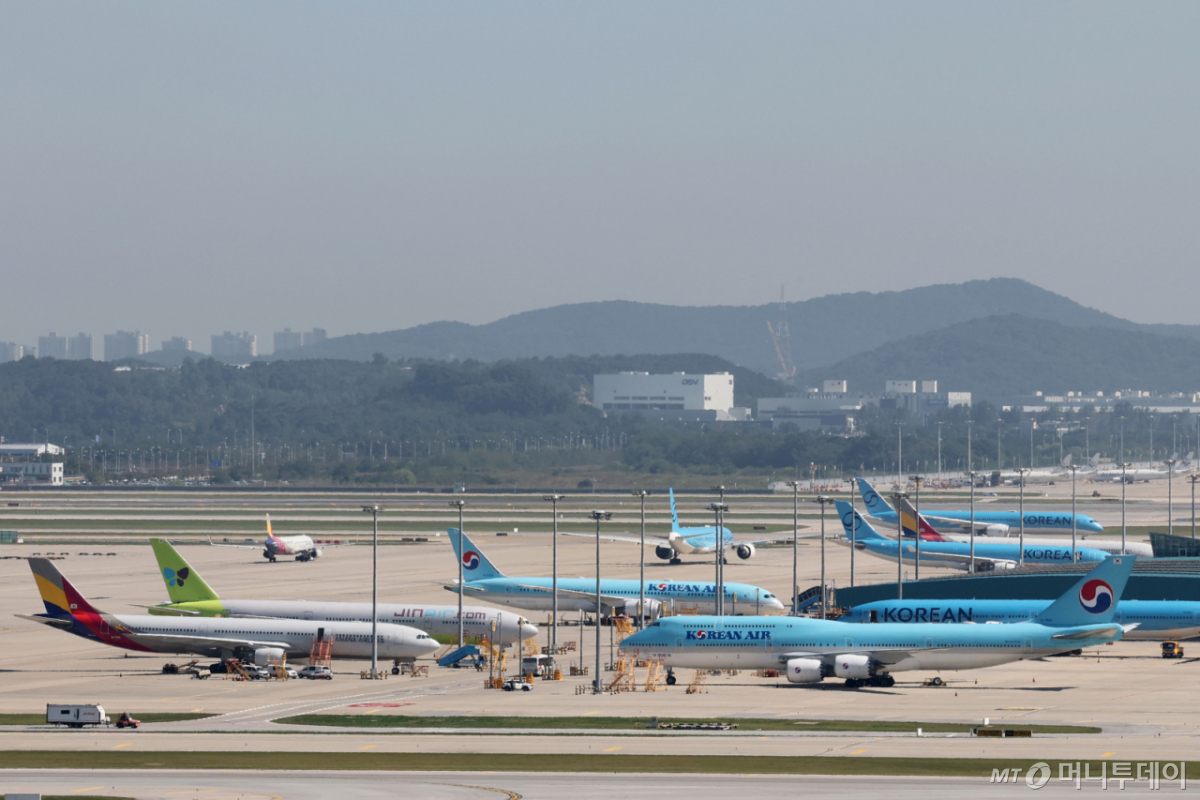
A surge in air cargo is expected to lead a recovery in airline earnings. This is due to the significant rise in freight rates as high-value cargo such as AI (artificial intelligence) semiconductor equipment increases. Unlike the passenger sector, which has been shaken by oil price fluctuations, cargo is also playing a role in defending profits.
According to the aviation industry and Hong Kong’s TAC Index on the 18th, the Baltic Air Freight Rate Index (BAI), a global air cargo freight rate indicator, recorded 2444 on the 14th. This is 21.8% higher than the year’s low point of 2007 on March 2. After reaching this year’s peak of 2772 in April, it recorded 2760 in June and has since declined slightly.
Air cargo volumes are also increasing. According to the aviation information portal system, international cargo transport volume at airports nationwide last month was 388,558 tons, a 9.5% increase compared to the same period last year. Cumulative cargo volume from January to August this year reached 2,983,499 tons, up 6.4%. Analysts attribute this to Incheon’s geographic role as a transit hub on routes connecting Asia and the Americas, combined with an increase in export cargo originating from Korea.
The boom in cargo business is expected to bolster Korean Air’s overall earnings. Hana Securities estimated Korean Air’s third-quarter standalone cargo revenue at 1.511 trillion won for this year. This represents a 41.6% increase compared to the same period last year, surpassing the passenger revenue growth rate of 23.5%. Freight rates are expected to rise by 38.9% to 685 won per ton-kilometer during the same period. The share of cargo in total revenue will increase from 26.6% to 29.5%. Consequently, standalone operating profit is estimated to reach 497 billion won, a 32.2% increase year-on-year and an 89.7% increase from the previous quarter. Hana Securities also forecasted that cargo revenue will grow by 29.4% to 1.596 trillion won in the fourth quarter, and by 30.2% to 5.74 trillion won for the full year.
The center of demand is exports bound for the Americas. Air cargo export volume (weight) from Korea to the Americas in the first half of this year increased by 27% compared to the same period last year. Exports of semiconductor equipment surged sharply, and volumes of cosmetics, automotive parts, and fresh food also increased. 52% of Korean Air’s cargo route revenue comes from the Americas. With a growing share of long-term contracts with shippers, analysts suggest that airlines will be able to take the lead in freight rate negotiations.
Cargo also has the effect of protecting earnings during periods of oil price volatility. Passengers purchase tickets one to three months in advance; when oil prices fluctuate significantly, a time lag occurs between revenue and fuel costs. In contrast, cargo has a short interval between booking and revenue, and fuel surcharges can be additionally applied even under long-term contracts.
An industry official said, “With tight cargo supply and a surge in demand for high-value cargo, high freight rates are being maintained.” He added, “In an environment where exchange rate and oil price volatility have increased, robust cargo earnings will play a role in defending overall profitability.”

 in INDUSTRY
