

One of four final rulings halted by the court
The Fair Trade Commission imposed fines totaling 234.927 billion won on five companies, including Samsung Electronics and three other affiliates, for funneling in-house cafeteria meal volumes to Samsung Wellstore. It also branded the case as the largest-ever instance of unfair support. Approximately four years and ten months later, in April last year, the Seoul High Court canceled both the fines and the corrective order, ruling that there was insufficient evidence to prove intent to support or excessive economic benefits. The Korea Fair Trade Commission is now appealing the decision, awaiting a ruling from the Supreme Court.
The Korea Fair Trade Commission has returned more than 580 billion won in fines over the past decade after losing administrative lawsuits and returning the money to companies. In the financial sector, as lawsuits challenging penalties have increased, refunds of fines by the Financial Services Commission are rising rapidly. When excessive measures are halted, not only do the fines return, but also interest and legal fees incurred for litigation response become a burden on the national treasury.
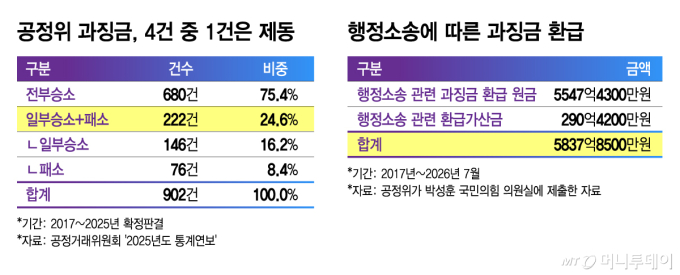
According to the "2025 Statistical Yearbook" released by the Korea Fair Trade Commission on the 16th, among the 902nd administrative lawsuits finalized between 2017 and 2025, the Korea Fair Trade Commission achieved a complete victory in 680 cases. There were 146 partial victories and 76 total defeats. The commission classifies both full and partial victories as wins, announcing an official win rate of 91.6%. However, if only the cases where the original ruling was fully upheld are counted, the win rate drops to 75.4%. This means that in one out of every four final judgments, the court halted at least part or all of the initial ruling.
The issue lies in the costs incurred when penalties fail to clear the court threshold. According to data submitted by the Korea Fair Trade Commission to the office of People Power Party lawmaker Park Sung-hoon, the principal amount of fines returned to companies through administrative litigation from 2017 through July this year totaled 554.743 billion won. When adding the refund surcharge, which carries an interest nature and amounts to 29.042 billion won, the total refund sum swells to 583.785 billion won.
Litigation costs funded by the government are also taxpayer money. According to data submitted by the Korea Fair Trade Commission to People Power Party lawmaker Lee Yang-soo's office, external lawyer fees were 2.85 billion won in 2021, 2.944 billion won in 2022, 2.921 billion won in 2023, and 3.003 billion won in 2024. The government has also allocated 5.8 billion won for next year as part of the budget plan to conduct administrative lawsuits with the Korea Fair Trade Commission.
The number of cases challenging the Financial Services Commission's decisions has also increased. According to data submitted by Kim Sang-hoon, a lawmaker from the People Power Party, to the FSC, new administrative lawsuits related to sanctions rose from 23 in 2022 to 26 in 2023, 36 in 2024, and 45 in 2025. As of May this year, 16 new cases have already been filed.
As lawsuits have increased, the amount of penalty refunds has grown significantly. The Financial Services Commission returned penalties to companies and financial institutions at just 108 million won in 2022, but this rose to 637 million won in 2024 and 789 million won in 2025. This year alone, within five months, the amount reached 3.563 billion won, surpassing 4.5 times the total refund amount for the previous year.
If severe sanctions are imposed, companies must bear fines as losses and engage in legal battles for an extended period. If the ruling is overturned, additional costs such as refund surcharges and government litigation expenses will be returned to taxpayers. There are concerns that sufficient evidence must be presented and precise fine calculations made from the initial sanctioning stage.
The Unchecked Power of the Korea Fair Trade Commission: A Case Study of Coupang
According to a public disclosure report filed by Coupang Inc. with the U.S. Securities and Exchange Commission (SEC), the company paid in full this June the 121st million dollars (approximately 162.8 billion won) fine imposed on Coupang by the Fair Trade Commission in June 2024. Even for a major retailer like Coupang, which boasts sales exceeding 50 trillion won, paying such 'punitive fines' has become reality, as it required installment payments over two years to manage the burden.
The Korea Fair Trade Commission, dubbed the "grim reaper of business," wields immense power. Based on confidential data secured during surprise on-site inspections conducted without arrest warrants, it issues corrective orders and imposes hefty fines that very few companies can withstand. Even if there are flaws in the Korea Fair Trade Commission's enforcement logic or a desire to present counterarguments, it has become standard practice for companies to remain silent due to fears of "follow-up sanctions."
Coupang, which introduced the Rocket Delivery service in 2014 and reshaped the landscape of the distribution industry, was once a symbol of innovation. Through its "planned deficit" strategy, investing 10 trillion won in domestic logistics networks, it has become a national platform used by 32 million customers monthly. However, over recent years, as Coupang became a concentrated target of strict regulations from government bodies including the Korea Fair Trade Commission and institutional investors, negative images such as "monopoly" and "illegal activities" have spread regarding the company.
In June 2024, the Korea Fair Trade Commission imposed a provisional fine of over 140 billion won (a final amount of $121 million) on Coupang for manipulating algorithms to promote its private label products and referred the case to the Prosecution Service. This was the largest fine ever levied by the Korea Fair Trade Commission against a single distributor.
The Korea Fair Trade Commission deemed it an illegal act that undermines fair competition for Coupang to configure its algorithm to display private brand (PB) products at the top of platform search results and mobilize employees to write purchase reviews. Coupang refutes this rationale for sanctions, arguing that PB products such as bottled water, toilet paper, and wet wipes, which have remained at the top of the app for an extended period, were not selected due to algorithm manipulation but rather because they are priced at half that of general manufacturers, leading customers who prioritize cost-performance to choose them.
According to the industry, depending on the outcome of the trial currently in its second-instance argument phase, a major revision of the 'product display' strategy for online-offline LINE retailers operating domestically will be unavoidable. An industry official stated, "Amazon, Walmart, and Costco in the United States are conducting unregulated product displays in online-offline spaces," adding that "reducing exposure to PB products would harm customers."
Large fines also deal a significant blow to capital management. Coupang, which paid off a fine in the range of 160 billion won within two years, must now pay another fine in the range of 620 billion won imposed by the Personal Information Protection Commission in June over a data breach incident. Given its financial capacity, installment payments are expected to be unavoidable once again. Concerns are being raised that this could lead to a contraction in follow-up investments in logistics centers and a subsequent decline in local employment.
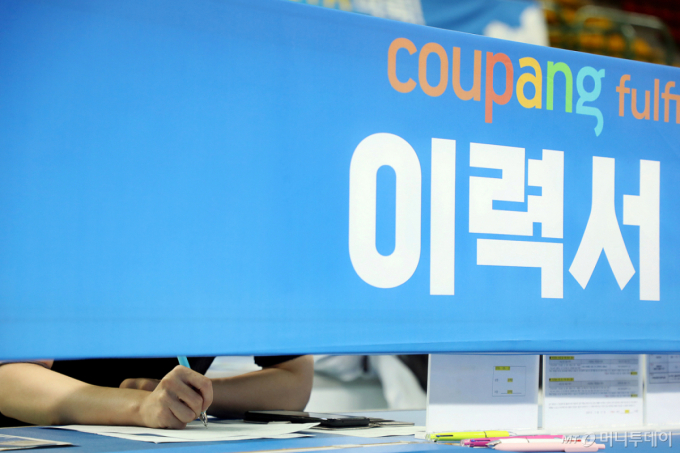
Even if Coupang wins the lawsuit, losses are inevitable. Even if it recovers the administrative fine, damage to its corporate image and a decline in corporate valuation sustained over the three-to-five-year litigation period will be difficult to repair. Coupang's market capitalization, which exceeded $50 billion at the end of last year, has recently plummeted to around $27 billion as massive fines, successive regulations, and sanction risks were factored in.
In addition to Coupang, major domestic retailers such as Lotte and Shinsegae have faced sanctions from the Korea Fair Trade Commission in the past over allegations of funneling orders to affiliated companies and abusing suppliers, leading to legal disputes lasting three to five years. While there have been cases where these companies successfully appealed the sanctions, the Korea Fair Trade Commission has taken no particular stance. Restoring damaged reputations is solely the responsibility of the companies themselves.
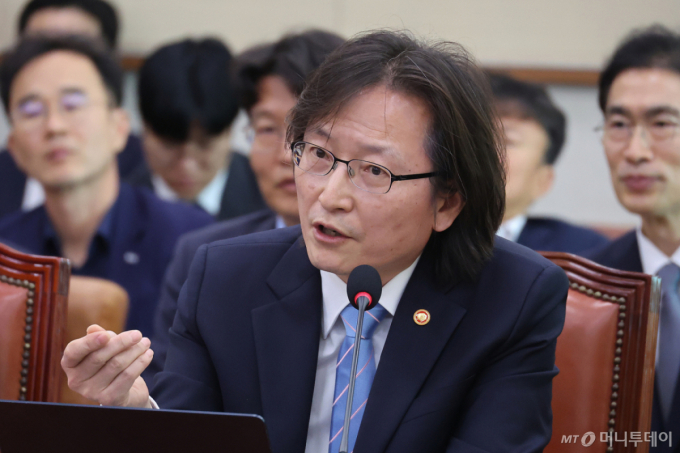
Experts advise that institutional reforms are necessary. Lee Byeong-tae, professor emeritus at KAIST Graduate School of Business, stated, "The Korea Fair Trade Commission monopolizes investigations, indictments (preparation of review reports), and rulings (first-instance judgments and penalties) within a single administrative body," adding that "the number of cases handled by the Korea Fair Trade Commission from 2015 to 2020 was 6,910, which indicates excessive intervention when compared to 230 cases in the United States, 65 in the EU, and 140 in Japan during the same period."
The professor pointed out that the recent incident in which a Korea Fair Trade Commission on-site investigation at Coupang's headquarters was blocked and ultimately failed represents resistance against the coercive nature and procedural legitimacy of administrative investigations conducted without judicial warrants by the court, revealing the limitations of an abnormal system where prosecutors and judges are monopolized by institutional investors.
⑥ Strict stance of regulatory institutional investors
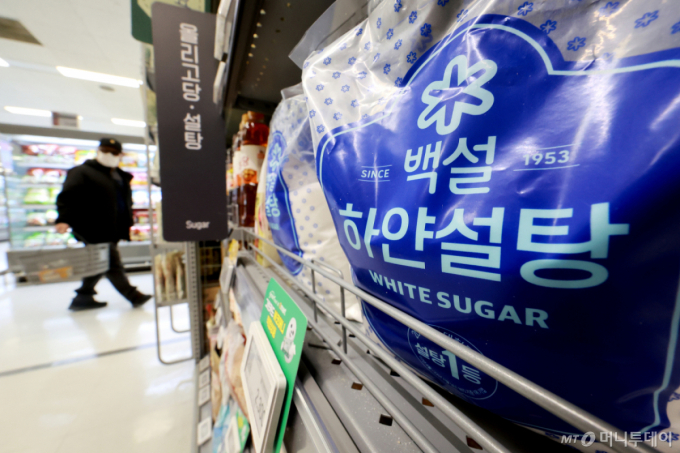
While complaints from companies are erupting over the regulatory authorities' "strict administrative punishment," the regulators also have their say. They explain that most recent cases involving massive penalties, such as the sugar collusion and flour/starch syrup collusion incidents, involved violations that spanned long periods, making it inevitable for penalty amounts to be large due to the accumulated sales revenue. Additionally, they clarify that procedural safeguards have been put in place to ensure the right of defense for the parties under investigation.
According to government agencies and other bodies on the 16th, the Financial Supervisory Service (FSS) applied the adversarial hearing system in its sanction process against 11 financial firms regarding the incomplete sales incident of Hong Kong H-Index equity-linked securities (ELS). The adversarial hearing system, introduced in 2018, refers to a review procedure where the FSS Inspection Bureau and the targeted financial firm appear before committee members with equal standing to engage in opposing debates.
In the past, disciplinary review proceedings were conducted in a manner where an employee from the Inspection Bureau would first state their position and report on the agenda before leaving, after which the subject of the disciplinary action would enter later to present their statement, resulting in insufficient protection of the right to be heard. The Disciplinary Review Committee was established as a measure to address this gap by ensuring adequate rights to rebuttal through simultaneous attendance and real-time debate.
In the case of Hong Kong ELS, the Financial Supervisory Service initially imposed a fine of 1.4 trillion won, but it was reduced to around 60 billion won following a request for supplementation from the Financial Services Commission. The reason the financial authorities adjusted the fine was to reflect the active compensation efforts by the financial institution. Moreover, the fact that the bank prevailed in a lawsuit filed by investors against the bank inevitably influenced the level of sanctions. Ultimately, it is explained that even when imposing administrative sanctions, the financial authorities must take into account not only procedural legitimacy but also acceptability.
The same applies to the Fair Trade Commission. A Korea Fair Trade Commission official stated, "If a lawsuit ensues, we will inevitably have to engage in a legal debate." The official added, "If the respondent appeals and the case proceeds to litigation, the Korea Fair Trade Commission's arguments will be thoroughly scrutinized; therefore, if the commission applies unreasonable logic, it is bound to lose the legal battle." This is why due process rights are guaranteed, including a thorough opportunity for the respondent to present their case during the deliberation process, in order to ensure maximum accuracy.
Nevertheless, the reason for the record-breaking increase in administrative fines is that the period of illegal conduct in collusion cases has been long. The sugar collusion fines imposed on the three sugar companies reached 390 billion won. The longer the collusion period, the higher the related sales revenue, and consequently, the larger the administrative fine. This is also why recent arguments have been raised claiming that the Korea Fair Trade Commission's sanctions are excessively severe, such as "unprecedented sanctions" and "the respondents' positions were not sufficiently reflected."

 in INDUSTRY


