

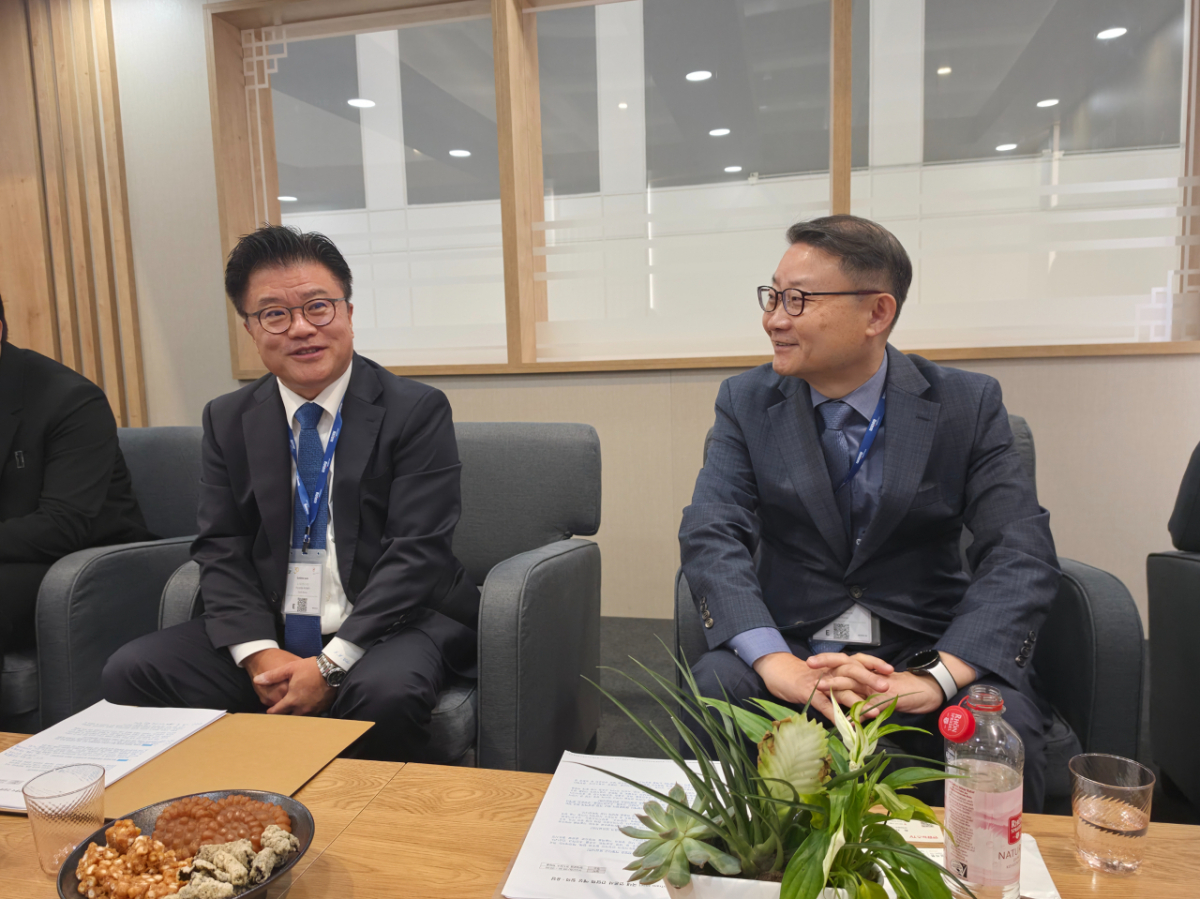
"We have created a high-speed train that is friendly to everyone."
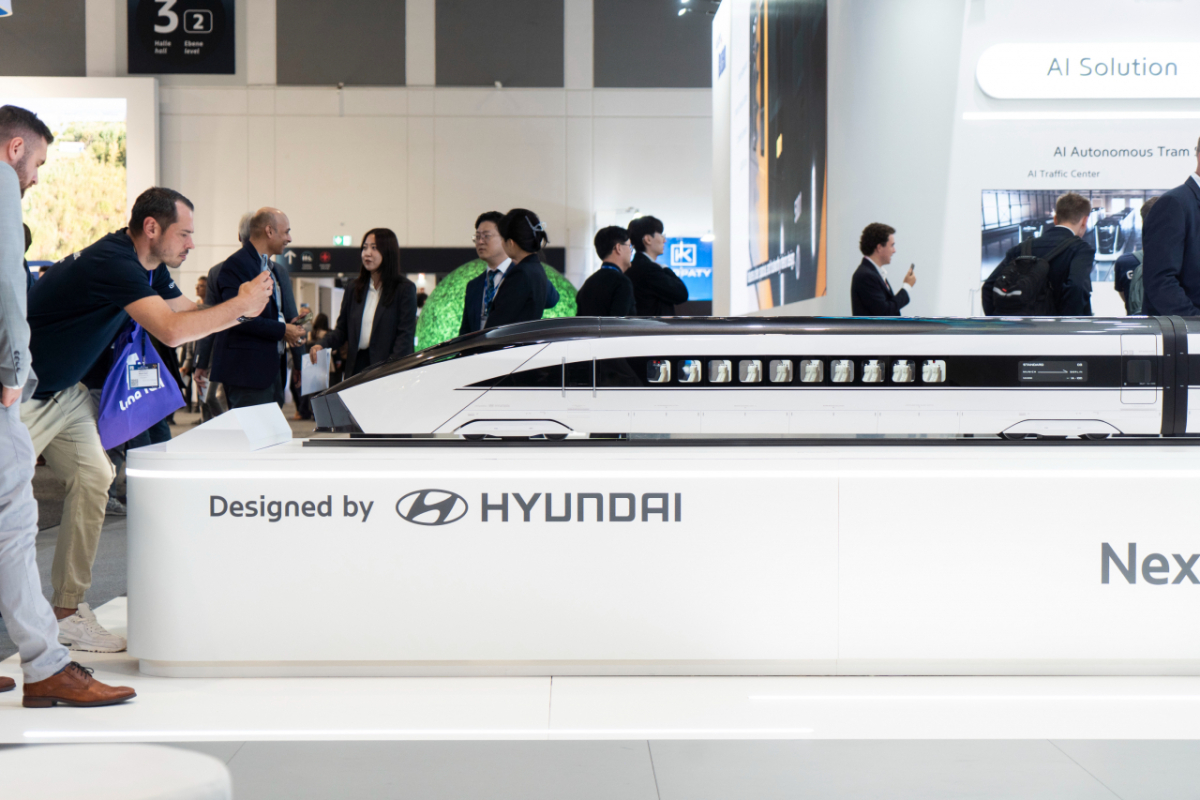
Jo Il-yeon, Head of the RS Division at Hyundai Rotem, introduced Hyundai Rotem's next-generation domestic high-speed train to reporters on the 22nd (local time) at 'InnoTrans 2026', the world's largest railway exhibition held in Berlin, Germany. "In high-speed trains, user experience (UX) and user interface (UI) are becoming increasingly important beyond just speed, performance, and power," said Jo. He added, "While securing top speeds of up to 370 km/h—faster than before—we focused on reducing interior noise and improving ride comfort."
Notably, Hyundai Motor Group's 'design DNA' was fully applied to this next-generation high-speed train. Designers from Hyundai Motor Group, not just Hyundai Rotem, participated in the development. Lee Won-sang, CTO of Hyundai Rotem, who was present at the event, explained, "Since design is crucial for enhancing brand value, we collaborated to leverage group synergies. For over a year, we conducted surveys directly with customers and analyzed the strengths and weaknesses of high-speed trains from countries around the world, leading to improvements not only in the exterior but also in structural elements like bridges, expanded interior spaces, and VIP rooms."
The next-generation high-speed train targets both domestic and international markets simultaneously. Domestically, a bidding war worth approximately 5 trillion won is already underway. This refers to a new high-speed rail project that Korea Railroad Corporation (Korail) will commission starting next year to replace the KTX-1. The project involves a total of 49 trainsets comprising 784 cars, with the first phase consisting of 28 trainsets to be ordered sequentially. Jo stated, "Recently, you can see that foreign passengers are increasingly using high-speed trains in Korea. High-speed trains represent the image of the Republic of Korea. Internally within the group, there is a directive to create 'world-class' vehicles at the Genesis level even for high-speed trains."
Competitors include Spain's Talgo and France's Alstom, which produced the initial KTX-1. Jo emphasized, "The localization rate of Korean high-speed trains has now exceeded 87%, with over 200 companies connected in the supply chain. If foreign companies enter the market, they do not have such an ecosystem, so we must defend our position to protect the domestic industrial ecosystem." Internationally, Hyundai Rotem plans to diversify export markets starting from Uzbekistan, its first export country, and expanding into Central Asia and the Middle East.
The company is also accelerating development in physical artificial intelligence (AI) and autonomous driving, key areas of interest in the global railway industry. The vision is to implement AI-managed railways covering everything from train manufacturing to operation, inspection, and maintenance. At this year's InnoTrans, Hyundai Rotem unveiled a blueprint for a 'Future Hydrogen Electric Tram' featuring full autonomous driving. Lee CTO noted, "Global companies like Alstom and Germany's Siemens are also entering the field of physical AI. By reducing energy consumption and maintenance costs while enhancing safety, railways will inevitably move toward autonomous driving." Hyundai Rotem expects to commercialize these technologies faster than competitors by leveraging related technical capabilities held by Hyundai Motor Group.
Development of hydrogen mobility utilizing the group's hydrogen capabilities continues. Lee CTO stated, "When hydrogen electric trams currently being promoted in Ulsan and Daejeon enter commercial operation, they will become the world's first." He added, "The group is also focusing on related technologies, such as enhancing the durability of hydrogen fuel cells, ensuring sufficient competitiveness." Once hydrogen electric trams are commercialized, they are expected to strengthen efforts to penetrate the European market. There is anticipation that by leading with hydrogen technology in Europe, which is actively transitioning to eco-friendly transportation, Hyundai Rotem can compete with global railway powerhouses.

 in INDUSTRY

