

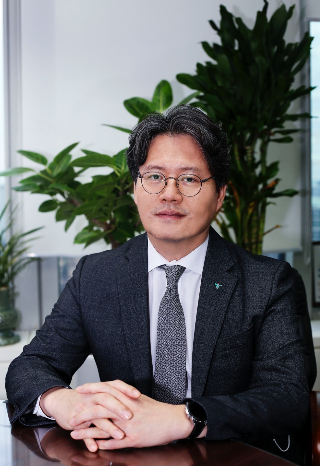
In the evaluation results of the Best Reports in Korea, hosted by MoneyToday and supported by the Financial Supervisory Service, Korea Exchange, and the Korea Financial Investment Association, the Hana Securities Research Center was selected as the Best Small-Cap House for the first half of 2026. Amid a market environment where capital flows were heavily concentrated on large-cap stocks, the center received high praise from judges for diligently and densely identifying promising companies. Hana Securities has once again secured the title of Best Small-Cap House, following its recognition in the first halves of 2022 and 2024, demonstrating its strength in the small-cap sector.
The Best Small-Cap House award is given to research centers that excel in analyzing mid- and small-cap stocks with a market capitalization under 1 trillion won. In the first half of this year, the Hana Securities Research Center published 206 small-cap reports, surpassing the industry average of 92 reports. After publication, the average return rate for these stocks was 1.49%, and the maximum gain based on peak prices reached 33.71%. Considering that the securities industry’s average returns were -0.35% and 24.39% respectively, this performance ranks among the top tier.
Hwang Seung-taek, Head of Research Center at Hana Securities, attributed the secret behind producing over 200 reports to on-site visits and collaboration with large-cap sector analysts. Currently, five researchers in the "Future Industries Team" at the Hana Securities Research Center are dedicated exclusively to small-cap analysis.
Center Director Hwang stated, “We have systematized active field visits occurring three to four times a week or more, ensuring continuous on-the-ground efforts throughout the first half of the year.” He added, “Our focus is on multi-dimensional verification of qualitative aspects that numbers alone cannot reveal, such as actual on-site conditions, factory operational status, and the sincerity and roadmap presented by management teams.”
A system has also been established for collaboration between sector analysts and the Future Industries Team to produce reports. Center Director Hwang explained, “When large-cap-focused sector analysts identify strong small enterprises located at the lower end of the value chain, the Future Industries Team conducts in-depth analysis and rapidly converts these findings into reports.”
Stock identification is not limited to one-off efforts; the center aims to consistently issue follow-up reports. Center Director Hwang noted, “We strive to provide continuous tracking reports whenever major events occur or earnings are announced, enabling investors to receive regular updates even during volatile market conditions.”
This system has yielded high-quality results in terms of stock returns. Center Director Hwang emphasized that the success stems from quickly grasping market trends and proactively identifying stocks based on fundamentals and momentum rather than mere thematic hype. He stated, “Our focus on mid- and small-cap stocks that are key beneficiaries within themes with clear structural growth—such as global AI infrastructure expansion, defense and nuclear power exports, semiconductors, high-performance advanced materials, robotics, and aerospace—proved highly effective.”
Taking into account the characteristics of mid- and small-cap stocks, the center also incorporates risk management and supply-demand volatility into its analysis. Center Director Hwang remarked, “Mid- and small-cap stocks face greater information asymmetry compared to large caps and are vulnerable to owner-related risks, rights offerings (paid-in capital increases), and overhang issues such as conversions of CBs (convertible bonds) and BWs (bonds with share subscription warrants).” He added, “In addition to fundamentals analysis, we strictly include details on fundraising activities and corporate governance risks in our risk management framework.”
For the second half of the year, leading industries expected to drive the mid- and small-cap market include the AI value chain and sectors where order backlogs are materializing into earnings, such as defense, aerospace, nuclear power, and shipbuilding equipment. K-beauty, which is gaining market share, was also highlighted as a sector anticipated to attract capital inflows through rotational trading. Center Director Hwang assessed, “Although recent excessive concentration of capital flows on large-cap stocks has relatively reduced interest in mid- and small-cap stocks, the entry into oversold territory combined with capital gaps has once again increased their investment appeal.”


 in STOCK

