

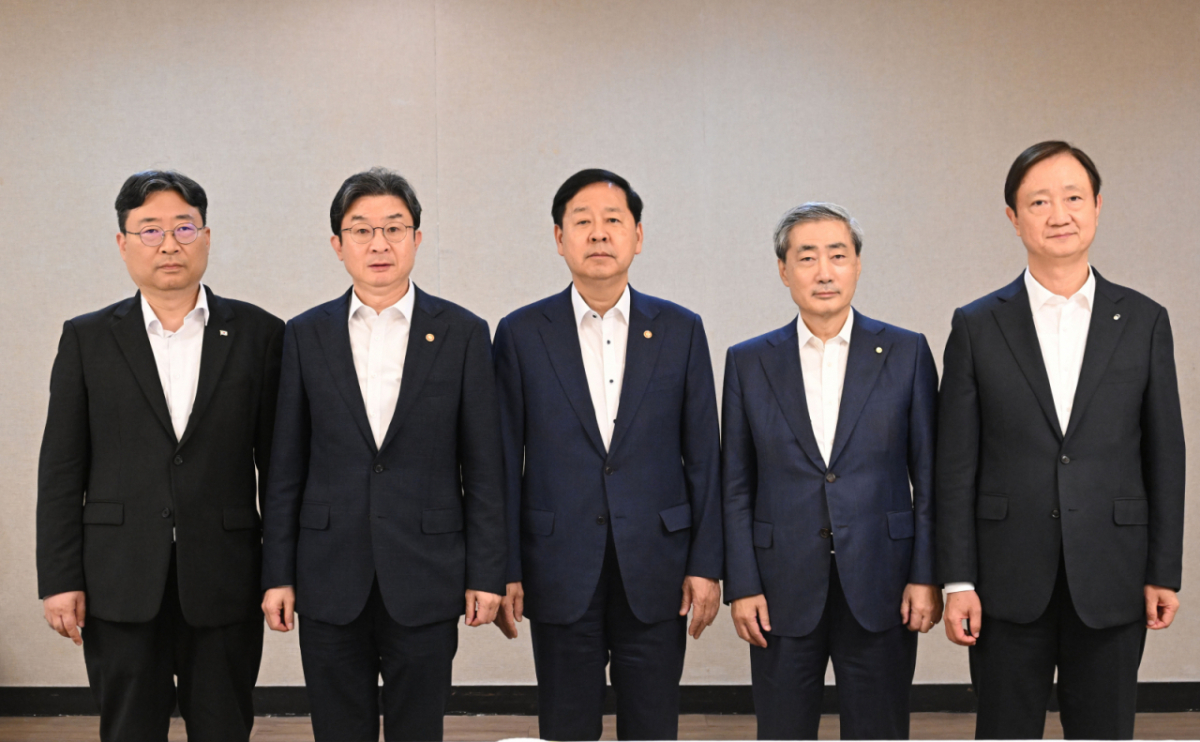
The government announced a second supplementary package just 14 days after introducing its first measures targeting single-stock leverage ETFs (exchange-traded funds). The initial response is seen as a preemptive move amid growing concerns that the first round of measures would fail to quell market overheating, coupled with significant recent volatility in the stock market. The second package primarily focuses on capping individual investment limits at 20% and adjusting leverage ratios daily, leading analysts to suggest these steps amount to effectively phasing out single-stock leverage ETFs from the market.
According to relevant government agencies on the 30th, the government announced at yesterday's emergency market situation monitoring meeting (F4) that it would implement the second supplementary package for single-stock leverage ETFs. This comes just 14 days after the first supplementary measures were announced on the 16th. Until the 24th, the official stance had been to observe the policy effects of raising basic deposit requirements, scheduled for early implementation on the 31st, before discussing additional measures. However, the government reversed its position in just six days.
The first set of measures faced criticism for failing to curb investment demand and was increasingly blamed for amplifying market volatility due to single-stock leverage ETFs, prompting a rush to finalize the second package. Increased stock market volatility, including circuit breaker halts on trading for two consecutive days across both the KOSPI and KOSDAQ markets, also played a role. Lee Won-wook, Chairman of the Financial Services Committee, and Lee Chan-jin, Chairman of the Financial Supervisory Service, heads of the financial regulatory authorities, ultimately apologized during yesterday's National Assembly Political Affairs Committee briefing, saying they were "deeply sorry."
The second supplementary package proposes measures to further tighten investment demand and make trading more difficult. These include capping individual investment limits at 20% of total investment amounts, increasing transaction cost burdens (by applying excessive order burden fees in the futures market), introducing simulated trading, and establishing a legal basis for Hong Kong's variable leverage ratio model.
For example, under the investment limit system: if an investor has 0.1 billion won to invest, they would be restricted to investing only 2 million won in single-stock leverage ETFs. Industry observers note that this approach "will likely be effective in reducing investment demand." The excessive order burden fee is a punitive charge imposed in the futures market to prevent traders from repeatedly canceling or correcting orders that are excessively large and not intended for actual execution.
Adjustments to leverage ratios follow a recent regulatory measure introduced by Hong Kong's financial authorities, allowing daily adjustments of leverage ratios within an existing cap of ±2 times. This means products previously expected to deliver 2x returns could see their leverage reduced to 1.5x or even 1x. However, in South Korea, current law requires approval through a beneficiary general meeting, necessitating legislative changes. In addition to pre-investment education, the introduction of simulated trading is designed to allow investors to directly experience the risks associated with single-stock leverage ETFs.
A financial investment industry official stated, "Raising deposit requirements and capping individual investments at 20% will have a direct effect in curbing demand. If leverage ratio adjustments become possible, investors seeking 2x returns will naturally exit the market."
Some opinions suggest that such strong demand-suppression measures amount to an effective market phase-out. Another industry official remarked, "Since delisting is not feasible, the government has resorted to suppressing investment demand through various measures, effectively initiating a process of market exit. It is regrettable that whenever negative side effects arise from certain products, stringent regulations are repeatedly imposed without allowing opportunities for self-correction in the market."
Concerns have also been raised regarding investor backlash and potential adverse effects such as the marginalization of retail investors, alongside fundamental doubts about whether these measures against single-stock leverage ETFs can truly quell market volatility. An industry official noted, "Given that global markets are currently synchronized around semiconductor stocks, it is difficult to expect that reducing trading in single-stock leverage ETFs will ease volatility in our domestic stock market."

 in STOCK
