

"When the market direction turns around, it is essential to appropriately incorporate active management strategies into portfolios that can compress leading stocks and boost returns."
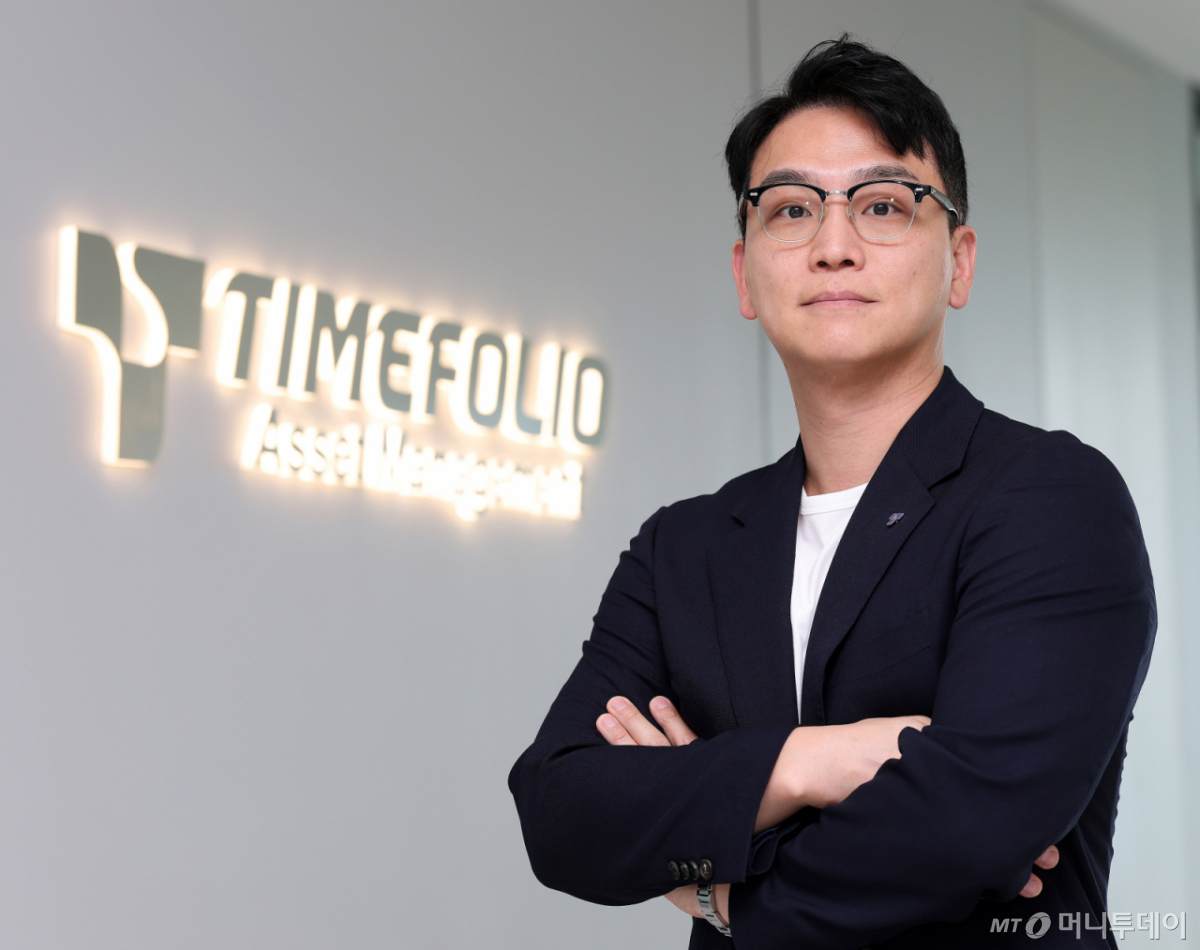
In a recent interview with Money Today, Kim Nam-ho, Head of ETF Management Division at Time Portfolio Asset Management, stated, "The recent decline in the stock market was not caused by damage to corporate fundamentals but rather by shaken investor sentiment. Therefore, the market is expected to show signs of recovery."
The KOSPI fell sharply by 22.19% over the past month and has since risen by 4.81% as of the 21st of this month. However, given that volatility remains high, he advised adopting long-term investment strategies rather than short-term trading.
The head explained, "With capital flows shifting to semiconductors and then potentially moving elsewhere unpredictably, chasing these movements daily will ultimately lead investors to lose money." He added, "Instead of engaging in short-term trading through leveraged ETFs, investors should focus on accumulating high-quality assets from a long-term perspective."
He further noted, "In the current volatile market and the anticipated bull market that will follow, it is necessary to consider utilizing active ETFs that can generate excess returns beyond simple index tracking."
Unlike passive ETFs that track a benchmark index, active ETFs are products managed relatively freely by fund managers. Fund managers can proactively include stocks with high growth potential in their portfolios or increase their weightings, while excluding those expected to decline. Consequently, they aim to achieve excess returns compared to the benchmark index.
Time Portfolio Asset Management currently manages 18 active ETFs. Among them, "TIME KOSPI Active" has achieved a cumulative return of 155.54% as of the 20th (based on reinvested dividends), which is 39.46 percentage points higher than the benchmark index return of 116.08%.
Regarding sector-specific investments, he identified domestic semiconductors and financials as key areas to watch. Kim stated, "The semiconductor cycle has not ended," adding, "Given that memory semiconductor stocks have fallen significantly over time, they warrant attention."
He continued, "However, in the second half of the year, capital and momentum concentrated on semiconductors will spread to other sectors." He emphasized, "Especially with the government's value-up program driving initiatives, investors should focus on financial stocks, particularly bank stocks." He analyzed, "The Bank of Korea's base rate hike will widen the spread between loan and deposit rates, acting as a positive momentum for banks' core profitability indicator, net interest margin (NIM)."
U.S. stocks are also an asset class that warrants attention. However, he advised against concentrating investments solely in technology stocks; instead, diversification across other sectors is necessary. Kim noted, "In addition to memory semiconductors, investors should closely monitor companies involved in neocloud, optical communications, and SMR (small modular reactors) as the scope of AI infrastructure expands." He explained, "As we enter an era transitioning from copper to light, demand for optical communications will increase." He further added, "In the AI industry, power plays a role akin to the heart, so it will remain indispensable."

 in STOCK
